New & Noteworthy
Stay up to date with news, highlights, & features from across Freeman's.
Stay up to date with news, highlights, & features from across Freeman's.
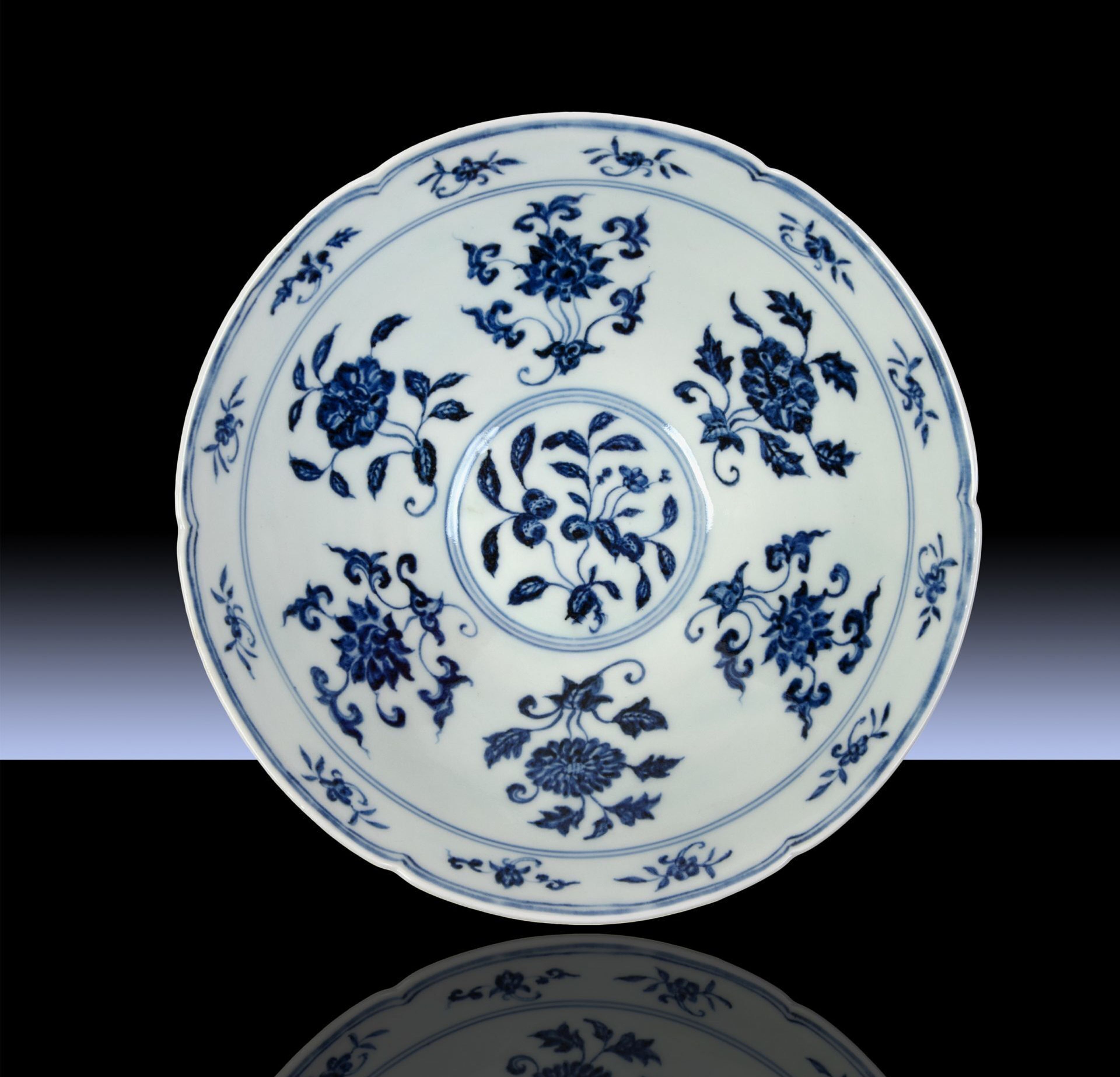
To be offered in our September 17 Asian Works of Art auction is an early Ming bowl that once belonged to Stanley Field (1875-1964), the renowned Chicago philanthropist, banker, civic leader and businessman. The Field family is responsible for developing the Field Museum of Natural History and its collection. Because of the Museum’s connection to curator Berthold Laufer, it can be suggested that the early Ming bowl was sourced by Laufer during the early 19th century on trips that delivered thousands of Chinese items to American clients. Marshall Field (1836-1906), the founder of Marshall Field and Company, the largest wholesale and retail operation in the world during the latter half of the 19th century, was Stanley Field’s uncle. Stanley Field’s father Joseph (Marshall’s brother) was based in England and in charge of sourcing European merchandise for the family business. With a similar appetite for global endeavors, Field approved of numerous international expeditions, where the museum’s renowned anthropologists would travel to remote locations on every continent to gather archaeological and cultural relics. The anthropologist in charge of the China expeditions was the famed German geographer and sinologist Berthold Laufer (1874-1934). The incoming Chinese items ranged from the Neolithic Period to the Late Qing Dynasty and included a vast grouping of jades, ceramics, porcelains, rhinoceros horn cups, snuff bottles, rubbings and puppets. In addition to his work as the museum’s curator, Laufer made many influential contacts in the Chinese art field. His colleagues and friends were some of the most celebrated curators, collectors and dealers during that time, with prominent names such as A.W. Bahr, C. T. Loo, George Eurmorfopolous, Shigejiro Yamanaka, Langdon Warner, and Kate Sturges Buckingham. Laufer’s situation at the Field Museum also allowed him to serve on other institutional boards and to moonlight as an art agent. During his final trip to China in 1923, Laufer was considered a major player in the Chinese art market. He wrote in his letters about his unfettered access to vast amounts of Chinese imperial objects – many of which were discretely sold directly to American clients. At the same time, Stanley Field began building up his own private collection of Chinese art, and it is quite possible that the present early Ming bowl was sourced by Laufer during this period. Fluent in numerous East Asian languages including Chinese, Japanese, Tibetan and Mongolian, Laufer was the curator of Anthropology at the Field museum from 1908 until his sudden death in 1934. He led the museum’s Blackstone Exhibition in 1908 and the Captain Marshall Field Expedition in 1923. In total, these trips brought back over 19,000 Chinese objects for the museum.
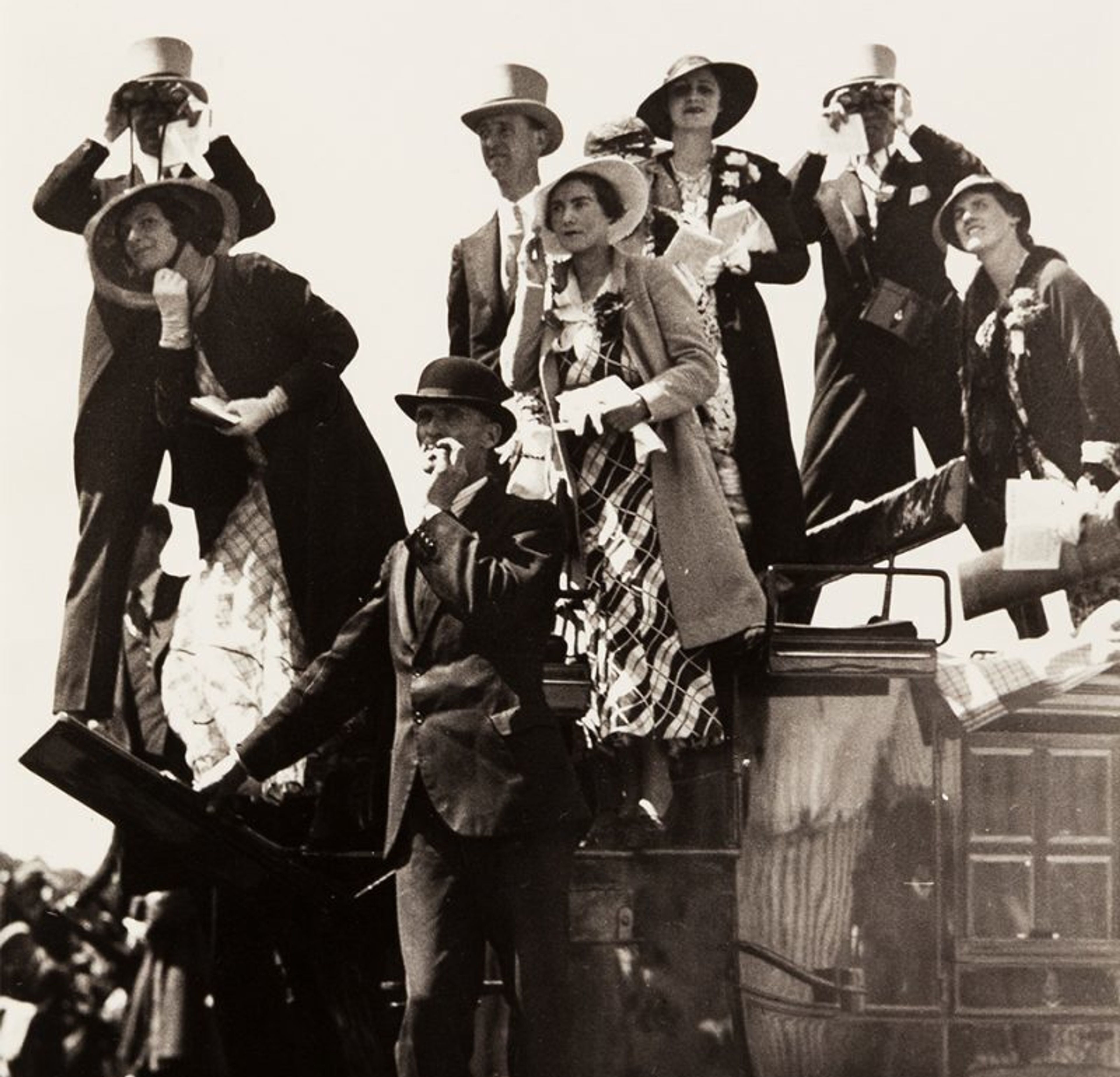
The May 23 Post War and Contemporary Art auction at Leslie Hindman Auctioneers includes a session of photography in addition to fine art and sculpture. Bill Brandt, Olafur Eliasson, Saul Leiter and Robert Frank are some of the photographers represented in the sale. Lot 144: While Olafur Eliasson is best known for his large-scale installation using natural elements, he also creates sculpture, works on paper, film and photography. Our upcoming Post War and Contemporary Art auction includes two Eliasson photographs, Ohne Title (Island Serie #49) and Ohne Title (Island Serie #47). They show Eliasson’s interest in and passion for the environment. Both photographs carry a presale estimate of $6,000 to 8,000. Lot 148: Although originally from Pittsburgh, Saul Leiter gained a reputation capturing the streets of New York City in the 50s and 60s. As demonstrated in this c-print from 1960, Snow, Leiter’s photographs often contained abstract elements. These elements are not only stylistic but also a result of the cheap materials he used, which often caused traces of a chemical nature. Snow has a presale estimate of $6,000 to 8,000. Lot 151: This Bill Brandt photograph entitled Coach Party, Royal Hunt Day, Ascot, 1933, displays Brandt’s interest in social class. The photograph was the cover of The English at Home, 1936, his first publication of photographs. In stark contrast to the high-class frivolity on the cover, the back presented a poor huddled family. Coach Party, Royal Hunt Day, Ascot carries a presale estimate of $8,000 to 12,000.[/vc_column_text][vc_separator][/vc_column][ Lot 159: Thomas Kellner’s work deconstructs architecture in a method the artist termed ” visual analytical synthesis.” New York, Times Square at Night in the upcoming Post War and Contemporary Art auction is an example. This color coupler print carries a presale estimate of $5,000 to 7,000.
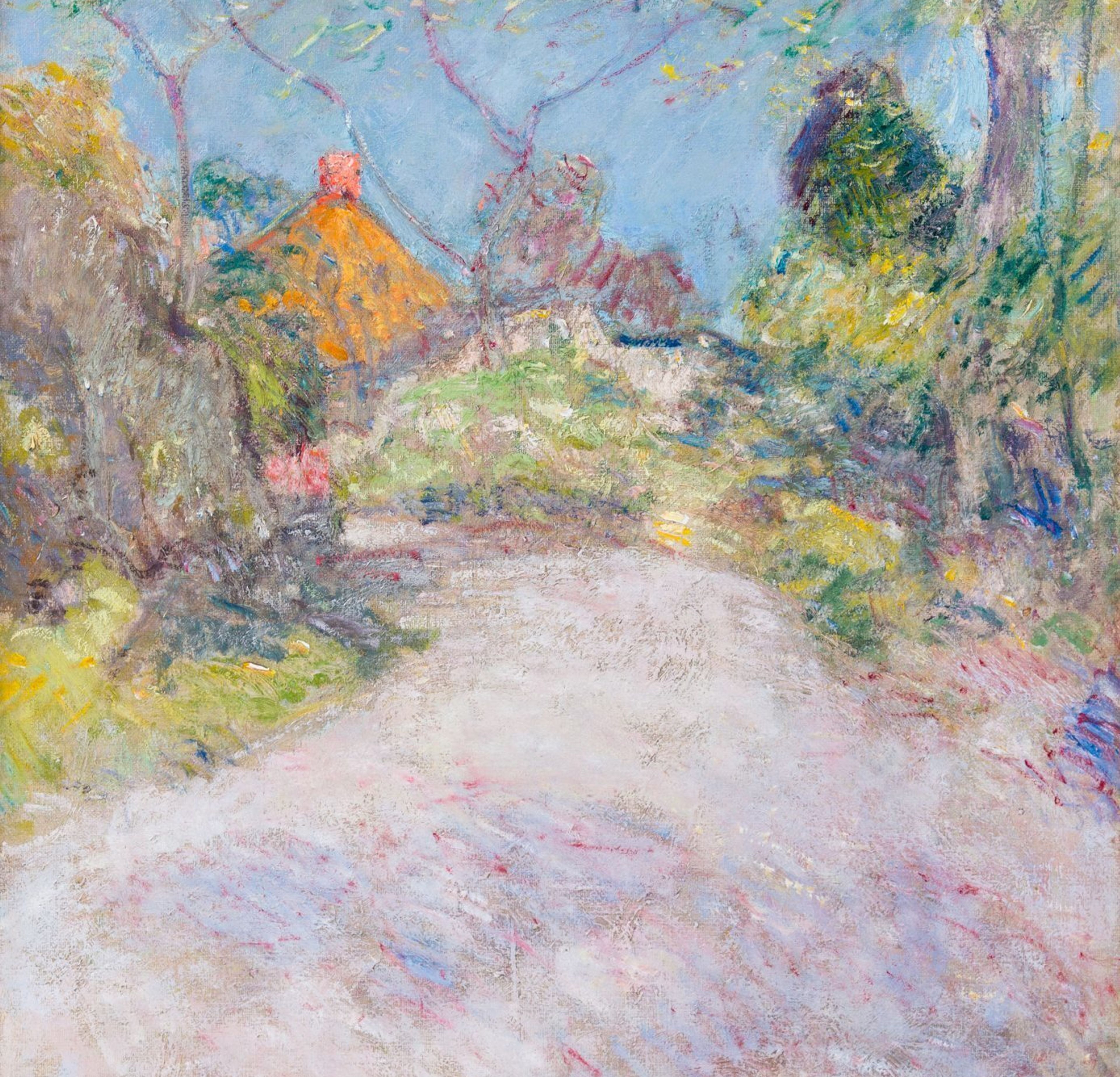
The May 24 American and European Art auction at Leslie Hindman Auctioneers includes highlights from James Ensor and John Henry Twachtman. James Ensor, Chinoiseries – Chinese Vases and fans, c. 1908-10 This oil painting is an authentic Ensor, created from the same subject as an earlier painting (Chinoiseries, 1880, Catalogue Raisonné nr. 153 – belonging to the Franck Collection). After 1900, the artist was getting more and more famous, even outside of Belgium. Many of his early works had already found a new owner. For that reason, and maybe because some collectors were asking for replicate versions, the artist made a series of secondary oil paintings modeled off of his early paintings, mainly between 1908 and 1910. Chinoiseries – Chinese Vase and Fans, belongs to this series and is a second version of a painting realized in 1880. In some cases, and probably to make small distinguishing variations, the artist changed the size of this version. Where in the initial composition the top of the vase and the fan were cut off, he added those elements with some background and minor detail changes to this version. This work is accompanied by a letter of authenticity from Mrs. Sabine Taevernier, President and Secretary of the Ensor Advisory Committee, along with Permanent Advising Members Mr. Herwig Todts, Mr. Michel Draguet and Mr. Xavier Tricot. Literature: Xavier Tricot, James Ensor, sa vie son oeuvre. Catalogue raisonné des peintures, Brussels, 2009, catalogue no. 153 John Henry Twachtman, The Back Road, c. 1890-99 Lisa N. Peters, Ph.D., writes: John Henry Twachtman (1853–1902) created The Back Road during his Impressionist phase, a time when he was living in Greenwich, Connecticut (1889–99) and deriving inspiration from his immediate surroundings. Conveying the Arcadian spirit of his art in these years, the painting features a landscape harmoniously balanced between the human and the natural. It demonstrates the avid interest in Japanese woodblock prints that Twachtman shared with his close friends J. Alden Weir and Theodore Robinson. Eliminating the foreground and employing a high horizon line, Twachtman emphasized the totality of the design over a recession into space. He cropped the leaves of trees in both the foreground and background to form a protective canopy over the scene. In the left distance, the red-orange gable and chimney of a farmhouse come forward counterbalancing the movement of the road toward the distance. The work’s location could be the countryside of Branchville, Connecticut, where Twachtman often visited Weir, and depicted similar views in pastel and oil of curving roads and small farmhouses. In his Greenwich period, Twachtman developed a distinctive method of paint application, rendering surfaces with densely woven color applied with rhythmic brush movements. Here he used a more typical Impressionist method of short dabs and broken strokes, perhaps to capture the transitory effects of the sunlit day. The painting evokes the style of Twachtman’s friend Childe Hassam, who also visited Weir and created Branchville views. The Back Road was presumably the painting of this title included in Twachtman’s solo show held in April of 1901 at the Cincinnati Art Museum. By 1915, Childe Hassam had acquired the work; he lent it to Panama-Pacific International Exposition, San Francisco (Hassam and Twachtman were among the eight American artists featured in their own galleries at the exposition.) The painting’s next owner was Candace Catherine Stimson (1869–1944), a granddaughter of the artist and design innovator Candace Wheeler (1827–1933) and the surgeon Lewis Atterbury Stimson (1844–1917); her brother was the statesman and politician Henry Stimson (1867–1950). Candace Catherine Stimson, an 1892 graduate of Wellesley College, lived in New York City and never married. She sold the painting to Milch Galleries, which handled most of the work from Twachtman’s estate from the 1920s through the 1940s. The American and European Art sale will be conducted Thursday, May 24 at 10am CT. Visit the auction page for more details, to view lots online and browse the digital catalogue.
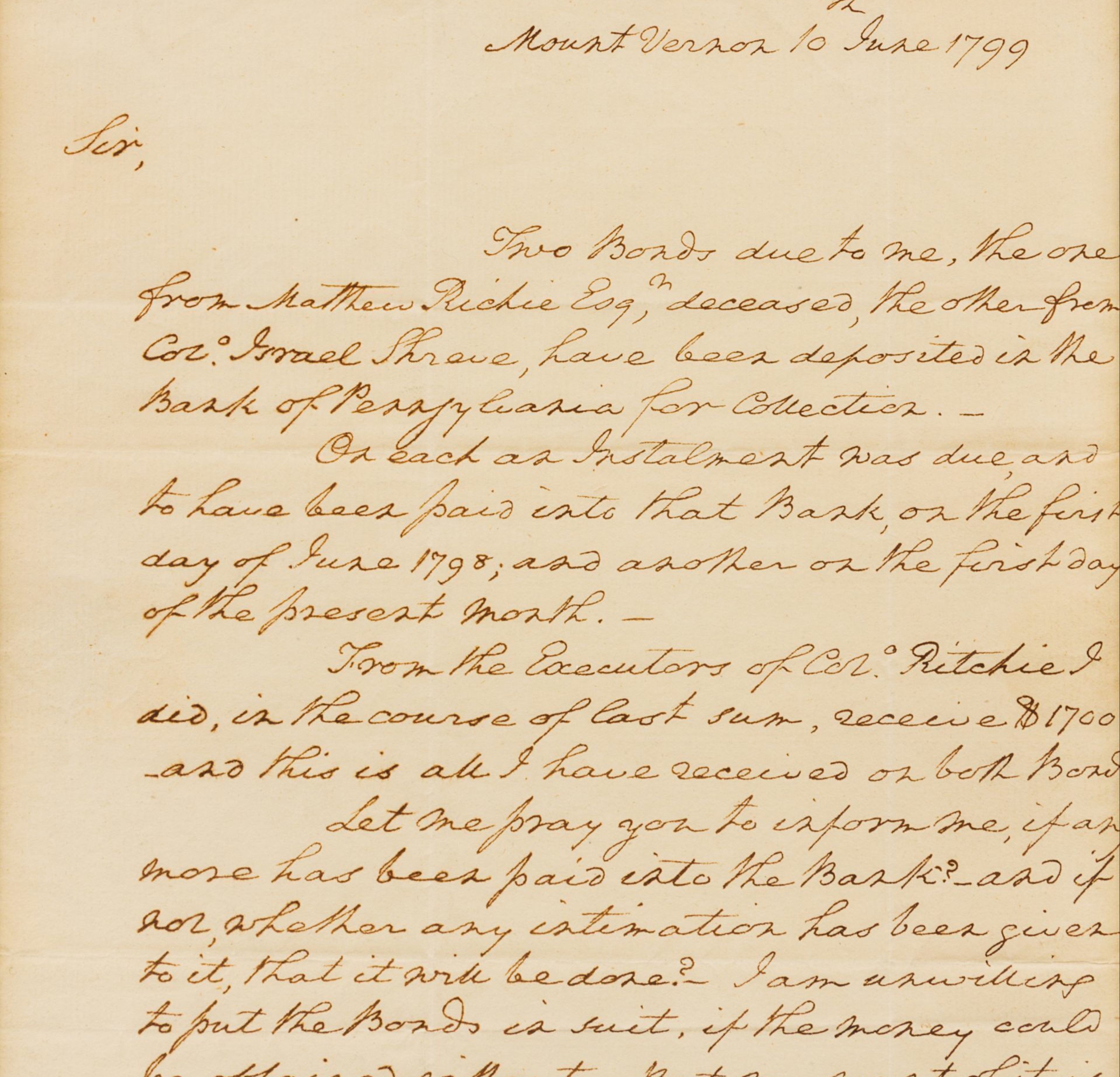
Our upcoming Fine Books and Manuscripts auction features an impressive collection of manuscripts from the private collection of Robert L. McKay, which we will be offered as a single session in our May 1st sale. This extensive collection includes signed manuscripts from Walt Whitman, Claude Monet, Peter Illich Tchaikovsky, Napoleon I, Charles Darwin, Janis Joplin, John James Audubon and George Washington, among many others. One highlight from the collection is an autograph manuscript signed by George Washington, written from his home in Mount Vernon in 1799 to Samuel M. Fox, President of the Bank of Pennsylvania. Manuscripts written by Washington from his home in Mount Vernon are rare, as he spent much of his time away in his roles as head of the Continental Army and President. He wrote the letter shortly after his retirement from political life and only a few months before he died in December 1799. Another highlight is a two-page autograph letter signed with an original hand-addressed envelope from Janis Joplin to her then-boyfriend Peter J. de Blanc. Joplin and Le Blanc met and began dating in 1965 while they both lived in San Francisco. After they both left San Francisco later that year, Joplin for Texas and de Blanc for New York, they continued their relationship and got engaged. This intense and emotional letter, written in the fall of 1965, portends the end of their tempestuous relationship. Joplin begs de Blanc to respond: “Guess I’ll go cry a little more and then mail these letters.” Their relationship ended shortly after, and in May 1966, Joplin returned to San Francisco where she joined Big Brother & The Holding Company. Continue exploring the Fine Books and Manuscripts sale by viewing all lots online and browsing the digital catalogue.
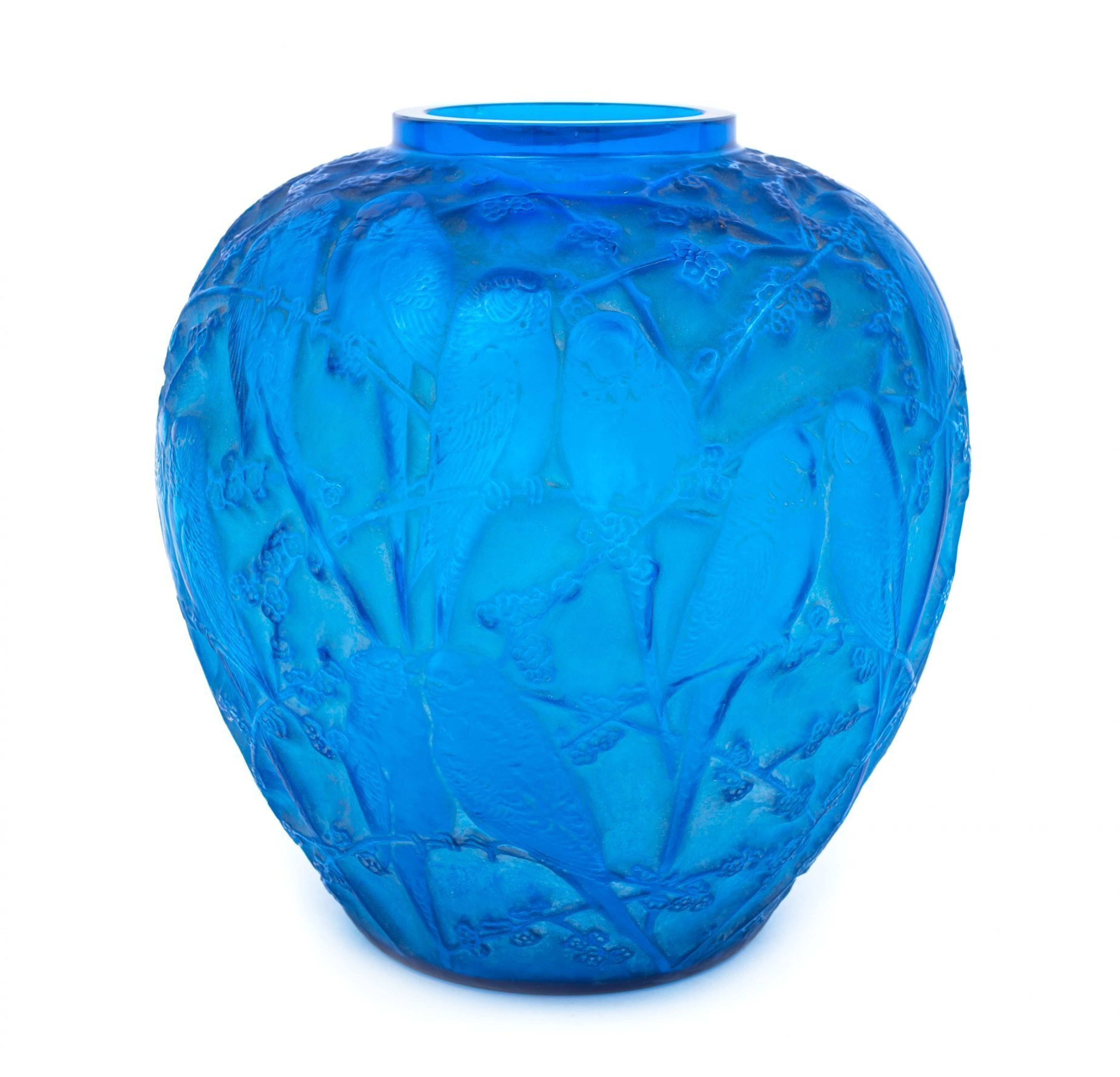
The May 7 Modern Design auction at Leslie Hindman Auctioneers includes exceptional examples of decorative art, including painted pottery by Gio Ponti and glass by René Lalique. Giovanni “Gio” Ponti (1891–1979) Born in Milan in 1891, Gio Ponti became one of Italy’s most famous modern architects, industrial designers, and furniture designers of the 20th century. Ponti began his career path by enrolling at the Faculty of Architecture at the Politecnico di Milano in 1914. Married in 1921 to Giulia Vimercati, daughter of local aristocracy, Ponti started to impress the design community, so much so that in 1923 at the Biennale in Monza Ponti was named artistic director for Manifattura Ceramica Richard Ginori. During the 1920’s Ponti revolutionized Richard Ginori’s production with ceramic pieces self-described as a “vaguely neoclassical inspiration, with Etruscan suggestions, turned toward the modern with ironic elegance.” Two years later in Paris at the Exposition Internationale des Arts Décoratifs et Industriels Modernes, Richard Ginori was awarded two grand prizes, with one for Ponti his designs. Ponti would later go on to gain international fame with the design of the Pirelli Tower in Milan in 1956, the Denver Art Museum in 1971, as well as designing furniture for American firm Singer and Sons. René Lalique (1860–1945) René Lalique is arguably France’s most important designer of glass and one of the world’s biggest innovators for the Art Deco movement. In 1885, René became an apprentice to craftsman and jeweler Louis Aucoc while also attending classes at the École des Arts Décoratifs in Paris. In 1887, Lalique set up his first business on Rue du Quatre-Septembre in Paris to showcase his jewelry techniques. It wasn’t until 1905 that he started to showcase his work in glass crafted in his workshop at his estate in Clairefontaine. Perfumer François Coty was so impressed by René’s designs in glass that he asked him to put his talent to work for the perfume industry. The 1925 International Exposition of Modern Industrial and Decorative Arts in Paris marked the climax of René’s career as a glassmaker. Additional career achievements included decorating famous fashion designer Madeleine Vionnet’s haute couture salons, designing glass doors for Prince Yasuhiko Asaka’s residence in Tokyo and creating the fountain for the Galerie des Champs Elysées in Paris. Following René’s death in 1945, his son Marc took over as head of the business, which still remains at the forefront of glass making today. The Modern Design sale will be conducted Monday, May 7 at 10am CT. Visit the auction page for more details, to view lots online and browse the digital catalogue.
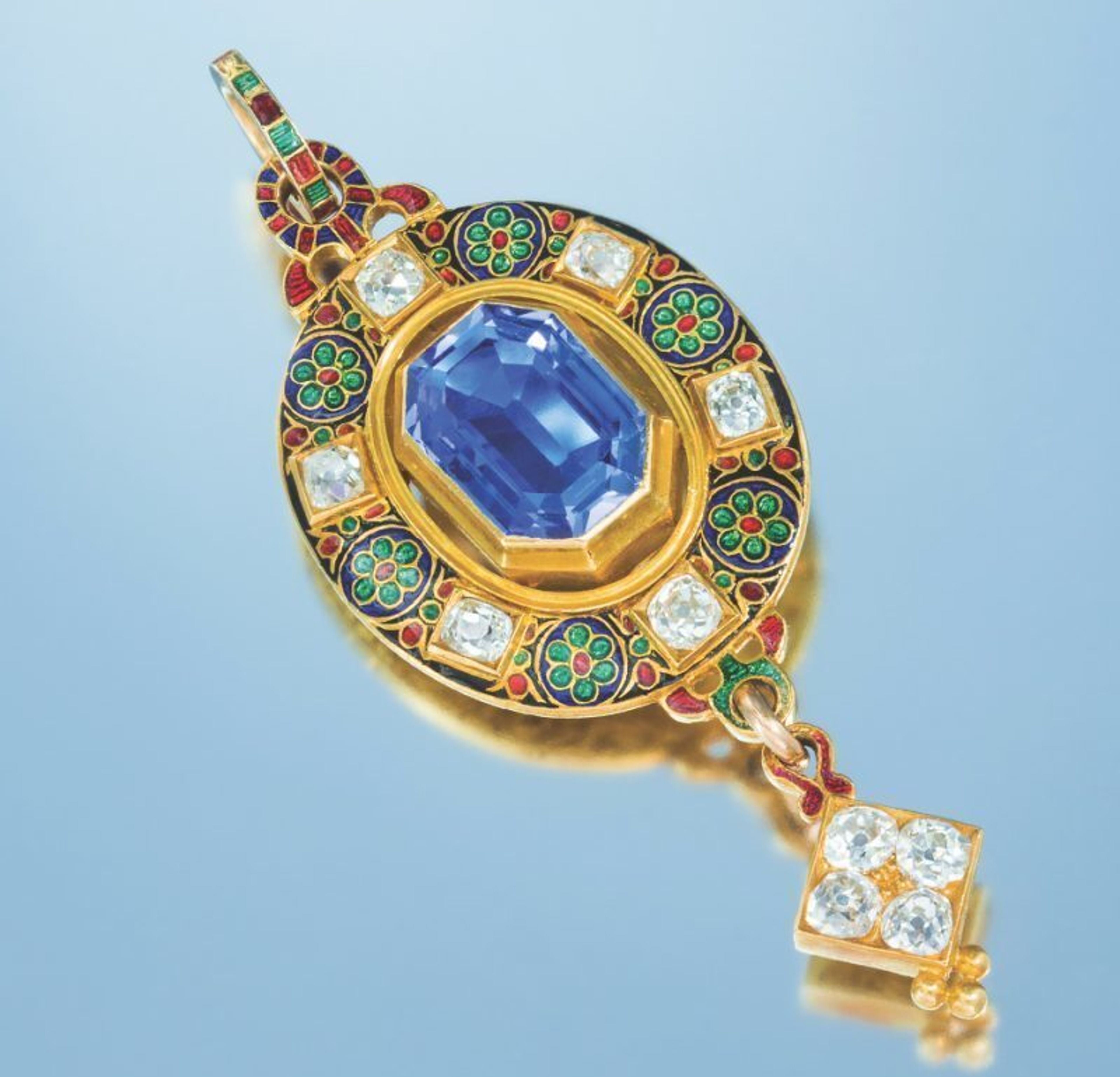
Our upcoming April 10-11 Important Jewelry auction includes a number of works, both vintage and modern, that use classical motifs including micro-mosaics, cameos and polychrome enamel. Micro-mosaics, a technique of jewelry design popular in the eighteenth and nineteenth century, involves carefully inlaying stone together to form an image. This incredibly time-consuming technique is highly sought after by collectors and connoisseurs. Lot 5: This archaeological revival Castellani yellow gold pendant brooch includes subtle micro-mosaics inlaid with black tesserae of the Greek letters, Iota, Chi, Theta, Upsilon and Sigma. While this pendant was made it 1870, it is more modern interpretation of the mosaic than the Gurhan pendant. This Castellani example of micro-mosaic carries a presale estimate of $3,000 to $5,000. Lot 362: This yellow gold and emerald pendant by Gurhan features a central floral motif micro-mosaic. This micro-mosaic is much more traditional than the almost abstract use of the technique in lot 5. This has a presale estimate of $800-$1200. Lot 40: This pendant features a central sapphire cameo, a carved raised relief often of a profile or a mythological scene. In addition to the cameo this pendant is adorned with two cushion cut sapphires, a navette shape cabochon cut ruby and stylized griffins. This carries an estimate of $1,500 to $2,500. Lot 220: This Elizabeth Locke brooch is an example of how contemporary designers are using classical motifs. This yellow gold brooch contains a central mother-of-pearl backed Venetian glass cameo of Medusa. This brooch has an estimate of $1,000 to $2,000. Lot 24: This Edward Tessier pendant is an exemplar of the Renaissance revival style, also known as “Holbeinesque,” that became popular in the late nineteenth-century. The reinterpretation of the Renaissance featured classical motifs, and large oval gemstones in the center of polychrome enamel, as shown in this pendant. It is estimated at $8,000 to $12,000. Lot 308: In addition to fine art, Roy Lichtenstein also dabbled in jewelry design. This pendant brooch is Lichtenstein’s interpretation of the classical polychrome enamel. Unlike the Holbeinesque example, this has a contemporary sensibility. This 1968 work carries an estimate of $1,000 to $2,000.
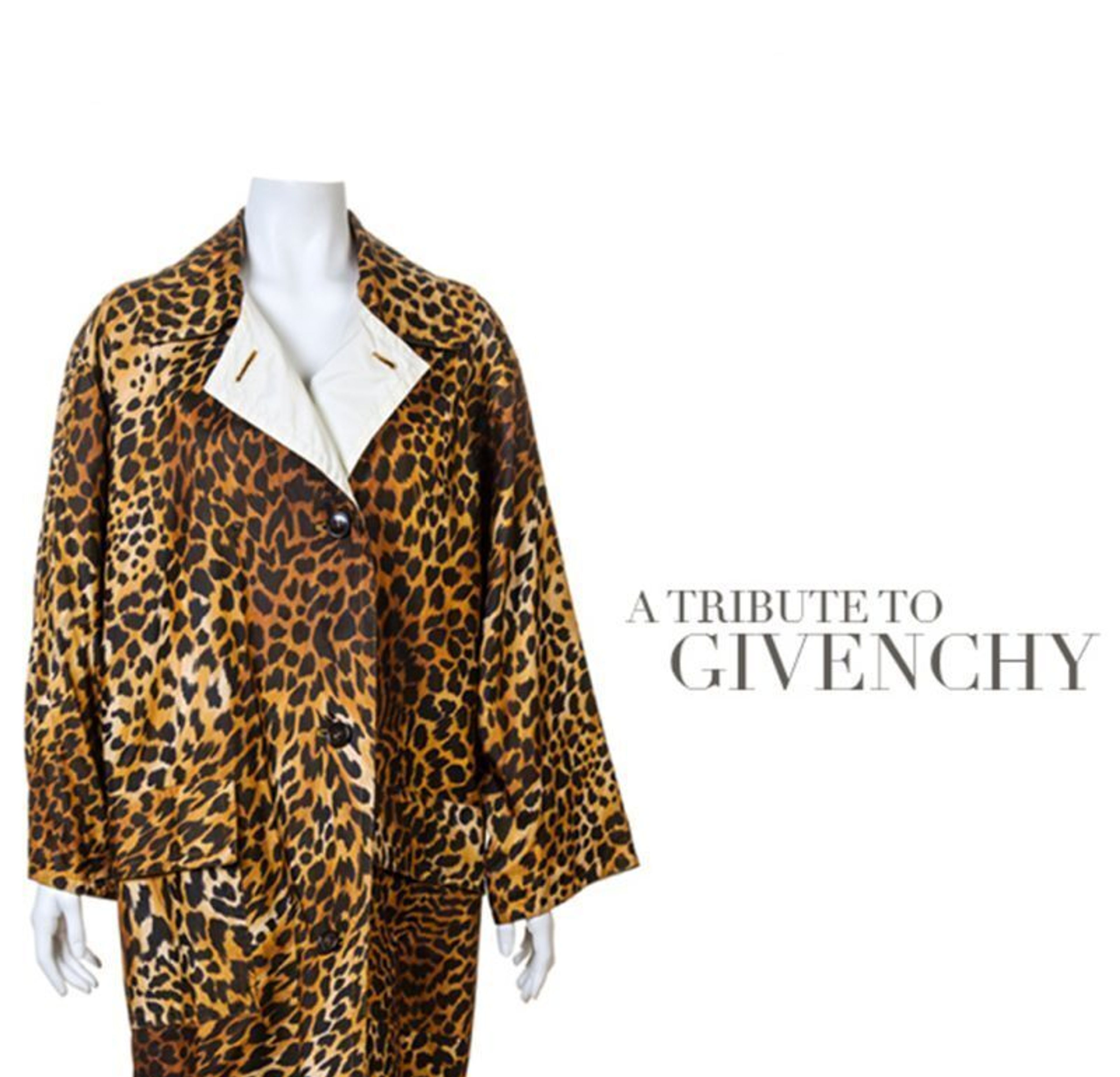
Givenchy opened his design house in 1952 after working for Elsa Schiaparelli, and his classic silhouettes and impeccable tailoring drew immediate interest from the Duchess of Windsor, Jacqueline Kennedy Onassis and Audrey Hepburn. Givenchy and Hepburn would go on to collaborate on a number of projects, the most famous being the sleek black dress she wore in “Breakfast at Tiffany’s.” Hubert de Givenchy was described by the New York Times as a, “pillar of romantic elegance in fashion.” He remained at his eponymous house until the mid 1990s. During his time at the helm, Givenchy developed a reputation as a designer of timeless elegance. We look back fondly on the Givenchy couture and ready to wear collections we’ve handled in recent years. Our upcoming Luxury Accessories and Couture auction includes a number of Givenchy items, such as a silk leopard print trench coat, a black wool a-line dress, a red halter gown and more. A first glance below.
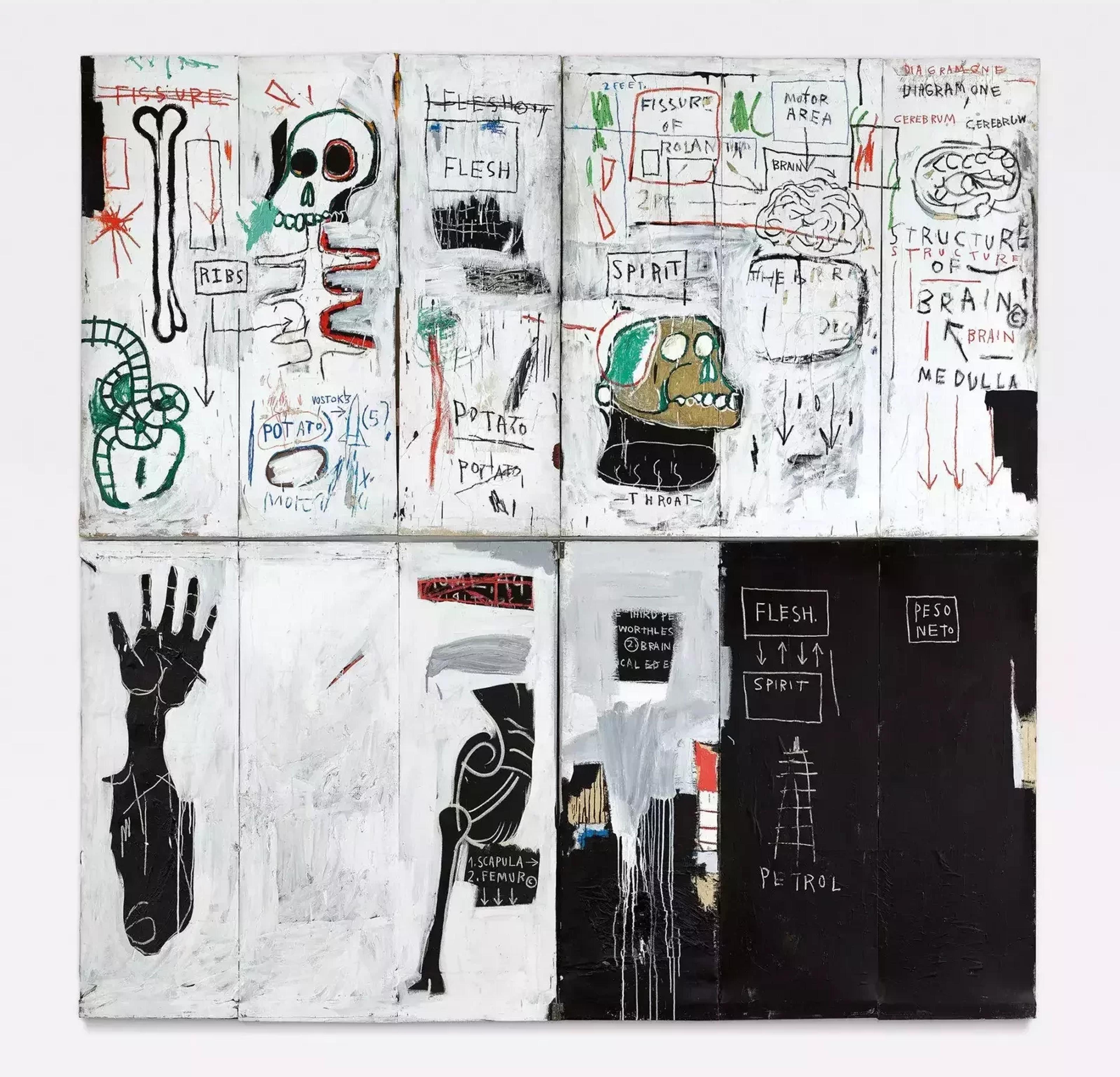
Artistic Allegations: Lawsuit Over Art Auction Price Can a beneficiary of Jean-Michel Basquiat’s Flesh and Spirit sue because the price was driven down? What happens if you think a painting sold for too little at auction? In this case, Belinda Neumann-Donnelly sued her father, Hubert Neumann, saying that he drove down the price of Jean-Michel Basquiat’s Flesh and Spirit, which sold for $30.7 million at auction in May of 2018. Neumann-Donnelly, representing her mother’s estate, claimed that the artwork could have yielded a higher price but for her father’s interference (Neumann had sued Sotheby’s auction house to block the sale). Neumann-Donnelly contended that this frightened potential buyers, which depressed the price of the artwork. In her complaint, Neumann-Donnelly called her father “the epitome of the child with rich parents who wakes up on third base and thinks he hit a triple.” Her complaint also states: “This action arises from a greedy, malevolent, fraudulent, bad-faith and (unfortunately) successful scheme to financially devastate the Estate and, indirectly, Belinda, by destroying the value of the Estate’s most valuable asset—Jean-Michel Basquiat’s masterpiece, Flesh and Spirit—in advance of a scheduled May 16, 2018 auction by Sotheby’s, Inc. of the Basquiat.” In January of 2018, Neumann-Donnelly filed another lawsuit—this one against her father and her two sisters, Melissa and Kristina—in an attempt to force them to sell all the artwork held in trust, which had a value estimated to be more than $50 million. She wanted to see the family’s entire collection liquidated, and argued that the “continued joint ownership of the family’s artwork is impossible.” She asked the New York Supreme Court in Manhattan to allow the works to be sold, and for the proceeds to be divided “in accordance with the parties’ respective ownership interests.” The Basquiat Background The story started when Neumann-Donnelly inherited the Basquiat painting at her mother Dolores’s death in 2016. When she went to sell it, her father tried to stop the sale in court, alleging that she’d applied undue pressure on her mother to sign over the rights to the work while she was receiving medical treatment. Hubert Neumann’s family compiled a world-class collection of 20th-century art. He wanted to block the sale of the 12-by-12-foot painting, arguing that the sale violated an agreement he had with Sotheby’s, which gave him the authority to approve “all matters” concerning the marketing of works from the “Family Collection.” The court rejected Neumann’s request to stop the sale, as Neumann-Donnelly showed that the Basquiat had been owned by Dolores Neumann alone. Neumann-Donnelly’s mother had been separated from her husband for the last 29 years of her life. In her lawsuit she alleges that her mother had been subject to years of repeated “emotional and physical abuse” by her father, a claim he denies. Dolores Neumann’s will explicitly expressed her wish to disinherit Hubert Neumann, her daughter’s lawsuit said. Neumann’s lawsuit was unsuccessful, but when the Basquiat sold at auction, she turned around and sued him for $100 million, claiming that his legal action against her to stop the sale deterred potential buyers, and greatly depressed the painting’s value. Most of the family’s art was given to the three sisters by their uncle, Arthur J. Neumann, in a trust administered by their father. That collection—valued at more than a billion dollars—includes works by Pablo Picasso, Alexander Calder, Vanessa Beecroft, Bruce Conner, Jean Dubuffet, Keith Haring, Jeff Koons, Joan Miró, and Claes Oldenburg. Disinheriting Someone Almost Always Means a Family Fight Neumann-Donnelly claimed that her mother had written her father out of the will and left the painting to her alone. But when artwork, or other valuable assets, are owned jointly, finding an equitable solution may be impossible. In that case, selling the assets held jointly may be the only path. Accurate valuation is therefore critical. Neumann-Donnelly argued in her January court filing that owning the artworks with her father and sisters was no longer possible, and they should be sold and the proceeds divided evenly as a result. But while selling a piece of art and dividing the proceeds is fair in the court’s eyes, it may not resolve the contentious feelings and anger when it concerns a family heirloom. Avoiding a major family dispute, like that of the Neumanns, requires open communication, along with accurate and reliable valuation, in order to formulate a clear estate plan. Freeman’s is committed to offering exceptional trusts and estates services that are uniquely tailored to each client.
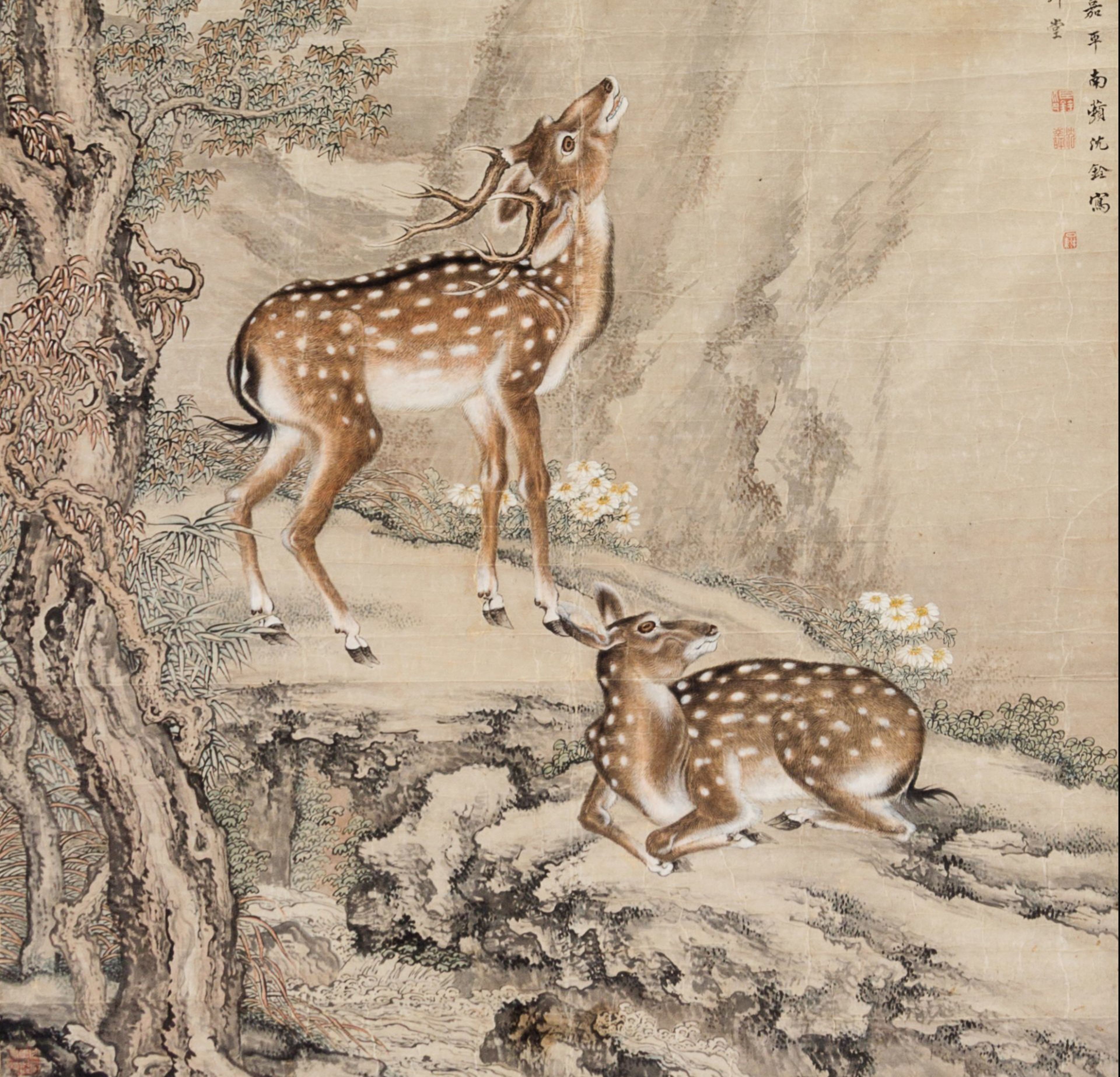
This March, Leslie Hindman Auctioneers will offer Property from the Collection of Ms. Yuan Jiaying and Mr. Li Guoyuan as part of our Asian Works of Art auction. The collection is comprised of 125 Chinese and Japanese paintings and will open the March 26 sale. Our upcoming Asian Works of Art auction features an important collection of 125 Chinese and Japanese paintings amassed by Yuan Jiaying and Li Guoyuan. Mrs. Yuan Jiaying is the granddaughter of China’s first president, Yuan Shikai, and Mr. Li Guoyuan, the son of Chinese entrepreneur Li Suran. The prolific collectors met and married in the 1940s. Highlights from their collection to be sold at auction include calligraphy scrolls by Ming Dynasty scholar Xing Tong; paintings attributed to the Qing Dynasty court painter Shen Quan; calligraphy scrolls by Wu Changshuo; and beautifully painted fan leaves by Ming and Qing Dynasty scholars. This is the first time that the complete collection of Yuan Jiaying and Li Guoyuan will be shown in public. Early on, Li Guoyuan was secretary to the Chinese general Zhang Zhizhong. Later on the couple moved to Indonesia, where Mr. Li became a minister and founded Gamaliel University. The family fled to the United States in 1964 due to riots in Indonesia. They brought with them only a fraction of their painting collection, which is presented here. The Yuan-Li collection will be offered as a session in our March Asian Works of Art Auction, opening the sale.
Leslie Hindman Auctioneers, St. Louis, is nestled in downtown Clayton, a bustling business district within close proximity to the many vibrant St. Louis art districts. Clayton is within minutes of multiple university campuses, museums, galleries and cultural institutions located in each direction. Near the campus of Saint Louis University close to downtown St. Louis, the Grand Center Arts District is home to many of the city’s historic cultural institutions, such as Grandel Theater. Visitors frequent this cultural center to enjoy Broadway performances at The Fox Theater, listen to music at Sheldon Concert Hall or Powell Hall, home to the Saint Louis Symphony, and to take in boundary-pushing exhibitions at the Contemporary Art Museum and the Pulitzer Arts Foundation. St. Louis is also home to smaller cultural hubs throughout the city, each with their own unique local flavor. Gaslight Square, just west of Grand Center, is an entertainment district built in the 1950s and known for its gaslights and ornate Victorian style architecture. Antique Row on Cherokee Street in the Benton Park neighborhood is a small, six-block stretch south of downtown featuring independently owned and operated antique, collectible and specialty shops, art galleries, restaurants and cafes. Throughout the St. Louis metropolitan area, there is a rich history of support for these art communities and institutions to thrive. Many of the area colleges and universities have fostered local talent and attracted internationally acclaimed artists. Washington University in St. Louis’ esteemed School of Fine Art has produced hundreds of noteworthy artists and architects over the years. The global headquarters for Webster University is located in the close-knit neighborhood of Webster Groves, where many noted early 20th century artists lived and where present-day art galleries, studios and locally-owned shops and restaurants abound. This neighborhood is also home to Opera Theater of St. Louis, housed on the university’s campus. Leslie Hindman Auctioneers in St. Louis holds auctions three-times annually and is available for appraisals, trusts and estates and consignments.
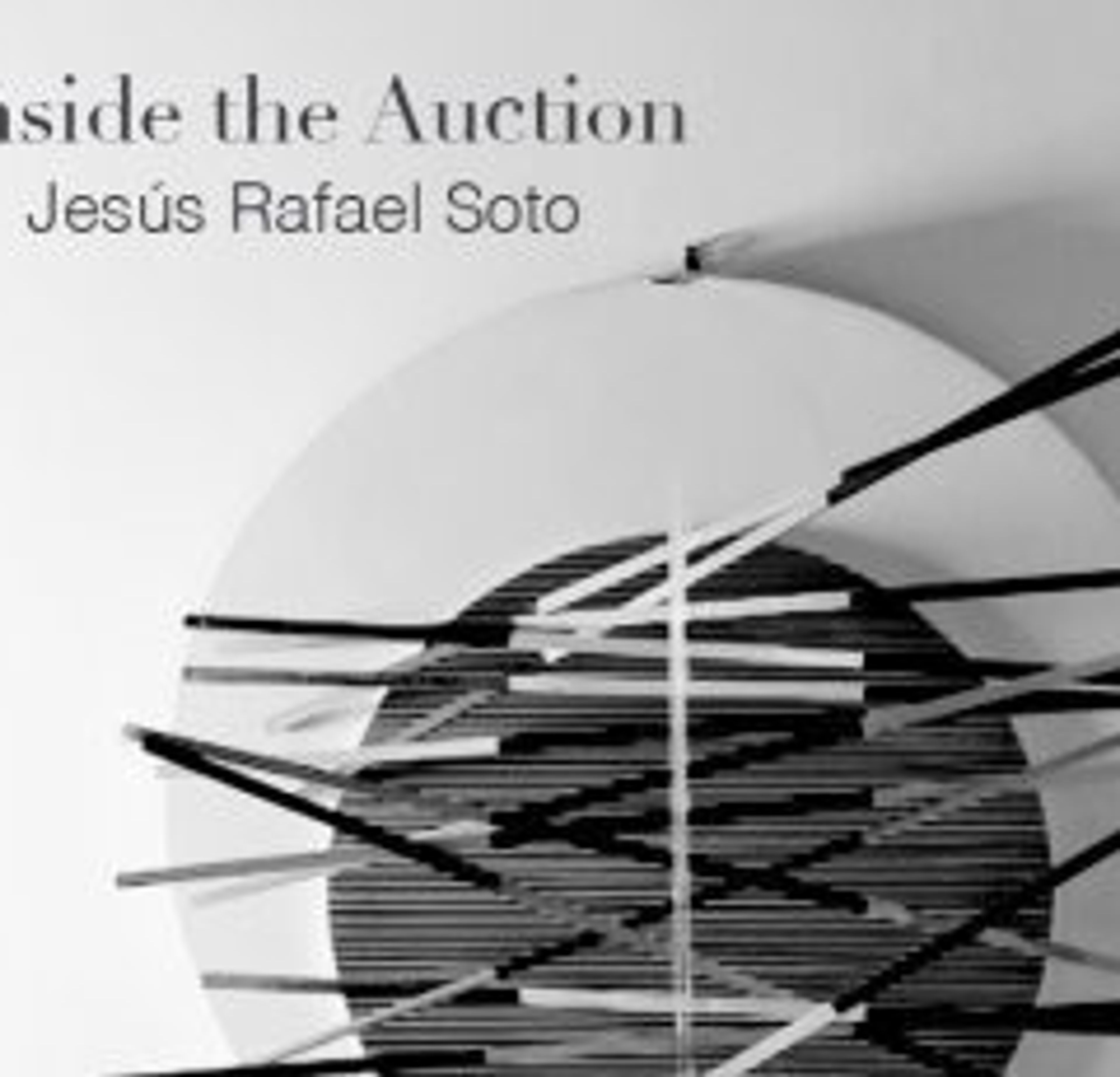
Included in Leslie Hindman Auctioneers’ December 14 Post War and Contemporary Art auction is sculpture Metal Negro y Metal by Jesús Rafael Soto. This sculpture by artist Jesús Rafael Soto will be available in our upcoming Post War and Contemporary Art auction. This is the first time the sculpture will be offered for sale since it was purchased by the current owner in 1969, the same year it was made. Venezuelan born Soto is best known for his large-scale installations that draw inspiration from the kinetic and op art movements. Soto’s work often blurs the lines between his interest in movement and also the illusion (accentuate) of movement. This sculpture is one such example of that dynamic. The carefully laid metal strips and the thin black stripes painted on the sculpture’s inner circle offer the suggestion of movement. But with the help of the nylon thread, the thin metal strips do (accentuate) actually move. Together they create a flurry of motion and sound in a work that otherwise looks quite simple.
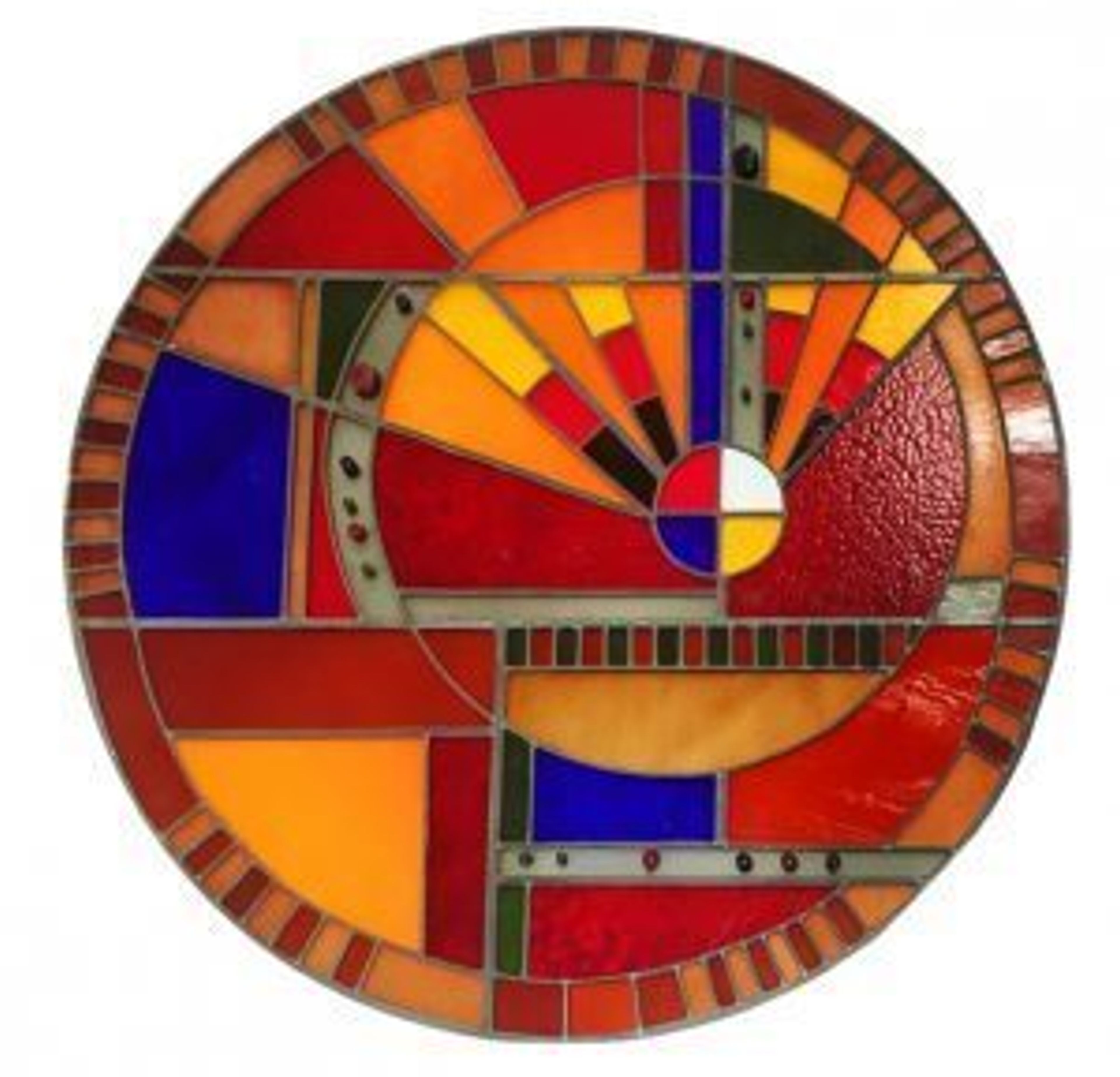
Scottsdale, Arizona is one of Leslie Hindman Auctioneers’ newer locations. Representatives work closely with our Denver office, expanding the reach of our Arts of the American West category to the Southwest, but also appraise property to be sold in Chicago in various collecting categories. The historic art district of Scottsdale, AZ, known as Old Town, is easily accessible in the center of downtown on Main Street and home to over seventy galleries. The best time to visit is Thursday evenings for the weekly Art Walk in which all galleries remain open until 9 pm. The event is not just for art-lovers; it has become a cherished community affair. Not too far from the galleries along Main Street is Scottsdale’s Museum of the West, a Smithsonian Affiliate. The institution celebrates Scottsdale’s and the region’s unique history and visual culture. In addition, the arts district of Central Phoenix is a quick trip from Scottsdale. Recently, prominent galleries including Bentley and Lisa Sette have moved to the area. Visitors can stop by the monthly first Friday’s for a unique experience. The neighborhood also boasts museums such as the Phoenix Art Museum and the Heard Museum along with the opera and ballet. Leslie Hindman Auctioneers’ can accommodate appraisal appointments and consignments through much of southeastern Arizona. Interested parties should contact Logan Browning, our representative in the area.
Included in Leslie Hindman Auctioneers’ December 3–4 Important Jewelry auction are a number of pieces by Oscar Heyman & Brothers. Learn more about these additions through the latest segment of our video series, Inside the Auction. Our upcoming Important Jewelry auction includes a number of items designed by famed jewelry house Oscar Heyman and Brothers. These examples display much of what the company is known for: exquisite craftsmanship, impeccable standards and attention to detail. Known in the industry as the ‘jeweler’s jeweler’ the house is known for creating the mystery settings for Van Cleef & Arpels along with the Taylor-Burton diamond for Cartier in addition to their own body of work. An Oscar Heyman Riviera necklace (Lot 104) speaks to the jewelry house’s superior craftsmanship and technique. The necklace features 99 impeccably matched and graduated oval diamonds set in platinum. The fine craftsmanship gives the necklace a fluidity not always found in similar designs. A platinum, diamond and ruby brooch from 1959 (Lot 150) is an example of Oscar Heyman’s very popular floral motif. Each flower has been meticulously designed. The classic form is highlighted by the carefully chosen stones, which offer the brooch symmetry and balance. An Oscar Heyman yellow gold, sapphire and diamond pearl torsade necklace (Lot 137) does not include the typical Oscar Heyman signature, an encircled HB, but a more discreet dash-dot-dash signature. Accompanying bracelet and earrings are also available in our upcoming sale.
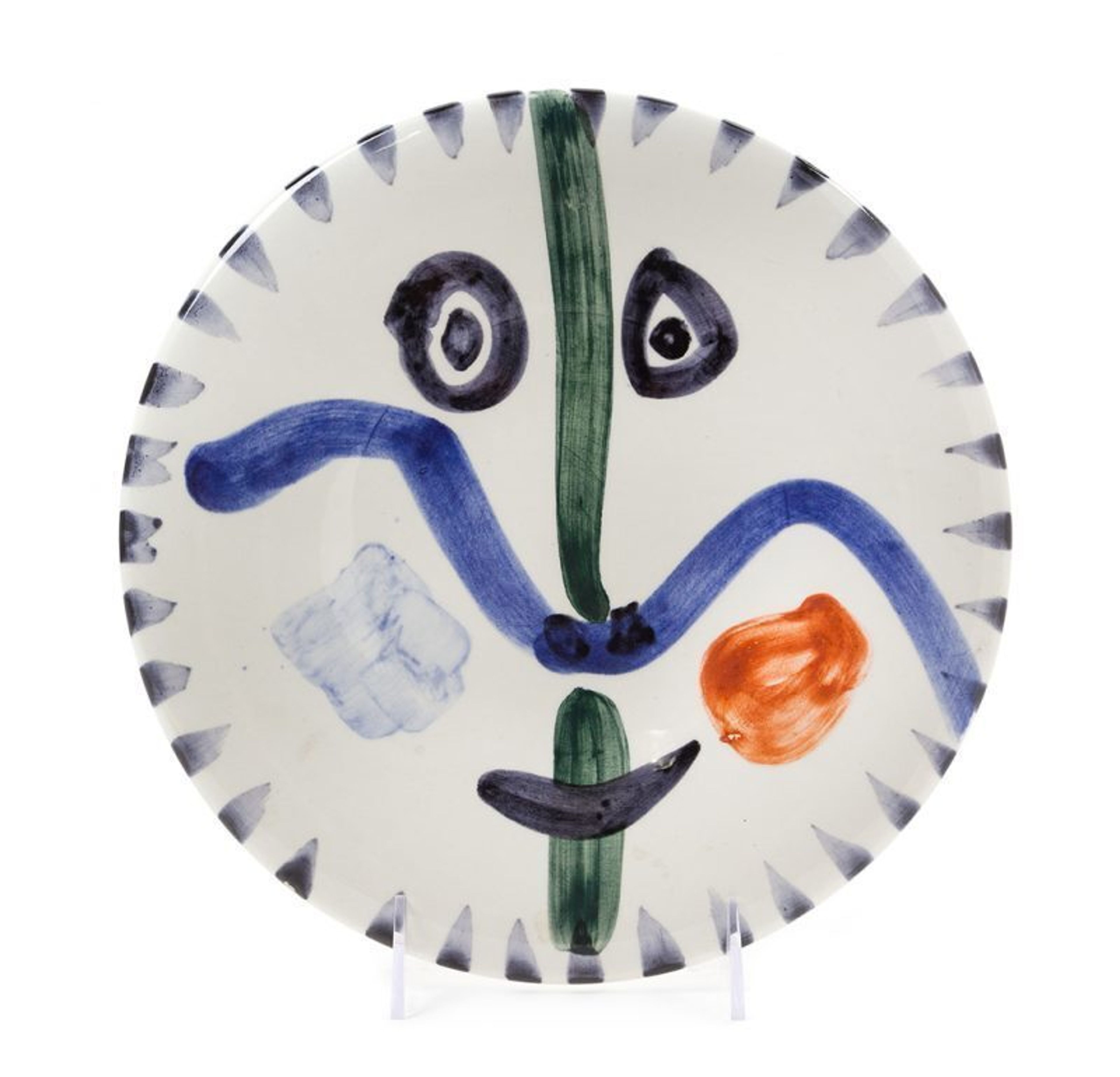
The upcoming Post War and Contemporary Art auction at Leslie Hindman Auctioneers will include a number of ceramics by Pablo Picasso including plates, pitchers and vases. Bid on these 35 lots and more on December 14. Of Picasso’s more than 3,500 ceramic designs, animal themes are recurring with motifs of goats and bulls most common. These ceramics are suggestive of Picasso’s everyday surroundings and the animals he personally kept. Our Post War and Contemporary Art sale features a number of these motifs on plates, including two profiles of goats’ heads, two bull profiles, a picador in action and a pair of lounging bulls. Another common, recognizable theme across Picasso ceramics is the use of the human face and figure as motif. These designs are often colorful and playful, rendered in a disjointed nature that was also translated across mediums in well-known paintings and prints. Picasso often used the ceramic vase to creatively display faces in duality (Lots 26 and 34 above) or in conversation (Lot 27 below) and the plate as head or body, to which he added features (Lots 16 and 44 below). Overlapping with the time period in which he created ceramics, Picasso also met and married his second wife, Jacqueline Roque. She served as his muse in the creation of many works including the glazed ceramics below that bear her profile (Lots 39 and 40). Further additions to the sale include a recognizable Wood Owl (Lot 50) and two partially glazed pitchers featuring “Little Beasts” (Lot 49) and a Picador (Lot 20). Our December 14 Fine Prints sale also includes a number of works by Picasso. View highlights below and browse the full catalogue online.

Included in our December 4 Fine Timepieces auction are a number of timepieces that elevate their traditional styles. From the extreme to the luxurious, below are some of the most recognized of our December collection. LOT 4 – This ‘Santos 100’ wristwatch by Cartier is modern and industrious. The square bezel is of matte rose gold and affixed by carbon steel screws. Combined with its black calfskin lined kevlar strap, this timepiece is rugged while retaining classic elements. LOT 48 – An undeniable staple is the two-tone Rolex. This stainless steel and yellow gold Datejust wristwatch is the image that many conjure when Rolex comes to mind. This example features a date aperture with gold Roman numerals on a champagne dial. LOT 60 – Offering a more sporty feel is this contemporary titanium dual digital-analog ‘Emergency II’ wristwatch by Breitling. The orange dial features digital apertures at its top and bottom for 12/24-hour analog and LCD displays. With the adventurer in mind, the turning bezel has an engraved compass scale and is equipped with other modern tech such as a (PLB) personal locator beacon, making it the world’s first watch to also act as a distress beacon. LOT 61 – Another sporty Breitling (but this time with the racer in mind) is the Bentley B06 S. Manufactured for the famed carmaker, this watch serves the need for speed with its variable tachymeter to calculate average speed over time, distance covered and maximum speed reached. The transparent case-back is crafted in the shape of a wheel rim. LOT 62 – This limited edition (one of only 25 made) Transocean Chronograph QP wristwatch by Breitling gives a nautical feel to a highly complicated piece of machinery containing over 450 parts. The clear measure of time from day to month, moonphase and season, even including leap year, showcases complex yet useful complications for everyday. This example features a blue alligator strap and dial in luxurious contrast to its rose gold elements. LOT 73– Also highlighting the clear and refined measure of time is this all-time classic Ref. 3940 perpetual calendar moonphase wristwatch by Patek Philippe. As one of the first manufacturers of a perpetual calendar wristwatch in the 1920’s, the 18 karat yellow gold finishes complete with a brown crocodile strap make it an elegant yet wearable example of one of horology’s true grand complications.

The December 14 Post War and Contemporary Art auction at Leslie Hindman Auctioneers has a particularly international focus. Continue reading to explore the sale’s top two lots by Liu Kuo-sung and Rufino Tamayo. Liu Kuo-sung is frequently heralded as both a groundbreaker and consequently one of the most significant modern Chinese painters, leading to him being acknowledged as the father of Modernist Chinese ink painting. Originally trained in the centuries old custom of ink painting, Kuo-sung briefly experimented with abstract oil painting in the early 60s, before returning to the traditional medium with a revolutionary approach. Recognizing the limited advancements made over the course of hundreds of years of ink and brush, Kuo-sung sought to innovate radically the approach and bring ink painting to the 20th century and beyond by rejecting convention, adopting new techniques of his own invention and utilizing paper of his own design. The Universe is in My Heart, 2003, from the artist’s Space Series, employs both his personally developed Shuitou or water rubbing technique and Zimo or ink steeping technique and demonstrates the artist’s virtuosity in composition, craftsmanship and expansive scale. Depicting a cycle of seven red moon phases arcing against an atmospherically abstracted planetary surface the work imbues tranquility as science, spirituality and invention harmonize. A teacher as well as a maker, Kuo-sung demonstrates with this spacescape, vast in scope and concept, the infinite possibilities of ink painting when approached with inspired vision. Rufino Tamayo Long revered for his signature stylized abstraction of the human form, Rufino Tamayo’s Tres Figuras, 1969, confirms this acclaim masterfully. Compositionally this work combines Tamayo’s Modernist leaning painting approach with notions of ancestral archetypal themes. The painting depicts three elongated figures, simultaneously futuristic and ancient, floating on an atmospheric brick red ground and softly surrounded by a pinkish lavender halo of hues; perhaps as a nod to Colorfield painting and certainly intended to provide a sense of mystery. The subjects stand full frontal, directly engaging the viewers gaze creating an imperative for conversation between character and audience on topics of humanity and how human, human can be. As well, in typical Tamayo fashion, the central placement of the figures ultimately transcends a visual hierarchy requiring the work to be read as a whole through balance and symmetry. Painted at the height of both the space race and the cold war, the exaggerated structure of the trio reference period science fiction and reality harkening to imagery of robots, astronauts, rocket ships or missiles. Contrasting these fantastical features with materials and process, Tamayo’s heavy paint application, use of sand for texture, limited palate and at times muted earth tones speak to something more primitive, reminiscent in technique of sophisticated cave painting. Considering the predominance of Catholicism in Tamayo’s native Mexico, the religious symbolism of the three cannot be escaped as parallels to the Holy Trinity, or the Three Kings of the Nativity are inherently evoked. Tamayo always one to operate in dualities, as evidenced by his idea that constraining the color choices in a given painting actually expanded the potential for complex organization within said work. In this instance, perceived conceptual opposition between the advanced imagined and the terrestrially historic actually synthesize in Tres Figuras making this work executed in 1969 perpetually in the now.