New & Noteworthy
Stay up to date with news, highlights, & features from across Freeman's.
Stay up to date with news, highlights, & features from across Freeman's.
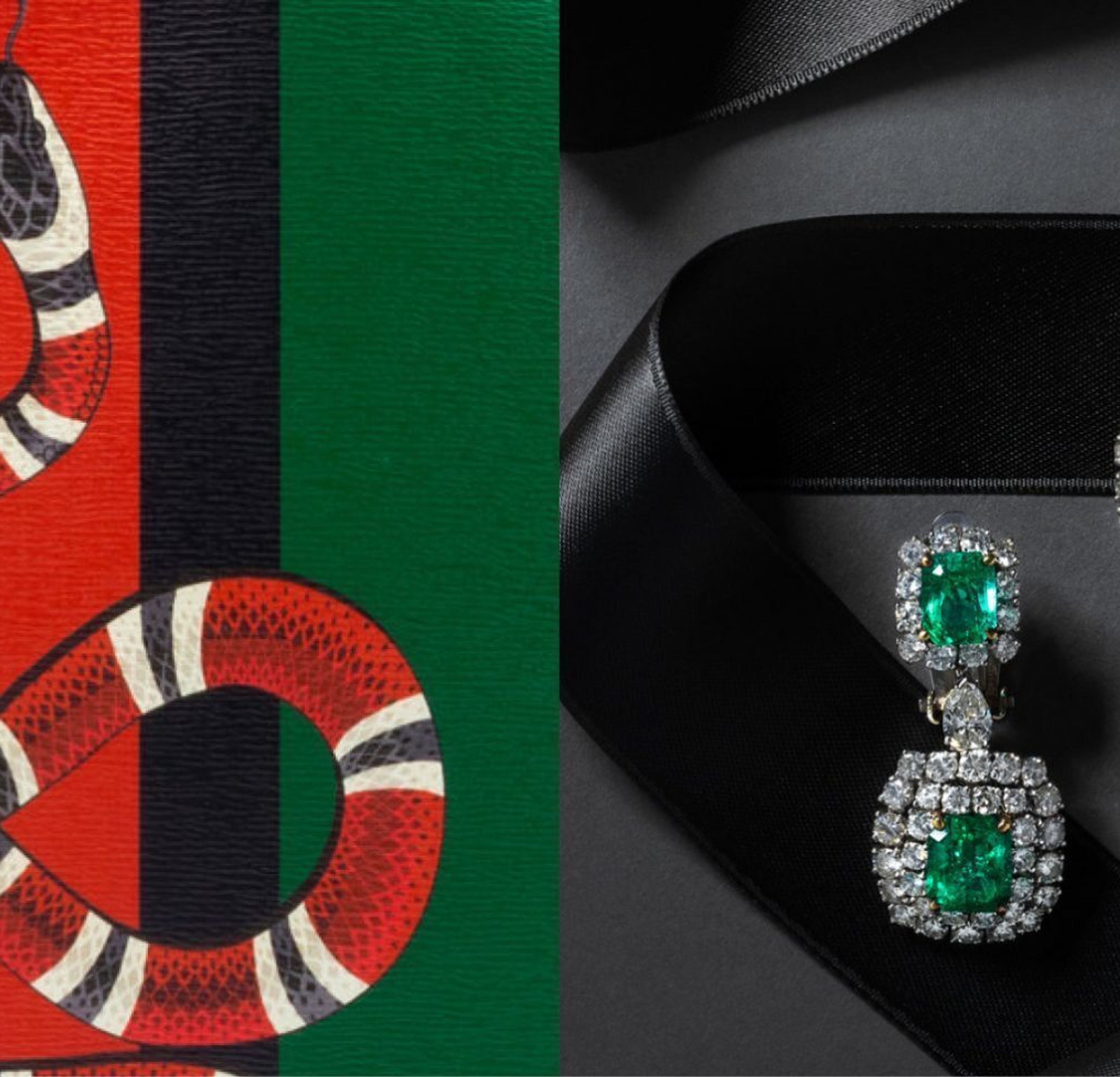
Please join us for a virtual preview of our upcoming December auctions: Luxe Holiday: A Collectors’ Collection Fine & Important Jewelry Join Senior Specialists Timothy Long, Couture & Luxury Accessories, Sally Klarr, Jewelry & Timepieces, and Katie Guilbault, Jewelry & Timepieces as they discuss the current market for luxury goods and preview highlights from the upcoming December auctions. Friday, December 4 12pm – 1pm | Zoom Please RSVP to Arrington Caison arringtoncaison@hindmanauctions.com | 312.447.3282 A Zoom link will be sent to you upon registration
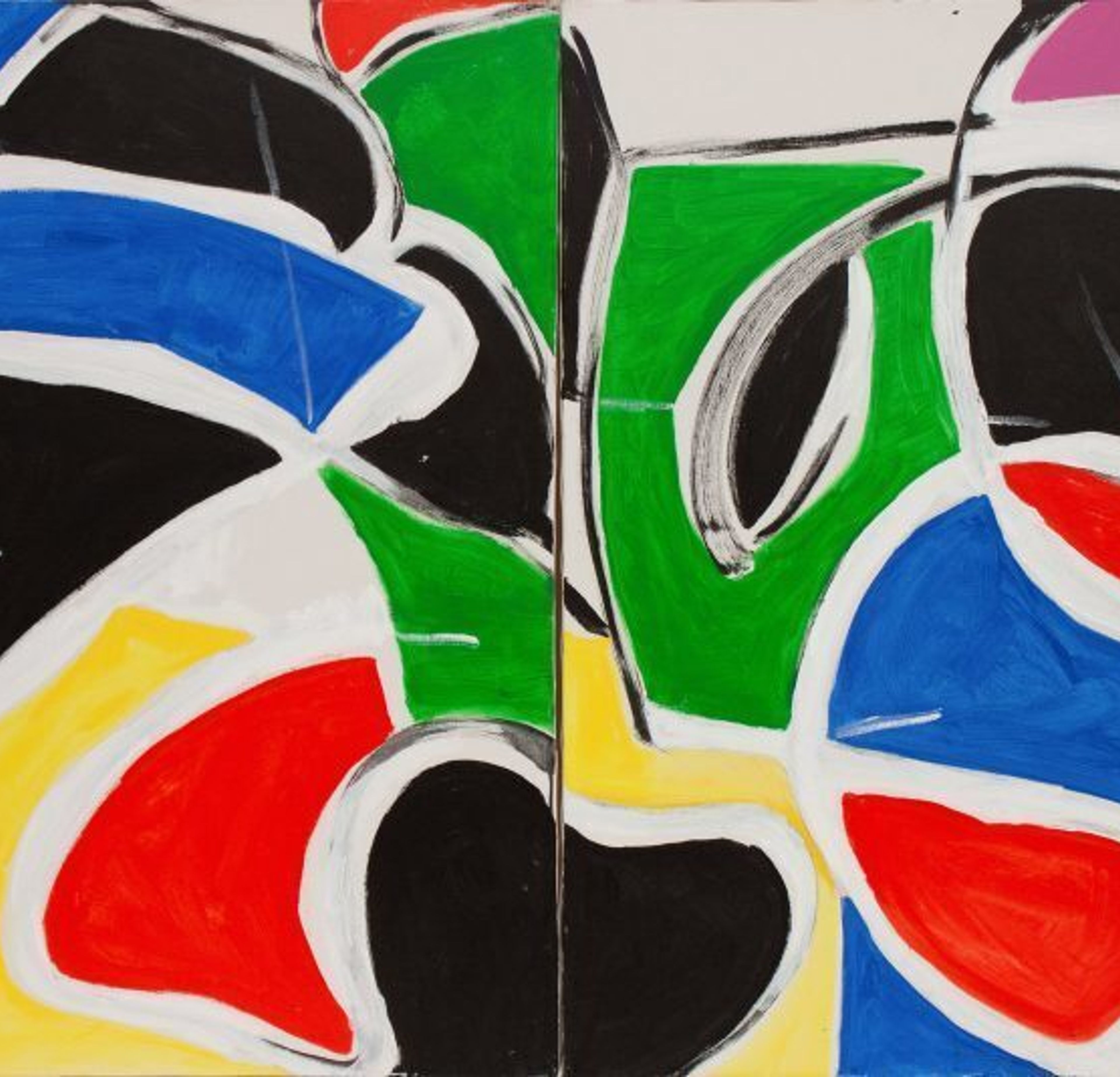
If Beatrice Mandelman (1912-1998) had remained in New York City, she would long since have joined the art historical canon alongside Lee Krasner, Helen Frankenthaler, Joan Mitchell and other famous female New York School painters, not to mention their male contemporaries. This would likely also be true for Bea’s husband, fellow artist Louis Ribak (1902-1979.) Mandelman was born across the Hudson in New Jersey, and was an active participant in the city’s bubbling modernist ferment. She studied in Paris with Fernand Léger, hung out with Willem de Kooning and Arshile Gorky, and she even vacationed with Jackson Pollock. But in 1944, just as the New York scene was emerging into international consciousness, making household names of many of their friends and essentially giving birth to the artworld as we now know it, Mandelman and Ribak decamped to New Mexico, where they became seminal members of the intense, vibrant milieu known as the Taos art colony. Lot 178 Beatrice Mandelman (American, 1912-1998) Jazz II- Spring (1725) , acrylic on canvas Rough, ready, and remote, Taos had been discovered a few decades earlier by a handful of artists from Chicago, New York, and Europe who utilized their classical academic training to heroically depict “cowboys and Indians” for a national, populist audience. The Taos Society painters didn’t necessarily let cultural or historical accuracy stand in the way of a good picture, and few of them had much sympathy for the modernist revolution that had already utterly transformed art in Berlin, Vienna, and Paris. But they nevertheless paved the way for subsequent waves of artists who not only employed the new modern aesthetics, but also included women – like Georgia O’Keeffe, and later, Bea Mandelman. By 1947, she and Ribak founded the influential Taos Valley Art School, which not only became a hub for the modern art community there, but drew avant-garde artists from both coasts. When the school was forced to close after funding dried up in 1953, the couple briefly moved back to New York, and while they continued to travel extensively throughout their lives, Mandelman mostly lived in and took inspiration from the majestic, high-altitude light and space of her adopted Taos homeland, working there steadily and exuberantly until her death from cancer in 1998. Like fellow émigrés O’Keeffe and her good friend Agnes Martin, Bea realized herself in this region, becoming a quintessentially New Mexican artist. It’s high time that more people outside of that state were familiar with her work. Lot 177 Beatrice Mandelman (American, 1912-1998) 50-Col-2-20/Sunshine, gouache and collage on paper Her impressive artistic development and prolific output tracks the trajectory of many of her contemporaries. Fundamental classical training evolved by incorporating the roiling stylistic and technical innovations that poured forth first from Europe, then took flight stateside. In earlier examples, you can see her pictures go from Ashcan School to Social Realist to Expressionist to Post-Cubist, then settle steadily into the so-called Abstract Expressionism that most aptly encompasses her mature style. However, even then strains of Color Field Painting, New Mexican Transcendentalism, Minimalism, Hard Edge, Op and even Pop Art can be discerned. She clearly kept tabs on what was going on around her, while defiantly going her own way. Thankfully, Bea had little use for conceptual Post-Modernism, and her mature work is distinguished by a confident ebullience and bold, musical lyricism that are all her own. Mandelman remained a dedicated high modernist, holding fast to rigorous non-objective formalism, ambitiously exploring its endless possibilities for decades. While any artwork necessitates facility or at least an awareness of both, painters can often be loosely classified as colorists (emphasizing hue and chroma, á la Mark Rothko) or structuralists (composition the primary concern, like Franz Kline.) Lot 179 Beatrice Mandelman (American, 1912-1998) Sun Series B-21, acrylic on canvas Bea is harder to pigeonhole. Her concerns appear to drift steadily back and forth between these polar emphases, and her hundreds of documented paintings, prints, and collages reveal a restless freedom to pursue whatever impulse drifted through her studio window, down from the perpetually breathtaking Sangre de Christo peaks that loom over Taos. Yet the work, often produced in tight series, still always demonstrates a quality of focused investigation. She paid for this kind of liberty by remaining lesser known and physically isolated from major urban art centers, taking advantage of the literal and metaphoric distances to elude certain inevitable pressures to conform to expectations – of peers, or the market. Mandelman was a modern artist to the bone, independent and committed to art for its own sake.
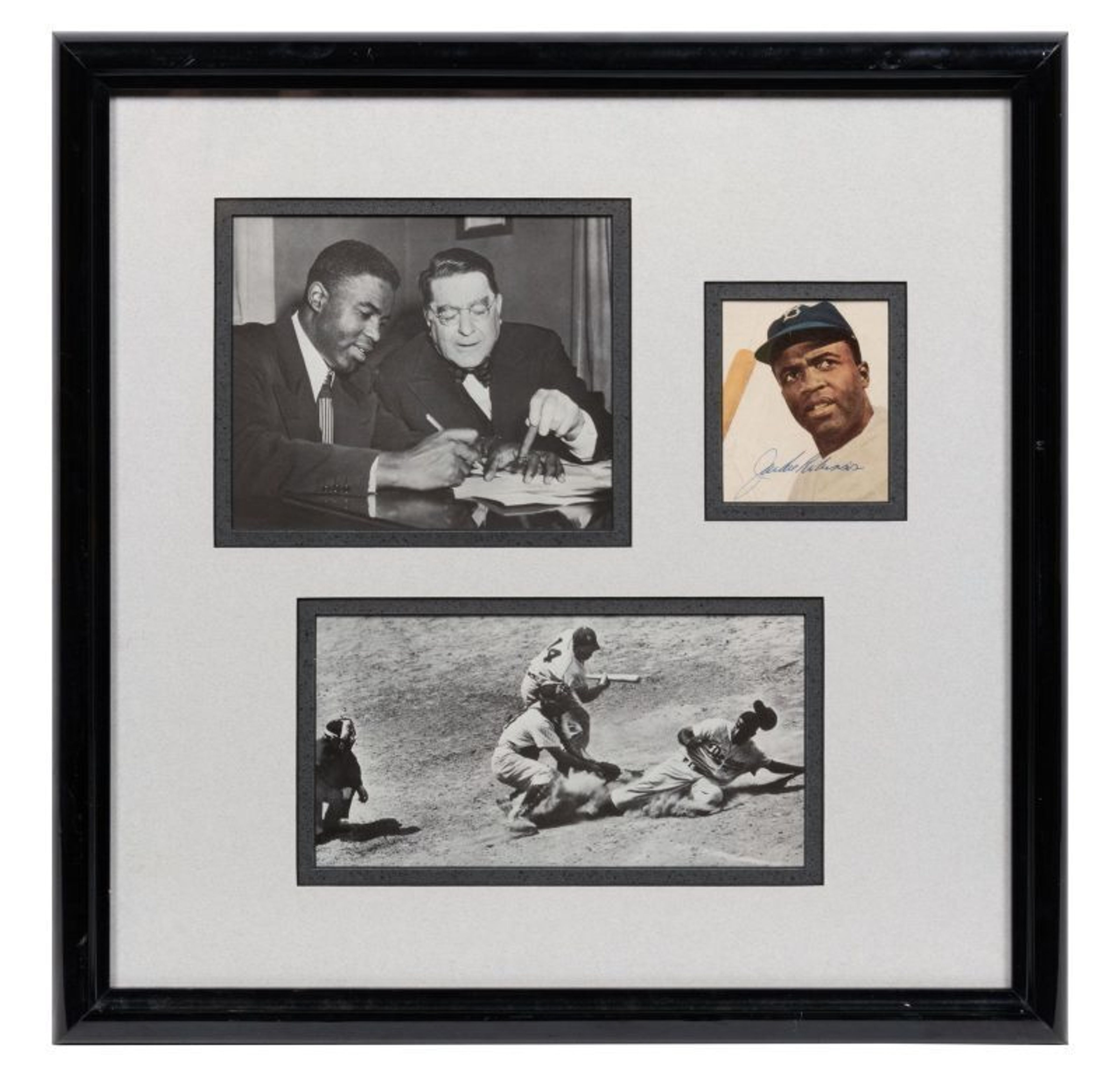
They were two trailblazers who broke barriers, while also changing the hearts and minds of America: Jackie Robinson and Muhammad Ali. Robinson broke baseball’s color line on April 15, 1947 – making his Major League debut with the Brooklyn Dodgers. Robinson’s contract with the Dodgers marked the end of professional baseball’s racial segregation that kept Black players isolated in the Negro Leagues since the 1880s. He was inducted into the Baseball Hall of Fame in 1962. Robinson also transformed American life outside of baseball. He influenced the civil rights movement with his character and philosophy of nonviolence, and also became a leader in business. Robinson was the first Black television analyst in MLB, the first Black vice president of a major American corporation, and he helped establish the African-American-owned Freedom National Bank in Harlem, New York. After his death in 1972, Robinson was posthumously awarded the Congressional Gold Medal and Presidential Medal of Freedom in recognition of his achievements. Born Cassius Marcellus Clay, Jr., Ali won a gold medal at 18 in the 1960 Rome Summer Olympics. Four years later, and against all odds, Ali captured the world heavyweight championship from Sonny Liston in what is still considered one of boxing’s greatest upsets. But 1966 was the year that changed his life, career – and our national history – forever, when he refused to be inducted into the military for the Vietnam War on religious and social grounds. At the peak of his career, he was convicted of draft evasion, faced five years in prison and was stripped of his boxing titles. He appealed the decision to the Supreme Court, which overturned his conviction in 1971. Until his death in 2016, Ali championed humanitarian causes across the globe and, like Robinson, earned the Presidential Medal of Freedom in 2005. Hindman is proud to offer two pieces that capture the spirit of these Civil Rights pioneers: A 2001 portrait of Muhammad Ali, “Athlete of the Century,” by LeRoy Neiman and a Jackie Robinson signed display. The Neiman is a limited-edition Artist’s Proof Serigraph that includes Remarques and Autographs of Both, is signed by Ali and Neiman and numbered AP 34/150. The Robinson display features a framed collage featuring a color photo inscribed (“Jackie Robinson”) in blue ink and comes with a Full Beckett Authentication Services Letter of Authenticity. These lots will be offered in the October 20, 2020 Sports Memorabilia Auction Lot 32 A 2001 Muhammad Ali “Athlete of the Century” LeRoy Neiman Artist’s Proof Serigraph with Remarques and Autographs of Both, limited edition, signed by Ali and Neiman and numbered AP 34/150. Property from the Collection of Larry Kieft, Elmhurst, Illinois $2,000 – $4,000 Lot 82 A Jackie Robinson Signed Display (Beckett LOA), framed collage featuring color photo inscribed (“Jackie Robinson”) in blue ink. Full Beckett Letter of Authenticity. 2 1/2 x 3 inches. $800 – $1,000
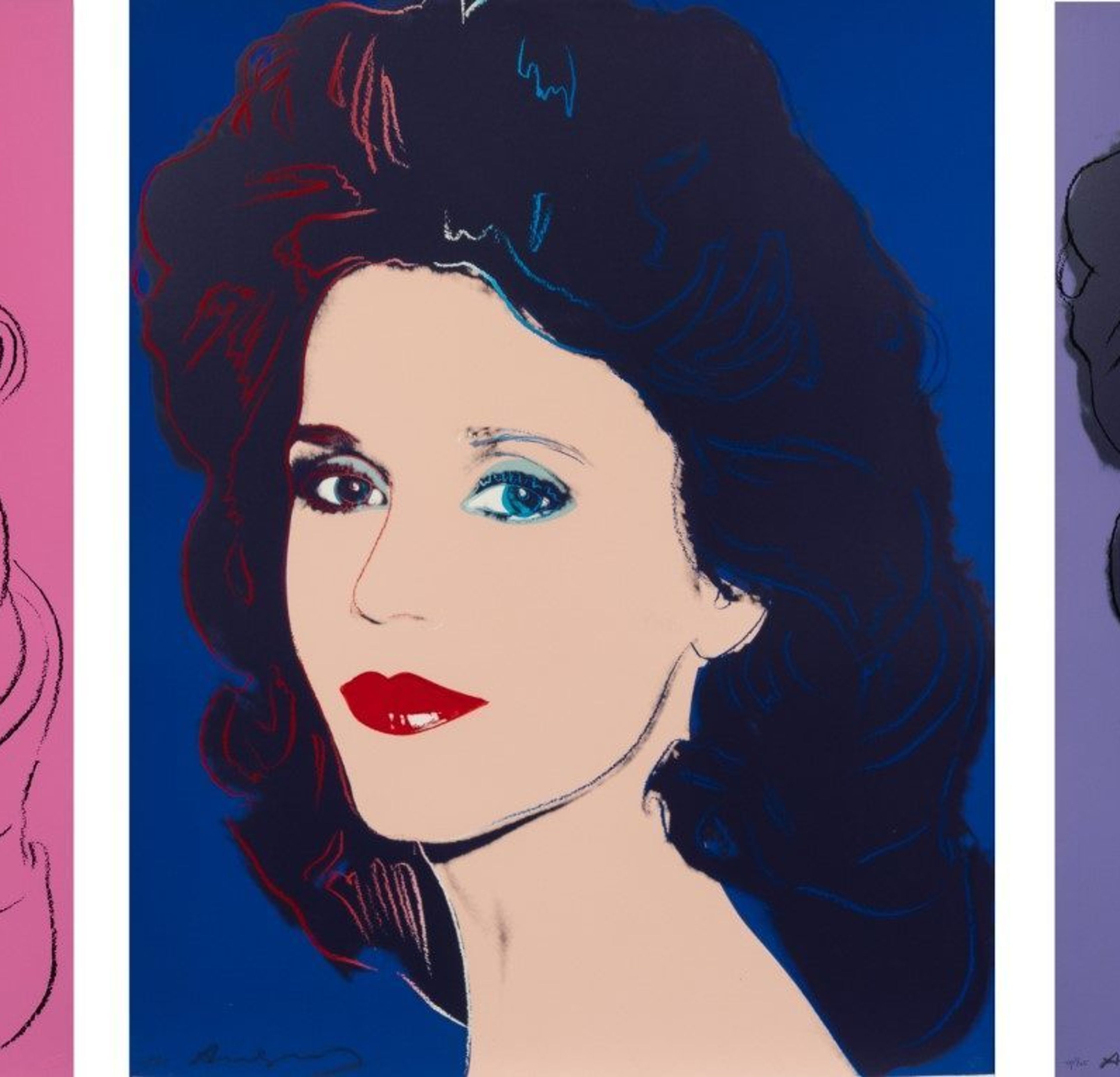
I’ve never met a person I couldn’t call a beauty. -Andy Warhol Fame, celebrity, politics, and repetition — themes synonymous with the artwork of Andy Warhol. Nowhere can this be seen more clearly than in his celebrity portraits. The artist began painting commissioned portraits in the early 1960’s and continued throughout his career creating a steady and constant stream of income which helped fuel his varied artistic endeavors. His portrait commissions would begin by taking polaroid photographs of the sitter which were then enlarged and silkscreened onto canvas or museum board. Jane Fonda’s portrait, presented here, was published to raise funds for her then husband Tom Hayden’s political campaign. He was creating an edition of 100, so Warhol knew that he needed to create an editioned image, however before choosing what exact color combination to use in the edition, he experimented with different colors, added drawn lines, or inserted color blocks. These unique experimental combinations he called Trial Proofs which he numbered and released in conjunction with the regular edition. The Trial Proof is an important concept in Warhol’s output as it firmly establishes the fact that later in Warhol’s career, he did not consider print making a machine-like process of reproducing images, but rather a dynamic means to creation. ‘Warhol was able to subvert the concept of the print as an identical unit. He used prints as other artists might use drawing – as a way to visualize ideas – and printmaking became a mechanical extension of his hand.’ (Donna de Salvo, God is in the Details: The Prints of Andy Warhol, in Feldman & Schellmann, 2003 pg. 19) The present lot consists of three of the 25 unique trial proofs that Warhol released for this image. Arranged as a triptych with connecting frames, this combination embodies the spirit of the most recognizable themes of Warhol’s career: fame, celebrity, politics, and repetition. This gridded style of portraiture is signature Warhol and imbues the sitter with his unmistakable commentary on fame itself. Andy Warhol (American, 1928-1987) Jane Fonda, 1982 three unique screenprints on Lenox Museum Board signed and numbered TP 10/25, TP 1/25 and TP 14/25 in pencil, respectively 39 3/4 x 31 3/4 inches (each). Provenance: Dorothy Blau Gallery, Inc., Bay Harbour Islands, Florida Literature:Feldman & Schellmann IIB.268 Provenance: Dorothy Blau Gallery, Inc., Bay Harbour Islands, Florida Literature:Feldman & Schellmann IIB.268

At the height of World War II transcendent folk troubadour Woody Guthrie emblazoned his trusty guitar with the heroic battle cry “This Machine Kills Fascists”, an explosive statement of the strength of the voice against violent oppression. This artful verbal salvo against authoritarianism, a most urgent update of Edward Bulwer-Lytton’s 19th century dichotomous dictum, comparing the efficacy of advocacy implements, composed communication more powerful still than steel when words sung load and not just penned. Channeling the timeless relevance of her predecessors in protest in her Truisms series, Jenny Holzer (American, b. 1950) automatizes this enduring proclamation, an extended magazine of explosive verse, rapidly reporting truth to treacherous power. Holzer first started playing with the words of Truisms while an independent philosophy and literature student in the radical late 70s New York City of CBGBs and Bronx park jams. Holzer shrewdly subverted contemporary cliché language creating a compilation of her own provocative maxims, resting in the Venn Diagram overlap of news flash, social commentary, self-help affirmation, one-liner punchline and manifesto thesis, skewering the constructs of over consumption culture. The concept was initially realized consciously as commercial printed alphabetized, type set arrangements of Holzer’s concocted adages, publicly peppering the pages through the city as confrontational broadsheets for widespread absorption. Unlike many of her text based artistic contemporaries who juxtaposed imagery with words, Holzer embraced pure symbology seeing the phrases themselves as composition enough. The delivery system was the variable, the content, the constant, to expand the bandwidth of the message reception ranging from the intimacy of a cookie’s fortune revealed to a global ad campaign’s call to action. Arguably Truisms conceptionally culminated with the 1982 installation of an electronic billboard version of the slogans set in Time Square, the glowing signifier of mass media commerce, stocker ticker scrolling a disruptive digital display of ideas as a currency of influence to the apex of audience. Untitled (from Truisms Series), 1985, is something of the play at home version of the stadium scale game show grandeur of the epic Time Square take over. A plastic housed LED console with yellow lit diodes, measuring 5 1/2 x 30 1/2 x 4 inches, transmitting 947 word segment of the original anthology of algorisms. Sequenced in a 20 odd minute loop with strategically static digestible pauses, reading individually as prescient alerts, collectively as a challenging poetic sermon, championing individuality and constructive change. By utilizing an established format for the mass presentation of information saturation to examine the medium of media, the poppy field is not the subjugator’s dreamy trap, but the following vivid anti-establishment stare behind the wizard’s curtain: CHANGE IS VALUABLE BECAUSE IT LETS THE OPRESSED BE TYRANTS CHASING THE NEW CHASING THE NEW CHASING THE NEW IS DANGEROUS TO SOCIETY CHILDREN ARE THE CRUELEST OF ALL CHILDREN ARE THE HOPE OF THE FUTURE CLASS ACTION IS A NICE IDEA WITH NO SUBSTANCE CLASS STRUCTURE IS AS ARTIFICAL AS P-L-A-S-T-I-C CONFUSING YOURSELF IS A WAY TO STAY HONEST CRIME AGAINST PROPERTY IS RELATIVELY UNIMPORTANT DECADENCE CAN BE AN END IN ITSELF DECCENCY IS A RELATIVE THING DEPENDENCE-CAN-BE-A-MEAL-TICKET DESCRIPTION IS MORE VALUABLE THAN METAPHOR DEVIANTS ARE SACRIFICED TO INCREASE GROUP SOLIDARITY DISGUST IS THE APPROPRIATE RESPONSE TO MOST SITUATIONS DISORGANIZATION IS A KIND OF ANTHESIA DON’T PLACE TOO MUCH TRUST IN EXPERTS DON’T RUN PEOPLES LIVES FOR THEM DRAMA OFTEN OBSCURES THE REAL ISSUES DREAMING WHILE AWAKE IS A FRIGHTENING CONTRADICTION DYING AND COMING BACK GIVES CONSIDERABLE PERSPECTIVE DYING SHOULD BE AS EASY AS FALLING OFF A LOG EATING TOO MUCH IS CRIMINAL ELABORATION IS A FORM OF POLLUTION EMOTIONAL RESPONSES ARE AS VALUABLE AS INTELLECTUAL RESPONSES ENJOY YOURSELF BECAUSE YOU CAN’T CHANGE ANYTHING ANYWAY ENSURE THAT YOUR LIFE STAYS IN FLUX EVEN YOUR FAMILY CAN BETRAY YOU EVERY ACHIEVEMENT REQUIRES A SACRIFICE EVERYONE’S WORK IS EQUALLY IMPORTANT EVERYTHING THAT’S INTERESTING IS NEW EXCEPTIONAL PEOPLE DESERVE SPECIAL CONCESSIONS EXPIRING FOR LOVE IS BEAUTIFUL BUT STUPID EXPRESSING ANGER IS NECCESARY EXTREME BEHAVIOR HAS ITS BASIS IN PATHOLOGICAL PSYCHOLOGY EXTREME SELF-CONCIOUSNESS LEADS TO PERVERSION FAITHFULNESS IS A SOCIAL NOT BIOLOGICAL LAW FAKE OR REAL INDIFFERENCE IS A POWERFUL PERSONAL WEAPON FATHERS OFTEN USE TOO MUCH FORCE FEAR IS THE GREATEST INCAPACITATOR FREEDOM IS A LUXURY NOT A NECCISITY GO ALL OUT IN ROMANCE AND LET THE CHIPS WHENEVER GOOD DEEDS ARE EVENTUALLY REWARDED GOVERNMENT IS A BURDEN ON THE PEOPLE GRASS ROOTS AGITATION IS THE ONLY HOPE GUILT AND SELF-LACERATION ARE INDULGENCES HABITUAL CONTEMPT DOESN’T REFLECT A FINE SENSIBILITY HIDING YOUR MOTIVES IS DESPICABLE HOLDING BACK PROTECTS YOUR VITAL ENERGIES HUMANISM IS OBSOLETE HUMOR IS A RELEASE IDEALS ARE REPLACED BY CONVENTIONAL GOALS AT A CERTAIN AGE IF YOU ARE TRUSTING YOU ARE CONFIDENT IN YOURSELF IF YOU AREN’T POLITCAL YOUR PERSONAL LIFE SHOULD BE EXEMPLRY IF YOU CAN’T LEACE YOUR MARK GIVE UP IF YOU HAVE MANY DESIRES YOUR LIFE WILL BE INTERESTING IF YOU LIVE SIMPLY YOU HAVE NOTHING TO WORRY ABOUT IF YOU LIVE SIMPLY YOU HAVE NOTHING TO WORRY ABOUT IF YOU UNDERSTAND THE PARTS YOU’LL UNDERSTAND THE WHOLE IGNORING ENEMIES IS THE BEST WAY TO FIGHT ILLNESS IS A STATE OF MIND IMPOSING ORDER IS MAN’S VOCATION FOR CHAOS IS HELL IN SOME INSTANCES IT’S BETTER TO DIE THAN TO CONTINUE INHERITANCE MUST BE ABOLISHED IT CAN BE HELPFUL TO KEEP GOING NO MATTER WHAT IT IS HEROIC TO TRY TO STOP TIME…..IT IS MAN’S FATE TO OUTSMART HIMSELF IT’S A GIFT TO THE WORLD NOT TO HAVE BABIES IT’s BETTER TO BE LONELY THAN TO BE WITH INFERIOR PEOPLE IT’S BETTER TO BE NAIVE THAN JaDeD IT’S BETTER TO STUDY THE LIVING FACT THAN TO ANALYZE HISTORY IT’S CRUCIAL TO HAVE AN ACTIVE FANTAST LIFE IT;S GOOD TO GIVE EXTRA MONEY TO CHARITY IT’S IMPORTANT TO STAY CLEAN ON ALL LEVELS IT’S IMPOSSIBLE TO RECONCILE YOUR HEART AND HEAD IT’S JUST AN ACCIDENT YOUR PARENTS ARE YOUR PARENTS IT’S NOT GOOD TO HOLD TOO MANY ABSOLUTES IT’S NOT GOOD TO LIVE ON CREDIT IT’S VITAL TO LIVE IN HARMONY WITH NATURE JUST BELIEVING SOMETHING VAN MAKE IT HAPPEN KILLING IS UNAVOIDABLE BUT IS NOTHING TO BE PROUD OF KNOWING YOURSELF HELPS YOU UNDERSTAND OTHERS KNOWLEDGE SHOULD BE ADVANCED AT ALL COSTS LABOR IS A LIFE-DESTROYING ACTIVITY LACK OF CHARISMA CAN BE FATAL LEARN THINGS FROM THE GROUND UP LEISURE TIME IS A GIGANTIC SMOKESCREEN LISTEN WHEN YOU BODY TALKS LOOKING BACK IS THE FIRST SIGN OF AGING AND DECAY LOVING ANIMALS IS A SUBSTITUTE ACTIVITY low expectations are good protection MANUAL LABOR CAN BE REFRESHING AND WHOLESOME MEN ARE NOT MONOGAMOUS BY NATURE MODERATION KILLS THE SPIRIT MONEY CREATES TAST MONOMANIA IS A PREREQUISITE OF SUCCESS MORALS ARE FOR LITTLE PEOPLE MOST PEOPLE ARE NOT FIT TO RULE THEMSELVES MOSTLY YOU SHOULD MIND YOUR OWN BUSINESS MOTHERS SHOULDN’T MAKE TOO MANY SACRIFICES MUCH WAS DECIDED BEFORE YOU WERE BORN MURDER HAS ITS SEXUAL SIDE MYTHS MAKE REALITY MORE INTELLIGIBLE NOISE CAN BE HOSTILE NOTHING UPSETS THE BALANCE OF GOOD AND EVIL OCCASIONALLY PRINCIPLES ARE MORE VALUABLE THAN PEOPLE OFFER VERY LITTLE INFORMATION ABOUT YOURSELF OFTEN YOUR SHOULD ACT SEXLESS OLD FRIENDS ARE BETTER LEFT IN THE PAST OPACITY IS AN IRRESISTIBLE CHALLENGE PAIN CAN BE A POSITIVE THING PEOPLE ARE BORING UNLESS THEY ARE EXTREMISTS PEOPLE ARE NUTS IF THEY THINK THEY’RE IMPORTANT PEOPLE ARE RESPONSIBLE FOR WHAT THEY DO UNLESS THEY’RE INSANE PEOPLE WHO DON’T WORK WITH THEIR HANDS ARE PARASITES PEOPLE WHO GO CRAZY ARE TOO SENSITIVE PEOPLE WON’T BEHAVE IF THEY HAVE NOTHING TO LOSE PHYSICAL CULTURE IS SECOND-BEST PLANNING FOR THE FUTURE IS ESCAPISM PLAYING IT SAFE CAN CAUSE A LOT OF DAMAGE IN THE LONG RUN POLITICS IS USED FOR PERSONAL GAIN POTENTIAL COUNTS FOR NOTHING UNTIL IT’S REALIZED PRIVATE PROPERTY CREATED CRIME PURSUING PLEASURE FOR THE SAKE OF PLEASURE WILL RUIN YOU PUSH YOURSELF TO THE LIMIT AS OFTEN AS POSSIBLE RAISE BOYS AND GIRLS THE SAME WAY RANDOM MATING IS GOOD FOR DEBUNKING SEX MYTHS RECHANNELING DESTRUCTIVE IMPULSES IS A SIGN OF MATURITY RECLUSES GET WEAK EVEN IF STRONG ORIGINALLY REDISTRIBUTING WEALTH IS IMPERATIVE RELATIVITY IS NO BOON TO MANKIND RELIGION CAUSES AS MANY PROBLEMS AS IT SOLVES REMEMBER YOU ALWAYS HAVE FREEDOM OF CHOICE REPETITION IS THE BEST WAY TO LEARN The limits of the technology of the day nostalgically dates the work somewhat to of a moment, still the substantive significance communicates directly to the now of screen time gluttony and tweeter feeds feeding fake news, ultimately sadly timeless. Indelibly so, Holzer’s revolutionary onslaught of axioms assault the viewers with weaponized words, theoretical truths that illicit a reflexive interpretation of what true is to you. Jenny Holzer (American, b. 1950) Untitled (from Truism series), 1985 electronic LED sign with yellow diodesedition 2/55 1/2 x 30 1/2 x 4 inches. Provenance: Cybernetic Data Products, Chatsworth, California Rhona Hoffman Gallery, Chicago Sold: Museum of Contemporary Art Benefit Auction, October 12, 1985 Private Collection, Chicago Rhona Hoffman Gallery, Chicago Private Collection Estimate: $20,000.00 – $40,000.00
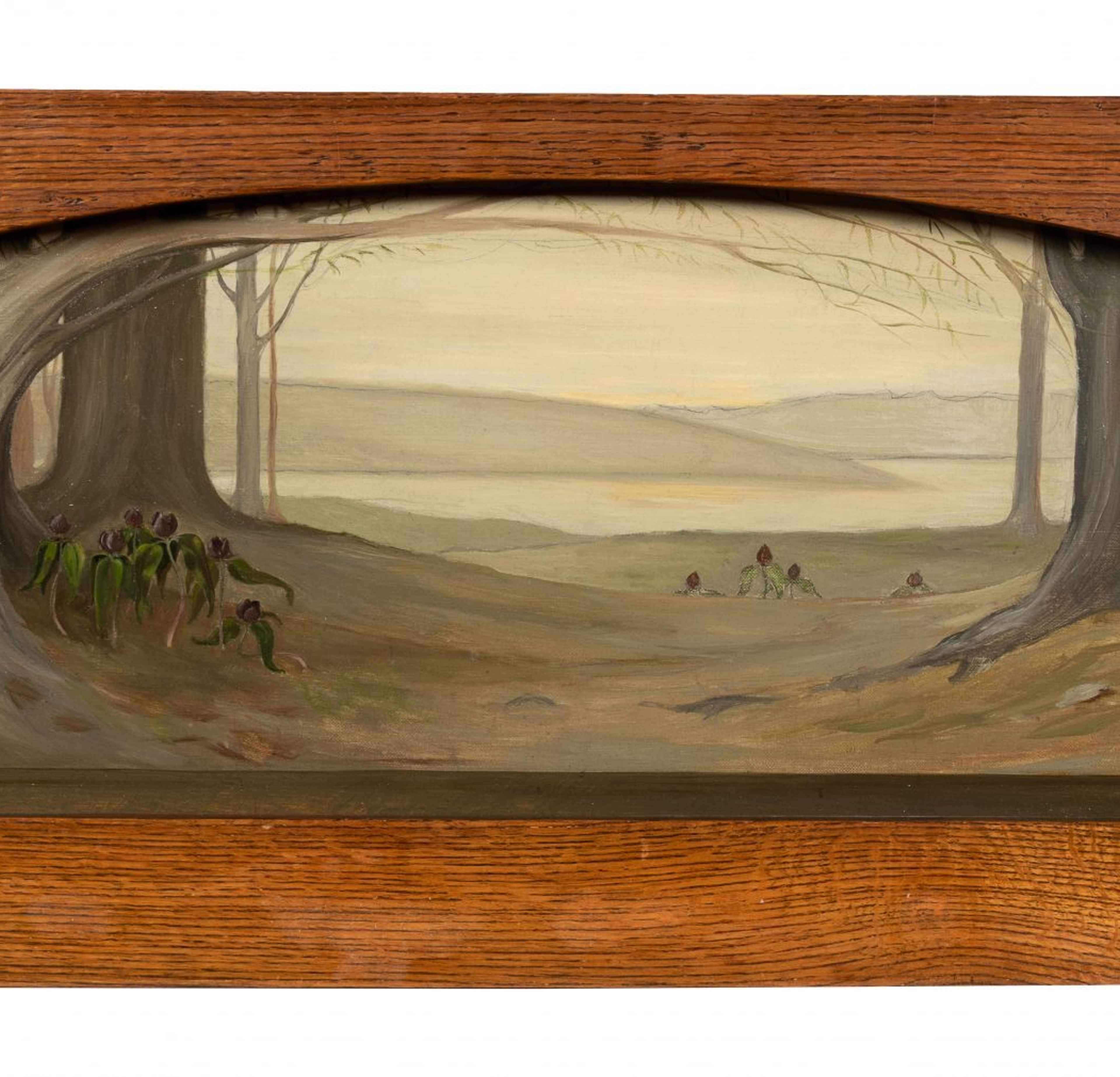
Painted in 1912 by a young Grant Wood, Decorative Landscape with Crocuses was created as a fireplace overmantel for the home of Charles and Kate Loomis of Cedar Rapids, Iowa. Charles Loomis and his brother ran a major construction company in the community. Wood embraced this tradition, creating works such as Fanciful Depiction of the Roundhouse (1920), Phantasy of Spring (1921), and Overmantel Decoration (1930). These artworks were similar to his panoramic stage backdrops for community theater performances, which he produced well into the early 1930s. In 1909, between his junior and senior high school years, Wood traveled to Minneapolis to enroll in summer classes offered by The Handicraft Guild of Minneapolis, Minnesota. Director and Instructor Ernest A. Batchelder taught the School of Design and Crafts’ Summer Session. It was during this time that Wood further immersed himself in the ideals of the American Arts & Crafts Movement, as a disciple under Batchelder. Batchelder was an important advocate of the English Arts and Crafts style and taught on the principles of decoration rather than imitation, tenets Wood readily absorbed. Wood later co-founded the Loomwood Craft Shop with Kate Loomis in Cedar Rapids, Iowa in 1911 and the shop stayed in operation into 1913. Likely as part of his work at the shop, Wood executed the present artwork. In Grant Wood and Marvin Cone: Artists of an Era, the author Hazel E. Brown states that Wood helped Kate Loomis, a Cedar Rapids resident, “…decorate her home, and over her mantel in an oak frame he placed his first signed painting—jack-in-the-pulpits in tree roots.” (H. Brown, Grant Wood and Marvin Cone: Artists of an Era, Ames, Iowa, The University of Iowa Press, 1972, p. 10) Despite the confusion of flower names, a label on the verso of the present artwork further attests to this being one of Wood’s first signed paintings. In fact, the flowers depicted are likely neither crocuses nor jack-in-the-pulpits, but instead may be prairie trilliums. Native to the midwestern states, prairie trilliums are shade-loving flowers that emerge in the spring, usually in woodlands. Wood was familiar with the flora and fauna of his native landscape and had ample opportunity to observe the flowers, which are characterized by each having three maroon petals and three green leaves perched atop a thick stem. The young artist shows the flowers in the bare forest earth, protected by an arching stretch of leafless branches that extend from trees to the left and right of the composition. Beyond the trees and flowers, a vista opens of patterned, curved hills. The curve of the painted branches and hills is echoed by the physical curve of the oak frame’s upper molding. The repetition of form, use of pattern, and simple composition attest to Batchelder’s teachings, which Wood had so recently learned. The artist would maintain these principles throughout his career, and the present painting is an early precursor to his later iconic work. Grant Wood (American, 1891-1942) Decorative Landscape with Crocuses, 1912 oil on canvas mounted on wood signed Grant Wood and dated (lower right) 15 x 34 inches. Property from the estate of Nancy Holmes, Cedar Rapids, Iowa Provenance: Charles Calvin Loomis and Kate L. Terry Loomis, Cedar Rapids, Iowa G. Stewart Holmes, Cedar Rapids, Iowa James T. Holmes, son of the above, Cedar Rapids, Iowa Exhibited: Cedar Rapids, Iowa, Cedar Rapids Art Association, Public Art Gallery, An Exhibition of Paintings and Sculpture by Mrs. Charles Dieman, Marvin D. Cone, and Grant Wood, April 14-28, 1920, no. 32, An Overmantel Decoration (Possibly) New York, Whitney Museum of American Art, Grant Wood: American Gothic and Other Fables, March 2-June 10, 2018, pp. 94-95, 203, pl. 8, illus. Literature: Hazel E. Brown, Grant Wood and Marvin Cone: Artists of an Era, Ames, Iowa, 1972, p. 10 James M. Dennis, Grant Wood: A study in American art and culture, New York, 1975, p. 21, 23, fig. 6. This painting will be included in Joseph S. Czestochowski’s forthcoming catalogue raisonné of the artist’s work by International Arts® at www.catrais.org. Estimate: $30,000-50,000
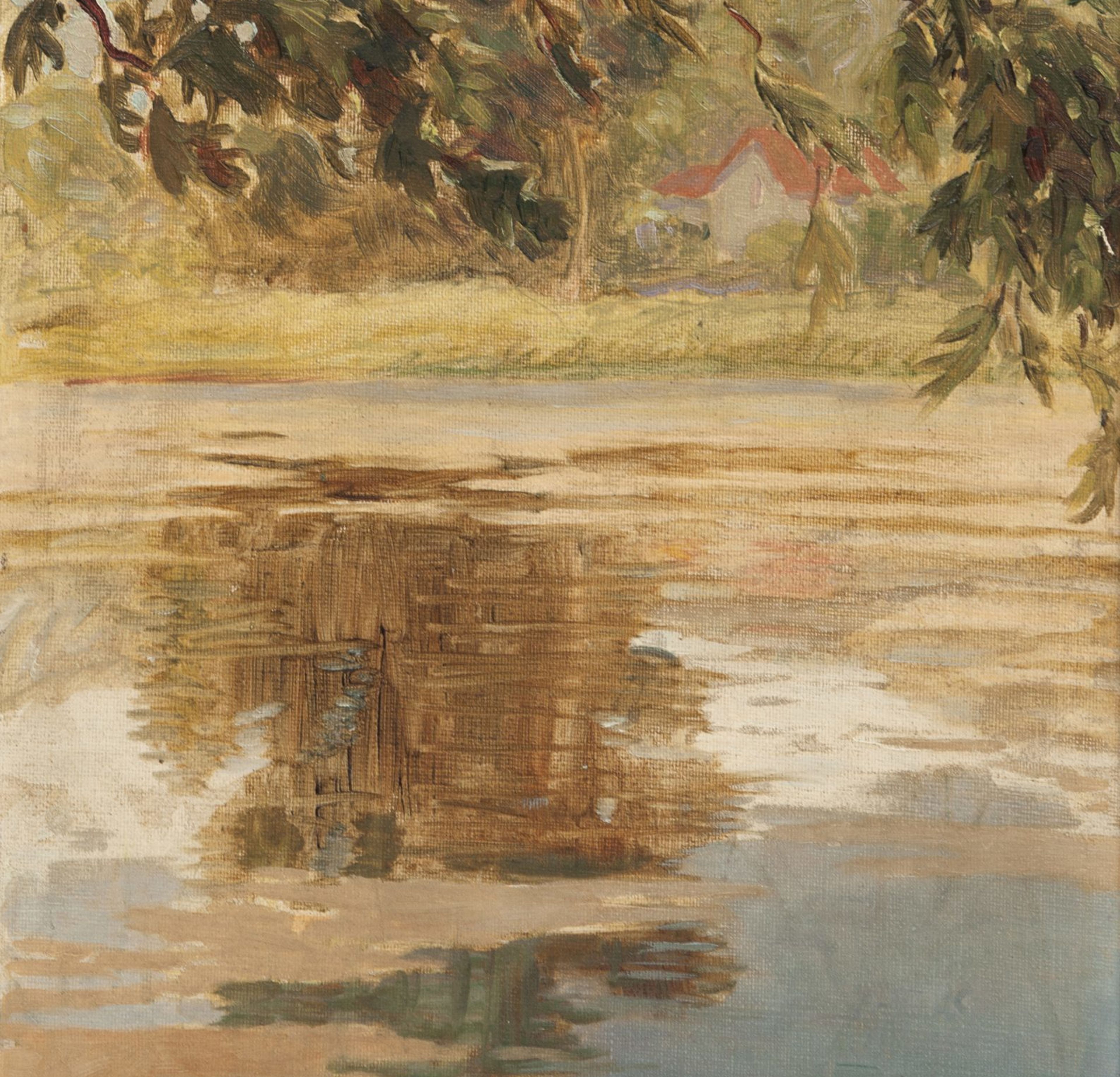
Reflections, Ville d’Avray stands as an early work by an artistically evolving Grant Wood. Prior to developing the unique style that gave rise to such iconic works as American Gothic, Wood primarily worked in an impressionistic manner. The young Wood was part of a generation that received training when impressionism was the dominant method of painting. After studying at various Midwestern art schools, including the Art Institute of Chicago, Wood and his friend Marvin Cone traveled to France in the summer of 1920, in order to continue their studies. It was during this trip that the present artwork was created. The pair of young artists settled in Paris, but traveled to the various suburbs surrounding the city, including Versailles and Ville d’Avray. The artist Jean-Baptiste-Camille Corot, a progenitor of impressionism, was a former resident of Ville d’Avray. Corot’s home included a pond that Wood painted several times, including the present artwork and Ville d’Avray, Paris, 1920 (Cedar Rapids Museum of Art, Iowa). The two paintings were exhibited upon the artists’ return from Paris in Paintings of Paris by Grant Wood and Marvin D. Cone, Public Library Art Gallery, Cedar Rapids Art Association, Cedar Rapids, Iowa, November 10-20, 1920. Cone executed a companion piece to Wood’s, titled Reflections, Corot’s Pond, (Cedar Rapids Museum of Art, Iowa), completed on the same June to August trip. It was on this same trip that Wood also introduced Cone to Winnifred Swift, and the two were married in 1921. According to Cone’s diary from the trip, Wood primarily worked outdoors, typically over the course of a few hours. The paintings were small for ease of transport and stylistically loose. However, Wood’s meticulous temperament prevented him from fully embracing the spontaneity of impressionism. Structure and form reigned supreme for the artist, with light and color of secondary importance. This emphasis on structure can be seen in Reflections, Ville d’Avray. Strong horizontal brushstrokes delineate the reflections in the pond and divides the water and grassy bank. The close-cropped tree branches in the upper foreground partially block the distant shore with its red-roofed building, creating a sense of circumscribed privacy. It is only the free, short brushstrokes that relate the painting to impressionism and carry it closely towards abstraction. The almost decorative quality in the present work hints at the later mature style for which Wood is best known. According to Joseph S. Czestochowski, this painting of Corot’s Pond is not the Cook’s Pond in Cedar Rapids, Iowa, which Darrell Garwood frequently referred to as “Corot’s Pond” in his book, Artist in Iowa, A Life of Grant Wood (New York, 1944, p. 53). Grant Wood (American, 1891-1942) Reflections, Ville d’Avray, 1920 oil on canvas board signed Grant Wood and dated (lower left) 15 x 13 inches. Property from the estate of Nancy Holmes, Cedar Rapids, Iowa This painting will be included in Joseph S. Czestochowski’s forthcoming catalogue raisonné of the artist’s work by International Arts® at www.catrais.org. Provenance: G. Stewart Holmes, Cedar Rapids, Iowa James T. Holmes, son of the above, Cedar Rapids, Iowa Exhibited: Cedar Rapids, Iowa, Cedar Rapids Art Association, Public Library Art Gallery, Paintings of Paris by Grant Wood and Marvin D. Cone, November 10-20, 1920, no. 12, (possibly) Estimate: $15,000-25,000
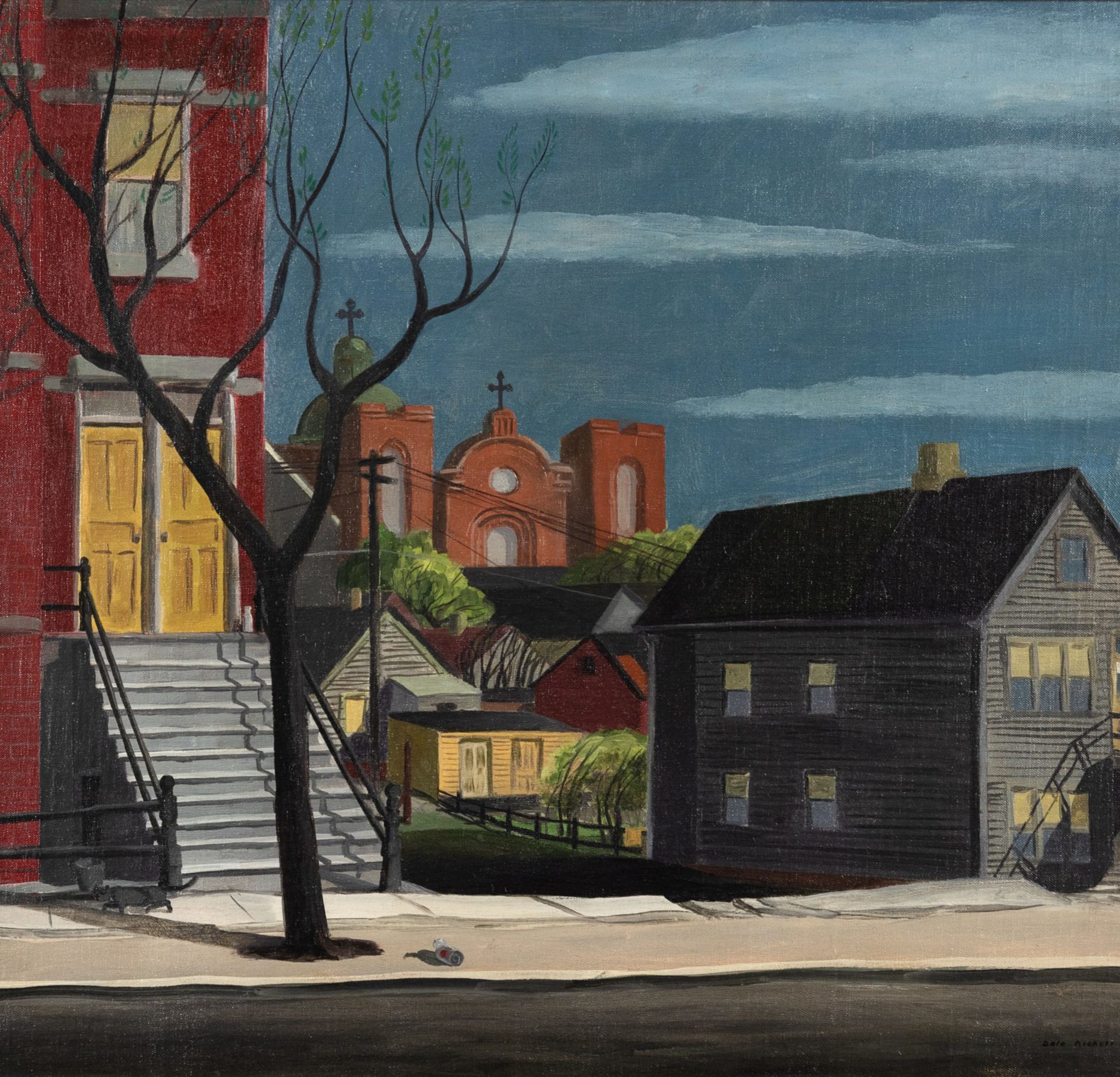
Chicago, 1934, stands as an early, unique example of Dale Nichols’ artwork. According to the Curator of Bone Creek Museum of Agrarian Art, which holds an extensive collection of the artist’s work, Chicago is distinctive for its urban setting, as Nichols is best known for his bucolic scenes of countryside red barns (Amanda Mobley Guenther, July 16, 2020). The painting is accompanied by a handwritten letter on Nichols’ personalized stationery, from the artist to a Mrs. Edwin N. Johnson. The letter is dated November 24, 1946 and in it Nichols testifies that Chicago is one of the very few paintings he executed “on the spot.” He was taken to the location by the illustrator Benjamin Stahl (1910-1987), and Nichols goes on to say in the letter that “The picture does not show the rather tough little boys that crowded about us while we worked.” Written 14 years after the artwork was painted, the artist cannot recall the exact location of the scene (“on the north side somewhere”). However, Chicago likely depicts an area in the Bucktown neighborhood. Possibly painted on the 1800 block of North Marshfield Avenue, St. Mary of the Angels Roman Catholic Church can be partially viewed from its location at 1850 North Hermitage Avenue. The two houses depicted in the painting still stand, but the view of the church through the stretch of green grass is blocked by two recently built condominiums. The artist would have to have stood facing slightly northwest for the angle and view of the church. Although Nichols simplified the ornate architectural details of the church, the two square towers and the rounded, vertical extension of the center portion of the front façade remain distinct. Both the dome and center portion of the front façade have been remodeled over the years, including brickwork that replaced the rounded extension. Chicago captures the particular architectural vernacular of the city’s neighborhood. Wooden houses like the one on the composition’s right were once common in Chicago. These were gradually replaced with dwellings such as the two-flat brick building on the left. The steep, elevated front steps of both homes speak to the Midwest’s deep winter snows and the city’s residents’ ingenuity to squeeze ever more living space in a small footprint. The building structures, with their rectangular blocks of windows and walls, and triangular roofs, reveal Nichols’ method of arranging geometric shapes to produce a formal composition. The artist also believed in using a single light source, typically the sun. Strong, dark shadows are cast by the branches of the tree and different elements of both houses. When transforming his geometric blocks into “realistic” objects, Nichols tried to paint them abstractly, in a way that expressed their inner reality. Although Chicago is at face value a painting of a city block, the structures and shadows convey a brooding, hard-bitten atmosphere populated by unseen residents. The artist’s artistic language is crystallizing into the formal elements for which he was later to become famous. The same year Chicago was produced, Nichols created his most famed painting, End of the Hunt (Metropolitan Museum of Art, New York), which became the basis for all his future works.

Ed Paschke (1939-2004) was the quintessential Chicago-based artist of the Imagist generation which emerged in the disruptive period of the late 1960s. His work centered on what critic James Yood called “The human figure under duress” as he described the salient theme of Imagist art. Other prominent Imagists mined the psychological surrealism of lowbrow popular culture. Ed Paschke relied on photo imagery drawn directly from mass media. He was interested in the adversarial relationship between individual identity and culture (which he defined as “symbols, metaphors, icons…and their baggage of referentiality”). He did not have a program, he was too inventive, the master Rule Breaker. In retrospect we see that he was working the grand theme of our age: The loss of self and hopeful redemption. His early work centers on outsider identity, using ironic, comic exaggeration of figures and their costumes (wearable defenses), freaks and their anatomical damages. These characters were the excluded ones, while the viewer is the eager insider observer: a little smug, a little horrified, a little amused, a little sympathetic, like a visitor at a zoo or an extreme entertainment event. As Paschke’s work develops, the viewer is gradually absorbed by the surrounding, immersive, fractured context, like electric flashes, in an abusive culture. In his late work, the individual is replaced by mythic icons of public power, layered with color shards, as if torn from signs. Outsider and insider are then mingled and subsumed. The individual, the autobiographical, the essence of human identity, vanishes. Or it may seem, but Paschke was not a nihilist. He chose ambiguity, contradiction and paradox over finality. Paschke held to a Law of Opposites, embracing the contradiction of one thing evoking its opposite alerting us to the “baggage” of ambiguous referentiality. That holds our attention and draws us close. We want to see Paschke’s art not only from the usual distance but also up close. We need to savor its surfaces and the paradox of image portraying the loss of self, and method asserting the redemption of self. Ed Paschke was a superb craftsman. His technical mastery of drawing and painting is evident on every inch of surface. His confident touch, the featherweight delicacy of his method and the gentle assurance of his marks reveal his skill and his patient, generous, temperament. It is as though he was in private conversation with his art and its characters. He used sponges to apply and rub paint, tiny pointed brushes, pure pigments straight from the tubes and ink, crayon, and pencil that scarcely touched the surface. The canvas -and its helpless inhabitants- never felt his hand, or if they did, it was a caress, a kiss, a protective palm, a slight tap. The surface reveals Ed’s truth. There is his love and empathy, to protect and rescue each of them and each of us. Boots, 1972, shows how visual concentration guided his pencil and crayons to an exacting, sculptural rendering that nevertheless retains a loose, almost casual, fading of edges. Thousands of bundled lines overlap, encircle and weave. They accumulate without effort. The boots are shown as in-use by an invisible wearer. Who? One thinks of bizarre militarism, maybe a crazed officer or costumed prankster. Elongated, too narrow, the boots convey oddness and tight discomfort. They are restrictive physical and psychological prosthetics. But the laces don’t bind. Instead they seem fluffy, almost like luminous chrysalises about to burst into butterflies — and freedom. Sky Blue, 1994, represents Paschke’s moving on from the large celebrity or historical icon portraits of a few years earlier (such as his Elvis and Lincoln). Here Paschke reinvents a human scale generalized androgynous face overlaid with tattoo-like symbols of little chicks. They may be either dreaded or soothing chicks but they fill the head. (they may refer to his father’s inspiring carvings of birds). On the upper right a larger chicken without a wattle is neither fully hen nor rooster. This ambiguity leads us again to Paschke’s paradoxical law of opposites that resist efforts to explain his imagery as a simple narrative. Paschke employs wide ovals and lines to merge with the painted head. Together they suggest the five senses. Other symbols float nearby. It’s an uncertain private dialogue about personal identity happening in broad daylight. The paint application is more varied in this work, sometimes thick, vigorous; sometimes water thin and dotted, evoking the presence of studio hands-on working and experiment. Sky Blue shows how Paschke’s commitment to inventive at-the-moment problem solving was guided by his career-long maxim: “Show life in the picture plane. Tracer, 1989: The jittery, glowing face of the iconic comic strip Dick Tracy is surrounded by a TV screen and to its left a full color mirror image (also indicated by reverse numbers on the frontal face) of a wannabe Dick Tracy, a Tracer. The duo reflects the essential oneness of the two faces. The merging of icon with “the common man “ suggests the projection of self into cultural identity or the absorption of self by a fictional, flickering icon. The delicately painted surface is a clue to Paschke’s encouraging empathy for a Tracer, the character under a big 1940s gangland Fedora. Spirit of Power, 1989, is a spectral image of a gun, one of many that Paschke made at this time. It’s an icon of gang violence and societal authority and defense, complicated further by the religious allusion of the INRI inscription and a cross. Meticulous rendering in several media, applied in succession, invite a visual delayering, as if peeling away the marks will reveal meaning. At this time Paschke was drawing over washes with ink dots that mimic his method of painting with the tips of small brushes, accumulating tone and illusion without obscuring the illumination from under-layers. There is a ritualist’s fondness for repetition in his method. It asks the viewer to participate in drawing and to contemplate the deceptive aura of an icon of sudden and terrible violence. -William Conger, Artist; Professor Emeritus, Art Theory and Practice, Northwestern University
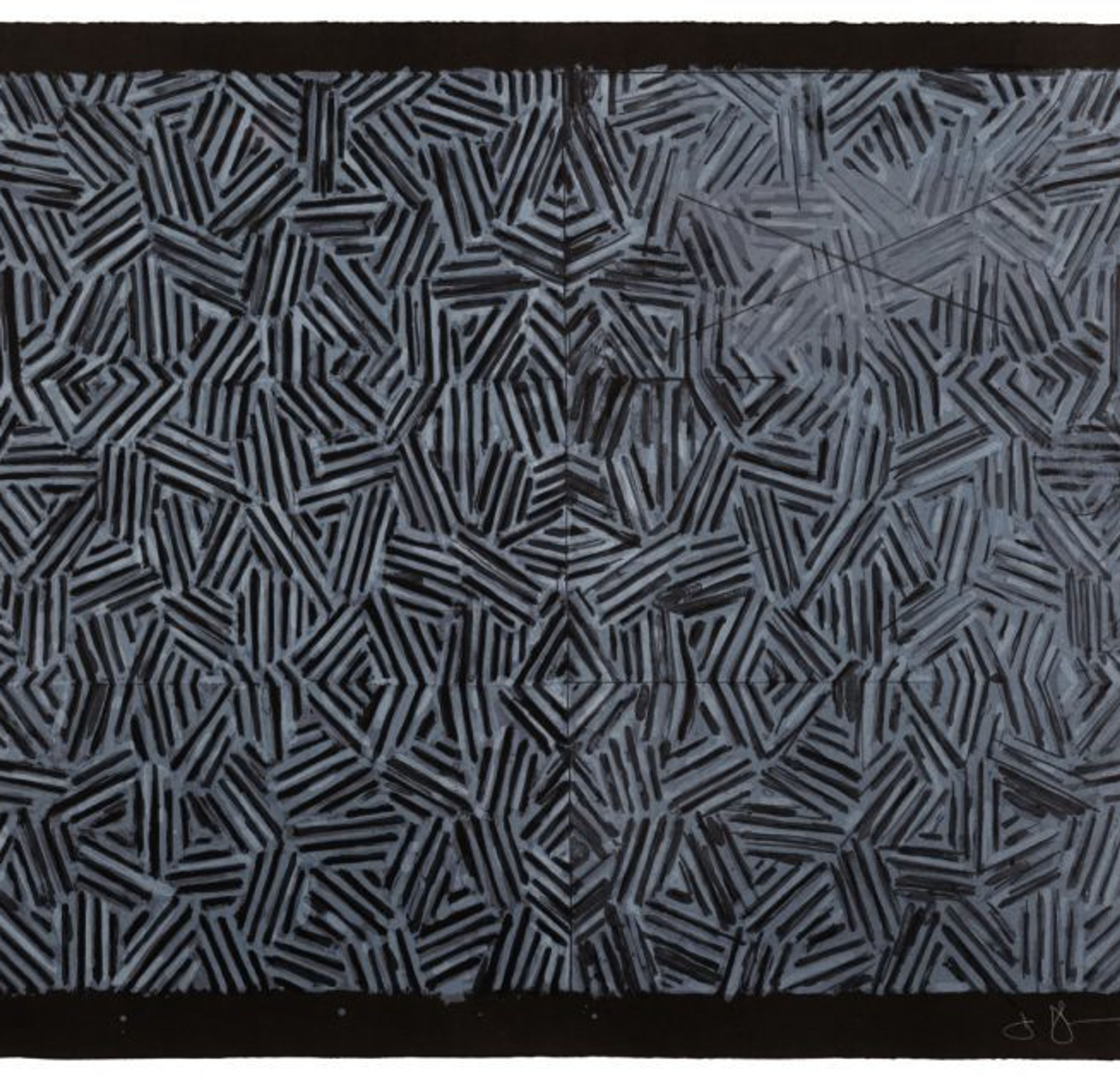
I only saw it for a second, but knew immediately that I was going to use it. It had all the qualities that interest me – literalness, repetitiveness, an obsessive quality, order with dumbness, and the possibility of a complete lack of meaning. -Jasper Johns, on glimpsing the crosshatched pattern for the first time on a passing car – a pattern that permeated his work for the next ten years Based on a painting of the same title from 1974 on which black encaustic hatching appears on a white field, Jasper Johns’ Corpse and Mirror printed at ULAE in 1976, was an ambitious undertaking from the start. It was not his first crosshatch print and would not be his last, but the complexity of the composition is pushed to the edge through the stark use of a black ground. The title, Corpse and Mirror,refers to the game cadavre exquis or exquisite corpse invented by the French Surrealists where a player makes a drawing on a piece of paper which is then folded over so that only the edge is visible to the next player who continues, thus producing a continuous but not logically linked image. Here, Johns furthers the idea of this game through the mirrored element, his signature crosshatching and of course his sophisticated mastery of printmaking. The printing process involved twelve lithographic plates each printed on a hand fed offset proofing press resulting in six individual yet related fields. The almost indecipherable differences in his treatment of each of the six sections include a light pink wash, adding violet, yellow or blue to the white pigment, but doing so in such a subtle way that the eye cannot immediately process the differences on the black background. This is where Johns’ deep knowledge and understanding of printmaking and compositional intricacies is most evident. For Jasper Johns, the 1970’s hailed a move to experimentation with the abstracted crosshatch theme in his paintings as well as his prints. It has become one of the central themes in Johns’ canon and is expertly executed in the work presented here. The complexity and calculated sophistication in technique and composition are a hallmark of the artist in every medium in which he works. October 2, 2020, Prints and Multiples Auction Lot 6 Jasper Johns (American, b. 1930) Corpse and Mirror, 1976 lithograph in white on black German etching papersigned, dated, and numbered 15/58 in white pencil28 3/4 x 30 1/2 inches. Property from a Private Colorado Collector Literature: ULAE 168 Estimate: $20,000.00 – $40,000.00
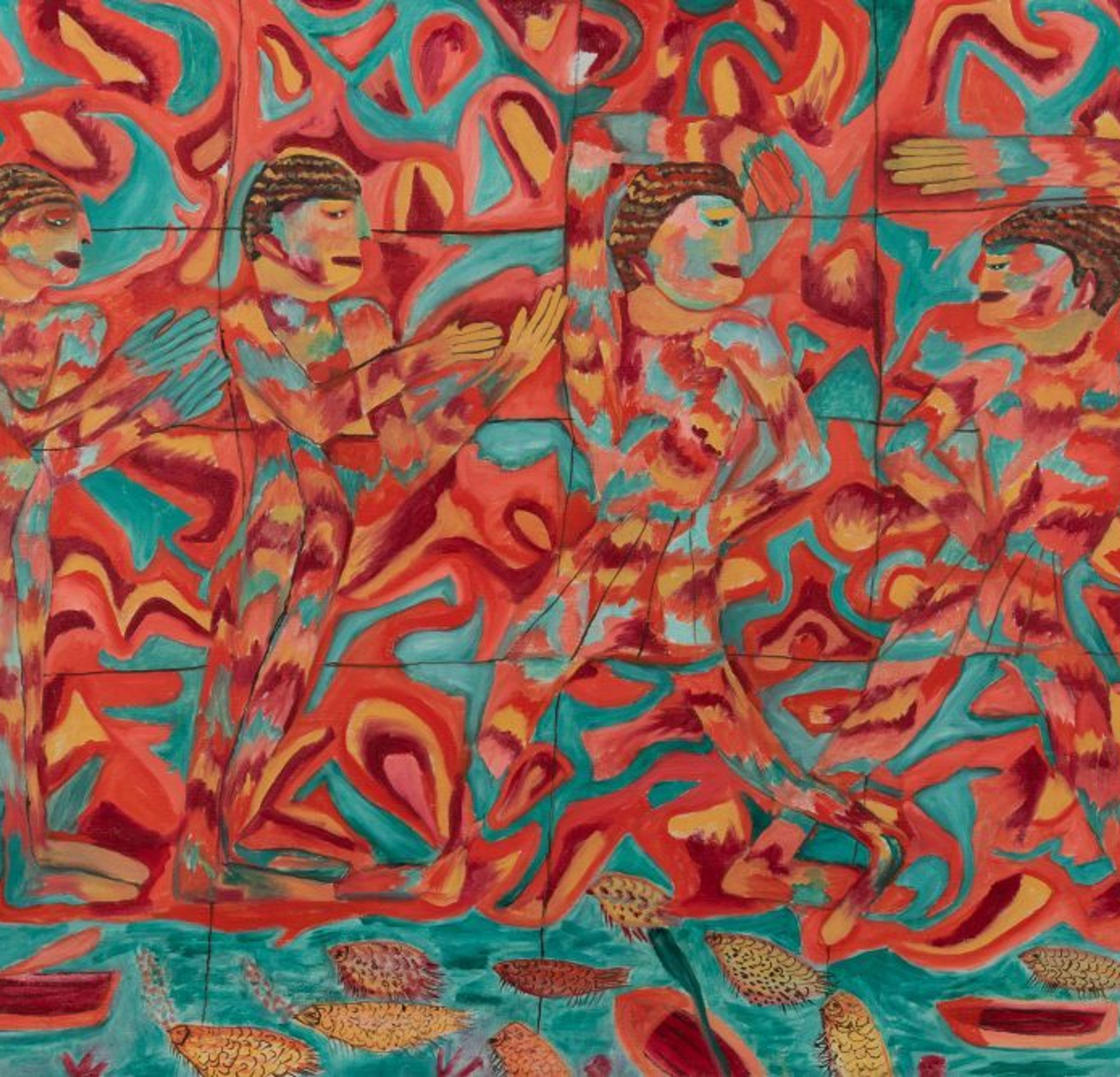
Suellen Rocca was an artist as well as instructor, collector in addition to curator. Her distinctive compositional arrangements and initially loose mark-making set her art production apart from her peers, a generation of artists colloquially known as the Chicago Imagists. Likewise, she taught in schools and colleges in and around Chicago for a range of age groups from diverse backgrounds, including students at The School of the Art Institute of Chicago (SAIC), The Jane Addams Hull House, and Elmhurst College, among others. Rocca’s personal collection included the present cache of prized works created by her friends and fellow artists— often obtained through trades and purchases made amongst them— and she stewarded these works just as she dutifully attended to Elmhurst College’s art collection, where she served as Curator and Director of Exhibitions since 2006. Boasting over 150 works, Elmhurst’s collection echoes Rocca’s own, since its growth is, in part, a result of donations and gifts made directly by artists. Rocca got an incredibly early start in the arts, and followed an esteemed trajectory throughout her career. A bit of a wunderkind, her artistic talents were recognized by a grade school teacher who recommended she attend children’s art classes at The Art Institute of Chicago, and by age 16, she was entering art school on scholarship at SAIC. It was there that instructors nurtured the development of Rocca’s eye, hand and personal collecting habits, and after graduating, she and a group of like-minded friends and fellow SAIC classmates—including Gladys Nilsson— formed an exhibition group. They named themselves Hairy Who, and in a natural evolution from the informal, generative and also stimulatingly competitive relationships forged in art school, they began mounting now infamous exhibitions at The Hyde Park Art Center on Chicago’s Southside. Together, Rocca and her peers created a bold context for their work, framing it within ornate exhibition designs accompanied by zany ephemera. The control and autonomy their collective, communal efforts yielded was a form of mutual aid—their exhibition group both emphasized and benefited Rocca and each artist as individuals. The critical acclaim Rocca and the Hairy Who garnered is still unparalleled when considered within the context of Chicago’s history of art. In the greatest form of flattery, they inspired subsequent generations to follow in their footsteps, beginning with exhibition groups such as Nonplussed Some and False Image, which included Phil Hanson and Roger Brown. In this way, Rocca’s wide-ranging and lifelong commitment to the arts not only showcased her unique abilities and vision, but also supported and provided opportunities for others to make and show their own art. Thea Liberty Nichols

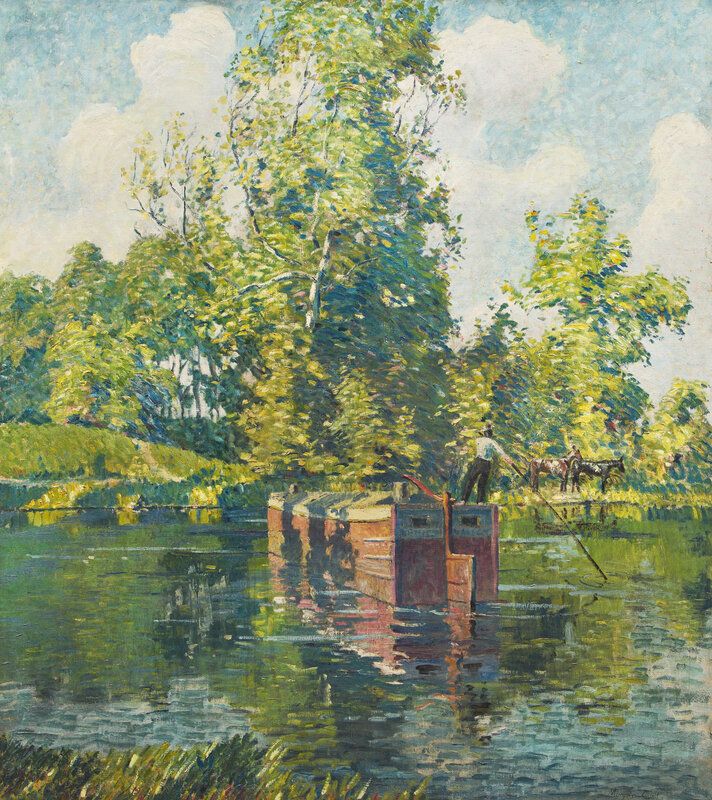
A native of Cedar Rapids, Iowa, the Midwestern landscape provided Marvin Cone a wealth of source material. While often grouped with Regional artists of the 1920s and 1930s, especially as he was close friends with Grant Wood, Cone did not consider himself a Regionalist. Cone’s art was not an effort to record surrounding daily life, but a blend of his values and imagination and their relationship to his unique experiences. The artist painted for himself, creating pictures that represented his own inner being. As stated by Joseph Czestochowski, “Each of Cone’s works reflects an individual moment in time and space, fixing the artist’s identity within a universal context of inevitable change.” (Joseph Czestochowski, Marvin D. Cone and Grant Wood: an American Tradition, Cedar Rapids, Iowa, Cedar Rapids Museum of Art, 1989, p. 10) From 1930 to 1937, Cone focused his gaze on the unique terrain of rural Iowa. Executed in 1934, Interval epitomizes his work from this period. The painting reveals Cone’s stylized method of breaking down landscapes into layers of component parts and using color rich with light. The composition, dominated by towering cumulus clouds, is given depth through a complex layering of forms, emphasized by the scattered smaller clouds in front of the larger cloudbank and the hazy striations of cirrus clouds above and below. The rolling hills are divided into distinct bands that recede into the background. The colors overall are subtle and evocative in their suggestion of light, which seems to emit outwardly from the heaped clouds. Two birds soar together in the lower left of the composition, accentuating the wild freedom of the expansive landscape. Like many of Cone’s paintings from this period, the scene is devoid of human life. The painting stands as a testament to the mysteries of nature, while also being extremely personal in its sense of solitude and tranquility. In Interval, Cone created a universal vision safe from the vagaries of time. “The artist does not set out to imitate nature,” Cone remarked. “Art traces an abstraction and makes it audible or visual. It symbolizes the whole of life” (as quoted in Cedar Rapids Gazette, January 19, 1938, p. 15, and May 26, 1938, p. 8). Perhaps the distinguished poet and Cone’s close friend Paul Engle, founder of Iowa Writers’ Workshop, best summarized Cone’s achievements when he said in 1960, “Marvin Cone dramatized space…He stares at the world with his hands…He has the painter’s second sight, the form seen once, then again after the imagination has redefined it” (“Portrait of the Artist as Neighbor,” Marvin Cone, A Retrospective Exhibition 1938-1960, Iowa City, Iowa, 1960, n.p.).
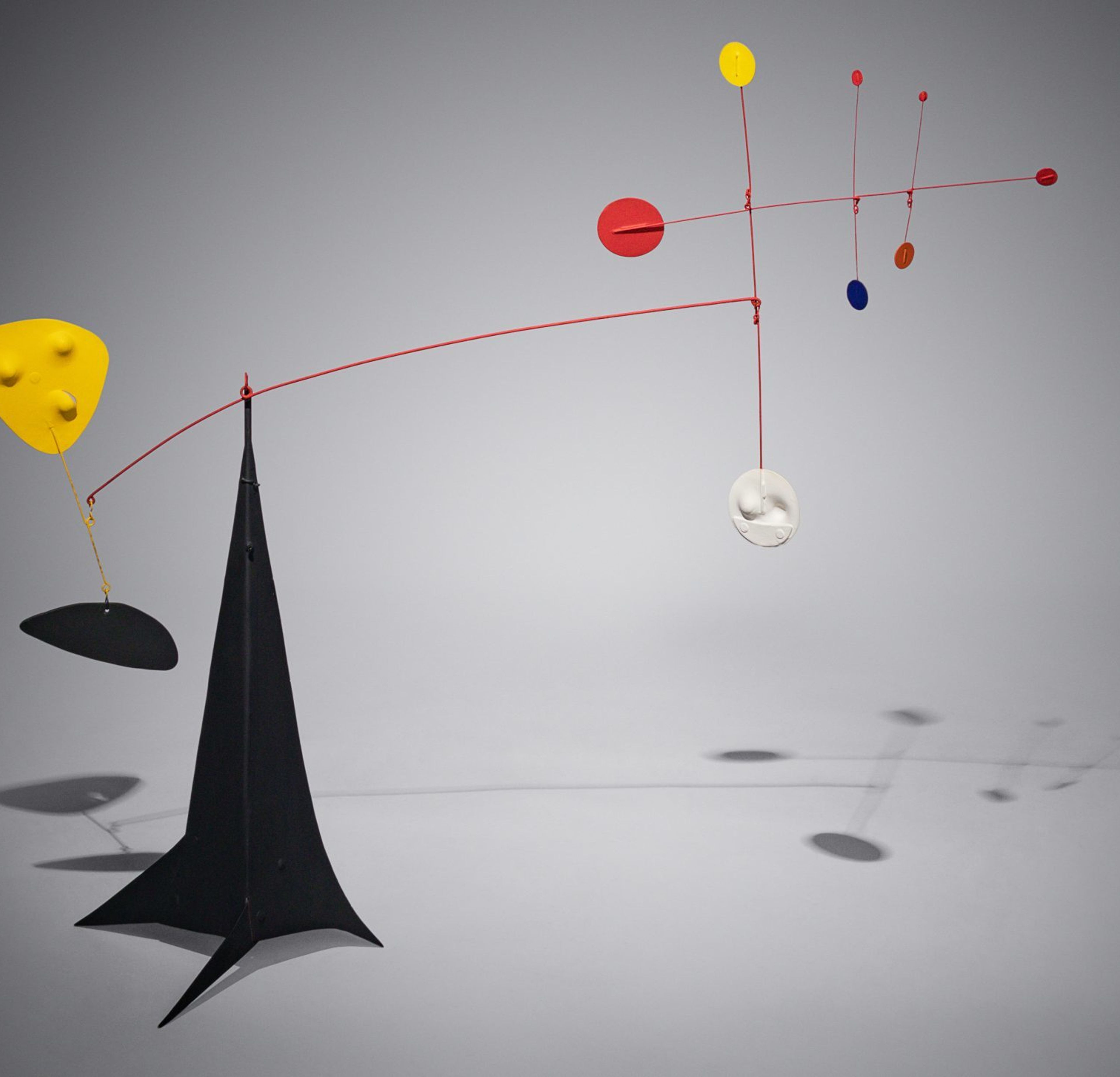
“When everything goes right a mobile is a piece of poetry that dances with the joy of life and surprises” (Alexander Calder, quoted in Jean Lipman, Calder’s Universe, London, 1977, p. 261). Calder’s instantly recognizable kinetic sculptures revolutionized three-dimensional art in the early 20th century. In 1926, the young artist began a seven-year sojourn in Paris, where he absorbed European Modernism and was particularly influenced by the biomorphic forms, flat planes, and primary colors used by Piet Mondrian and Joan Miró. Calder used these motifs to invent his own artistic language, constructing sculptures brimming with dynamism and vibrancy. These innovative creations include static sculptures termed stabiles, kinetic sculptures called mobiles, and a hybrid, the standing mobile, with a kinetic sculpture attached to a non-moving base. All forms delight and awe with their irregular forms, bold colors, and flat planes, harmoniously balanced to move with the faintest breath of air. LOT 63 | Alexander Calder (American, 1898-1976) Triple Cross, 1947 Executed in 1947, Triple Cross exudes a whimsy that belies its sophisticated construction. One of Calder’s standing mobiles, it reflects the artist’s training as a mechanical engineer, as well as his use of humble materials such as sheet metal and wire struts. A long thin rod balances on top of the swooping foundation and forms the basis of a chain-linked system of smaller rods. Biomorphic, metal shapes are attached to the terminal points of the rods and carefully counterbalance each other. The black base, all angles and curves, is a solid contrapuntal to the colorful, quivering construction that rests on top. LOT 62 | Alexander Calder (American, 1898-1976) Petit poteau jaune (Little Yellow Post), 1963 Created toward the end of his storied career, Petit poteau jaune (Little Yellow Post), 1963 demonstrates through balance and movement a maker who has mastered his craft. The standing mobile takes its title from the yellow “post” composed of a triangular base that then extends vertically upward. Perched on top of the post is a wire with a red, crescent moon-shaped element connected on one side and a decrescendo of wires and round forms on the other. The juxtaposition of the large red crescent moon with the smaller black and white round elements creates a visual tension that gives the sculpture a unique presence. Calder’s desire to create an art that would resonate with life led to a constant engagement with the pull of gravity, the circulation of air, and the play of chance. The stable bases of Triple Cross and Petit poteau jaune (Little Yellow Post) support an intricate system of cantilevers that give the individual elements extraordinary mobility. Together, they express a delicate vitality and strength, testaments to Calder’s ingenuity and creativity.
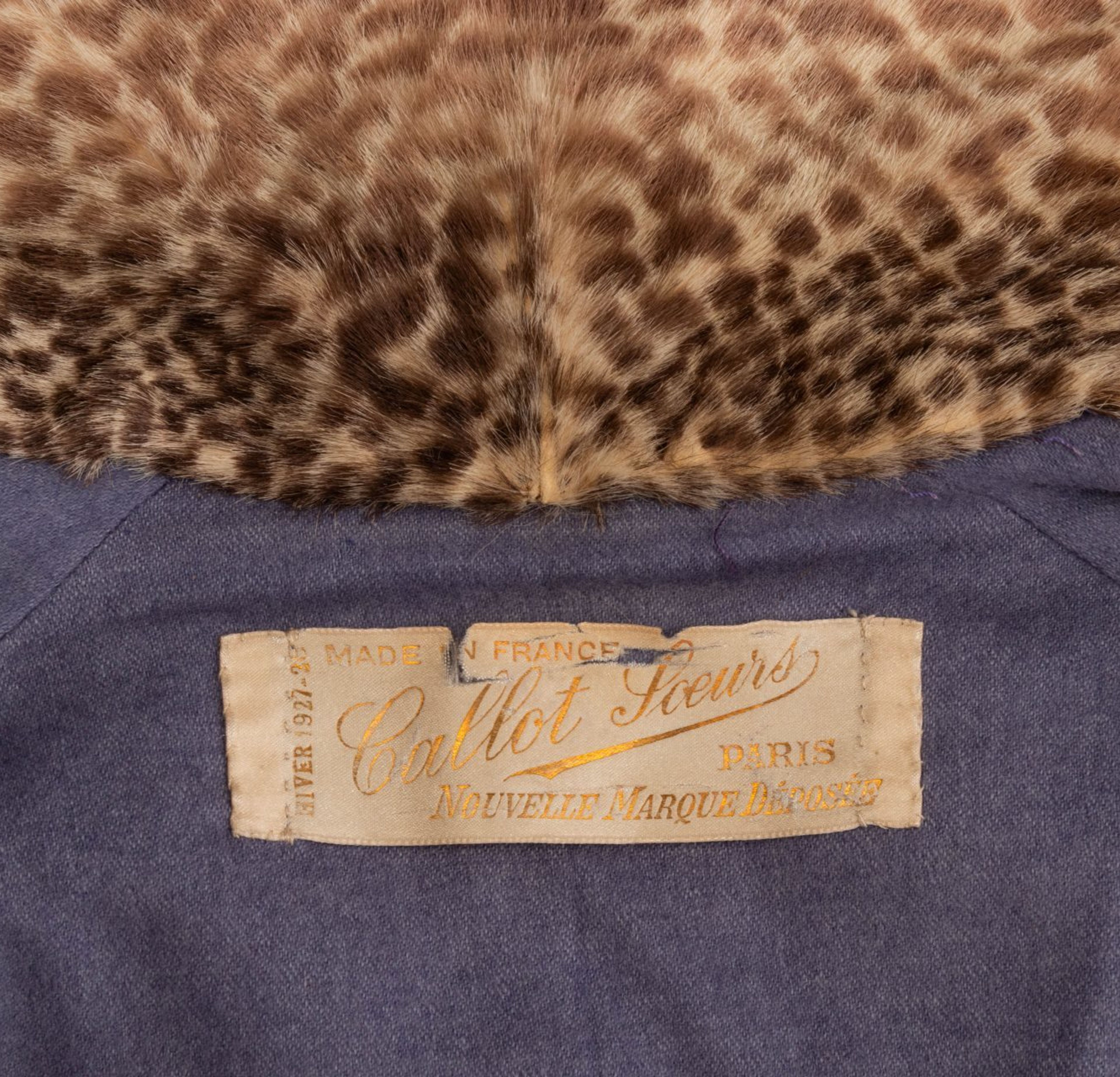
Recognized internationally for their resplendent gowns and extraordinary quality of work, Callot Soeurs are regarded as vanguards of Belle Epoque fashion. They set the standard for elegance at the beginning of the twentieth century: in 1916, American Vogue proclaimed Callot Soeurs as “foremost among the powers that rule the destinies of a woman’s life.”[1] The enterprise helmed by three sisters became the coveted label for an elite class of women, dressing modern femininity in embroidery and lace. Today, Callot Soeurs’ legacy remains understudied, but nonetheless widely recognized and collected; their designs feature prominently in museum collections worldwide and perform well at auction. Hindman is proud to again bring their work to auction this September. As the daughters of a painter and a lacemaker, the Callot sisters opened their first shop in Paris in 1879. Their business thrived selling the lace, ribbons, and lingerie that were coveted for the ornately detailed fashions of the era. By 1895, their success and acquired investment by wealthy benefactors led their business to expand into a couture house under the name Callot Soeurs. The label was operated primarily by the three eldest sisters of the Callot family: Marie Callot Gerber, Marthe Callot Bertrand, and Regina Callot Tennyson-Chantrell. Their reputation grew rapidly throughout Paris, and the 1900 Paris Exposition made them known to international clientele. Callot Soeurs became a staple in the wardrobes of society women throughout Europe and the United States, helping to usher in a new era of fashion. Fig. 1. Sale 769, Lot 1 | Callot Soeurs Leather and Fur Coat. Estimate: $1,000-2,000. The label became known for their romantic, highly ornamented creations composed of weightless layers, creating tea gowns and housecoats inspired by the Near and Far East. They abandoned the corset, eschewing the S-curve of the 1890s for a more natural feminine shape. The silhouette favored by Charles Frederick Worth — cinched, padded, and buttressed — dictated the movement and occupation of the female body only a decade prior. Marie Gerber was known among the three as the lead innovator and designer, who, skilled in draping and effortless manipulation of fabric, created dresses less restrictive than Poiret’s hobble skirts, and more understated than his theatrical orientalism. After maintaining a thriving business throughout the economic challenges of the First World War, the years following the war brought about a great deal of change for Callot Soeurs. This was a time of flux for the fashion industry as customer demands and tastes shifted; in 1920, Marthe died and Regine retired, leaving Marie as the sole proprietor and creative force during a time of enormous change for Callot Soeurs. Dated 1927, lot 1 in Hindman’s Couture and Luxury Accessories September Sale (fig. 1) seems an unlikely consequence of Callot’s earlier orientalist and Rococo sensibilities. And yet, this coat is simultaneously a continuation of their modernist tendencies and reflects their ability to respond and lead on profound shifts in fashion over just a few years. In 1916, Vogue, describing Callot, wrote, “In the housecoat, Paris has invented a real inducement for woman to stay in her traditional sphere.”[2] By the mid-1920s, Callot was offering leather coats for women venturing boldly outside into public life. Fig. 2. Sale 92, Lot 9 | A Black Silk French Couture Dress, 1920s, attributed to Callot Soeurs, in a halter style with an extreme plunging back with gold lamé hem band. Together with an Alençon lace overlay. Sold for $4,250. Callot Soeurs’ later work reflects the aesthetic revolution underway in fashion, decorative arts, and architecture. During the war, women entered the workforce in unprecedented numbers, enjoying activities and liberties they had previously been denied. The transfigurations that occurred in art were paralleled in fashion, and antiquated bodily ideals were subverted by the straight, almost tubular, figure of the “liberated and enfranchised” woman.[3]Indeed, Callot experimented with the sleeker lines, harder edges, and flattened forms of modernism, as the taste for ornamentation declined. They began to incorporate elements of Art Deco and cubism into their romantic, feminine core. “Geometric in design,” noted Diana Vreeland, “the clothes relied on the motion of living women to breathe in a shape, a movement and a sexuality into an otherwise sterile form.”[4] Madeleine Vionnet, the head seamstress at Callot Soeurs from 1901-1907, could have easily inspired the designs for figs. 2 and 3. Once a student of Callot’s, she later became an influence, and forever remained an admirer, saying, “Without the example of the Callot Soeurs, I would have continued to make Fords. It is because of them that I have been able to make Rolls Royces.” In turn, Gerber began to utilize the bias cut, of which Vionnet was an early proponent.[5] Light layers rather than volume give subtle depth in fig. 2 and 3, evoking Vionnet’s plunging backs and sleek, body-skimming silhouettes, while honoring their own dentellière roots. The second (Fig. 3), in floral silk, emulates the modern body shape, flattened and straight. Richard Martin notes, “Still of an older order in not eschewing ornament, the Callot Soeurs worked ornament subject to the plane. Amplification and accretion were deliberately avoided.”[6] Fig. 3. Sale 240, Lot 1 | A Pink and Green Silk Embroidered Dress, circa 1923, attributed to Callot Soeurs, pink silk ground with all over foliate embroidery, pink and green tulle trim around bottom. Sold for $782. With its drop waist and architectural pockets, this coat was worn by a fashionable young woman, likely as part of a chic motoring ensemble. The owner of this garment, the daughter of an East-Coast industrialist family, acquired it at the age of twenty-one. One imagines her in a matching cloche hat, perhaps behind the wheel of a Model T as she ventures into the city. It is a work of “contrived simplicity,” in its unusual use of leather and complex, sweeping lines of a wrap coat that secures on the left hip with an Art Deco clasp.[7] Its drop waist sits snugly on the hip, creating a straight, cylindrical silhouette with subtle volume in the torso. It also features a printed fur collar and cuffs, likely pony hair dyed to resemble an exotic animal, bringing warmth to the sleek blue calfskin. Women’s participation in the war effort led to limited adoption of military-style leather jackets, but the material had barely begun to enter mainstream fashion. Callot is responsible for one of the earliest uses of leather in couture, in a 1925 driving coat, housed in the Fashion Museum, Bath, UK. Marie Gerber died in 1927, the same year this coat was created. Her son took over Callot Soeurs following her passing, but, impacted by the American market crash in 1929, the house could not sustain. By 1937, Callot had been fully absorbed by Calvet, a competitive French fashion label. This coat speaks not only to its historical moment, but to this turning point for the house: it marks the dawn of a new age for women, and the beginning of the end for Callot Soeurs. Gerber had, at one point expressed that, “The dress is everything that should be part of the woman. Not the woman part of the dress.”[8] It is this woman-first ethos that inspired Callot Soeurs, and which is imbued in the coat. Created for the lifestyle of a modern woman, it demonstrates an effort to embody the zeitgeist of the late 1920s, and marks the end of an era for the “Three Fates” of Parisian couture.[9] [1] “Fashion: The Straw Ballot of the Paris Openings,” Vogue (Sep 15, 1916), p. 38. [2] “Fashion: In the House Coat Paris has Invented a Real Inducement for Woman to Stay in Her Traditional Sphere,” Vogue (Dec 15, 1916), p. 44. [3] Martin, Richard. Cubism and Fashion (New York: The Metropolitan Museum of Art, 1998), p. 11. [4] Vreeland, Diana, The 10s, The 20s, The 30s: Inventive Clothes 1909-1939 (New York: The Metropolitan Museum of Art, 1973), p. 5. [5] Richard Martin credits Callot with the very foundation of this innovation: “Indeed, this is faint and self-serving praise, given that the Callot Soeurs established the flatness of the plane on which Vionnet exercised the twist of the bias and the weightless shifts of line.” Martin, Cubism and Fashion, p. 27. [6] Martin, Cubism and Fashion, p. 23. [7] Battersby, Martin, Art Deco Fashion: French Designers 1908-1925 (London, 1974), p. 93. [8] Polan, Brenda and Roger Tredre, The Great Fashion Designers (Oxford, 2009), p. 15. [9] “Fashion: By Following the Lines the Old Masters and Miniaturists Pictured, Callot Soeurs Make Frocks Lovely Beyond Fashion,” Vogue (Oct 1, 1915), p. 76.
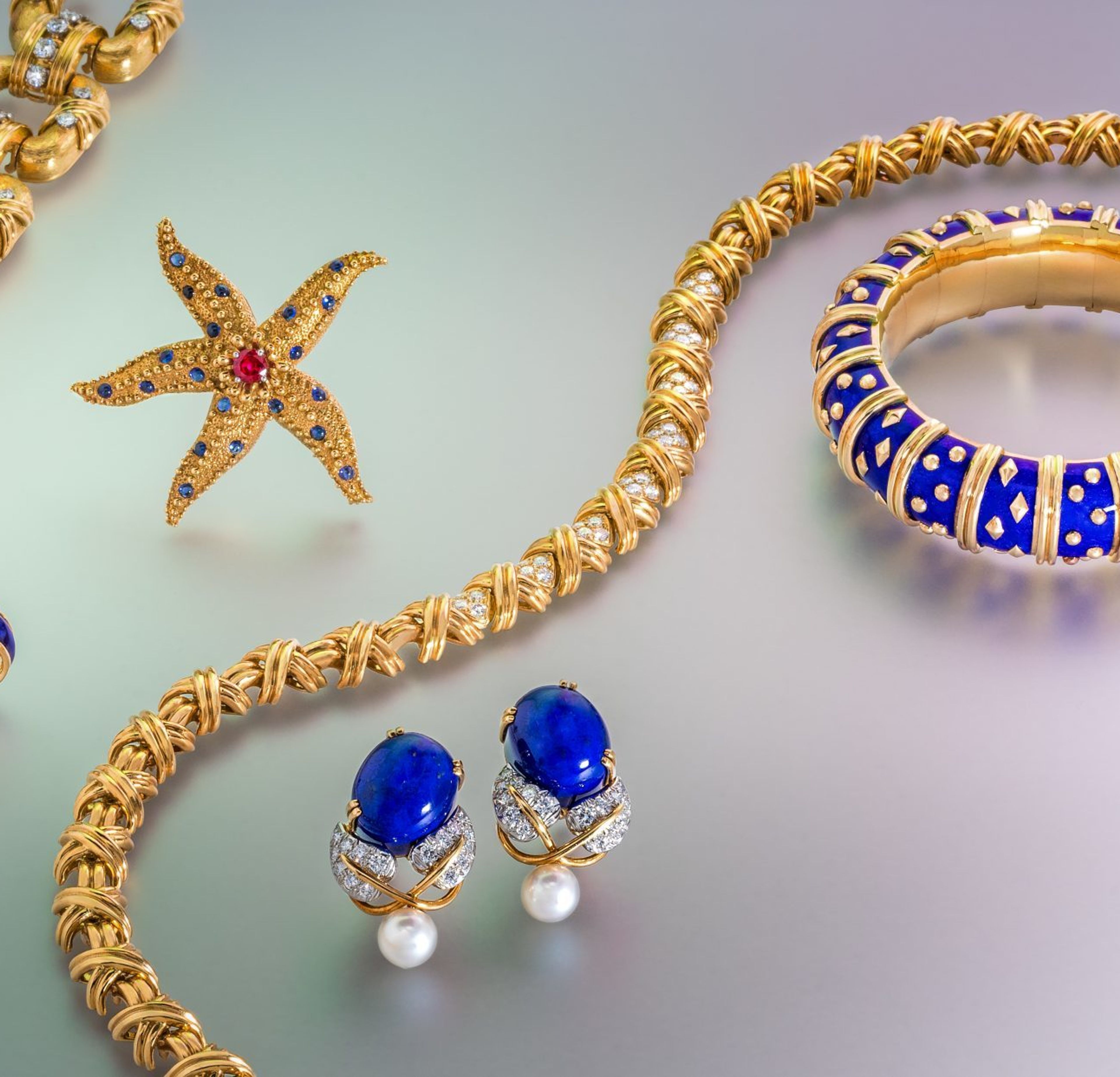
Jean Schlumberger (pronounced ‘Shlum-Bur-Zhay’) is an iconic name in jewelry design. He is one of only four designers ever given permission to sign their work for Tiffany & Co. in the company’s 183-year history – the others being Paloma Picasso, Elsa Peretti, and Frank Gehry. Born in France in 1907, Schlumberger was a completely self-taught artist. His work is known for its creativity, daring use of color, and inspiration from the natural world. Schlumberger designs have a lasting legacy with important pieces continuing to be remade by Tiffany & Co. in limited runs, displayed in permanent collections in museums and worn and enjoyed by collectors around the world. When Schlumberger joined Tiffany & Co. he was given his own independent salon on the mezzanine level of its flagship store on Fifth Avenue – a rare honor. He retained complete creative control of his designs and cultivated an impressive following, including Greta Garbo, Jackie Kennedy, Audrey Hepburn and Elizabeth Taylor. He continued to be a signature designer for the firm for over 30 years. One of Schlumberger’s first designs when he started in 1956 was the iconic ‘Bird on a Rock’ brooch made for the historic Tiffany Diamond (a 128.54 carat yellow diamond). It has been made in several iterations with various large ‘rocks’ of different gem varieties. We are pleased to offer this important brooch (Lot 59) with a beautiful green beryl as the bird’s perch. Lot 59, TIFFANY & CO., SCHLUMBERGER, GREEN BERYL AND DIAMOND ‘BIRD ON A ROCK’ BROOCH Another of Schlumberger’s most famous designs is the ‘Dot Losange’ bangle bracelet, which was first designed in 1960. Jackie Kennedy, then the first Lady of the United States, was a fan and wore her bangle so often they became known as “Jackie Bracelets”, and were popular throughout the 1960s as a chic daytime accessory for ladies including Bunny Mellon and Lauren Bacall. Lot 56, TIFFANY & CO., SCHLUMBERGER, ‘DOT LOSANGE’ BANGLE Schlumberger renewed paillonné enamel for the ‘Dot Losange’ bangles, a technique developed in the 19th century. Extremely labor intensive, it requires the application of translucent tinted enamel over fine pieces of gold leaf (paillons), then is fired at a high temperature and repeated dozens of times to create a thick layer. This fine craftsmanship gives the bangles a unique and beautiful shimmering effect. Marine life was a source of inspiration for Schlumberger throughout his career. He traveled to Sri Lanka, Thailand, Indonesia and the Philippines, where he saw coral reefs and shallow seas, sketching designs of the sea creatures he saw along the way. By the late 1950s, he had his own studio in Guadeloupe, a French colony in the Caribbean, where he was able to connect with nature and the ocean for design inspiration. These pieces are infused with his signature whimsical touch. Lot 53, TIFFANY & CO., SCHLUMBERGER, YELLOW GOLD, RUBY AND SAPPHIRE STARFISH BROOCH Among many design elements he made his own, Schlumberger is famous for ‘X’ motif jewelry representing a kiss. The ‘X’ motif displays Schlumberger’s knack for wearability and timelessness that continue to be worn and admired by collectors today. With warm yellow gold, his designs are a whimsical and elegant addition to any jewelry collection. Lot 57, TIFFANY & CO., SCHLUMBERGER, DIAMOND ‘X’ NECKLACE Schlumberger’s designs continue to delight modern jewelry collectors and are a staple of any collection. Hindman is pleased to offer a collection of nine Schlumberger pieces (lots 52A through 60) in our September 15th auction. Please contact our specialists for a private viewing or more information on how to bid.
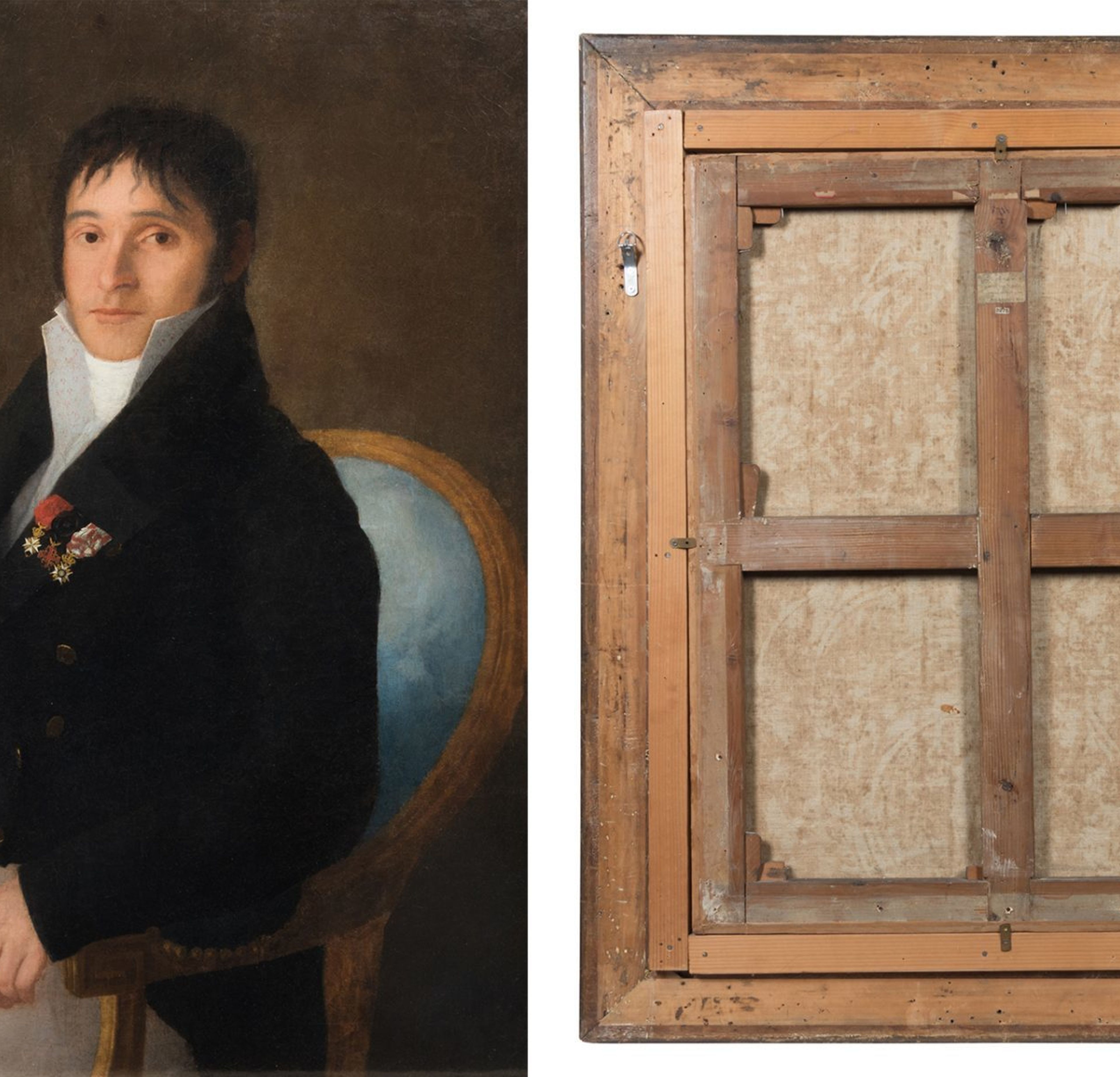
The Hackley Art Gallery (ultimately named the Muskegon Museum of Art) acquired this portrait on June 3, 1913 as a work attributed to Francisco José de Goya y Lucientes (Spanish, 1746-1828). Raymond Wyer, the gallery’s first director, conducted the purchase, which was the most expensive painting ever acquired through the Hackley Picture Fund. The above referenced article in Aesthetics, vol. IV, published by the Hackley Art Gallery, designates the portrait as “one of the most important paintings in our permanent collection.”[i] The sitter, Don Juan José Perez Mora, was an influential civilian and military administrator for the city of Madrid. He is depicted holding a letter in his right hand inscribed in Spanish “Madrid, 10 July 1810. Administration of Madrid. Concerning the most noble Don Juan José Perez Mora.” This same inscription is printed in English on an old paper label affixed to this painting’s stretcher. In 1915, the Art Committee of the United States invited the Hackley Art Gallery to loan six paintings from its permanent collection to hang at the Panama-Pacific Exposition in San Francisco, the most of any museum in the world.[ii] This portrait is specifically referenced by Rossiter Howard, a prominent art educator and one-time director of the Kansas City Art Institute: “Goya’s Don Juan José gives us the feeling of the same period in Spain, though Goya stood alone, rather than as one of a group, in his expression of it […] The character is drawn so that we feel it keenly, the modeling is vigorous and fine, and the composition is sensitive. The painting would stand high among the Goyas of Madrid.”[iii] On February 9, 1929, Juan-Allende Salazar, a Spanish art scholar and trustee of the Prado, called into question the Goya attribution in a letter to the Hackley Art Gallery, and argued that the painting was likely by José Ribelles y Helip (Spanish, 1778-1835) instead. In a letter dated April 15, 1946, Professor Martin S. Soria, an art historian in the Spanish Department at Princeton University, voiced similar concerns regarding the Goya attribution, and reaffirmed Salazar’s identification of José Ribelles y Helip as the true artist. His letter states: “I had felt that José Ribelles y Helip was probably the author of your picture. I have recently been able to check this attribution by comparison with various photographs of authentic portraits by this master in Spain. My conclusion is that Juan José Perez Mora is a work by José Ribelles […] As to the date of the picture, your discussion is very convincing and I fear that for the time being it must remain 1810 or 1818. The decorations are, from the spectator’s left: Order of St. John of Malta, Order of the Holy Sepulchre, Order of St. Ferdinand.”[iv] The Muskegon Museum of Art no longer possesses the two aforementioned letters in their archives. The documentation provided for this lot is courtesy of the Muskegon Museum of Art. Charles H. Hackley (1837-1905) was born in Michigan City, Indiana, and made his fortune in Muskegon’s then thriving lumber industry as the owner of the Hackley-Hume Lumber Mill from 1854-1894. While many lumber mill owners eventually moved their operations to the Pacific Northwest, Hackley remained in Muskegon and emerged as a preeminent philanthropist in the once prosperous former industrial center. Among his numerous endeavors, Hackley envisioned opening a municipal art gallery for the city, and left through a bequest in his will an expendable trust of $150,000 to the Muskegon Public Schools Board of Education, a fund that ultimately came to be known as the Hackley Picture Fund. Hackley stated in his will that the fund was established for the purpose of purchasing “pictures of the best kind,” and in 1910, Muskegon’s Board of Education broke ground on a facility meant to house their growing collection of fine art, ultimately culminating in the opening of the Hackley Art Gallery. In 1979, the Hackley Art Gallery, also known as the Hackley Art Museum, underwent significant renovation and was renamed the Muskegon Museum of Art.[v]