New & Noteworthy
Stay up to date with news, highlights, & features from across Freeman's.
Stay up to date with news, highlights, & features from across Freeman's.

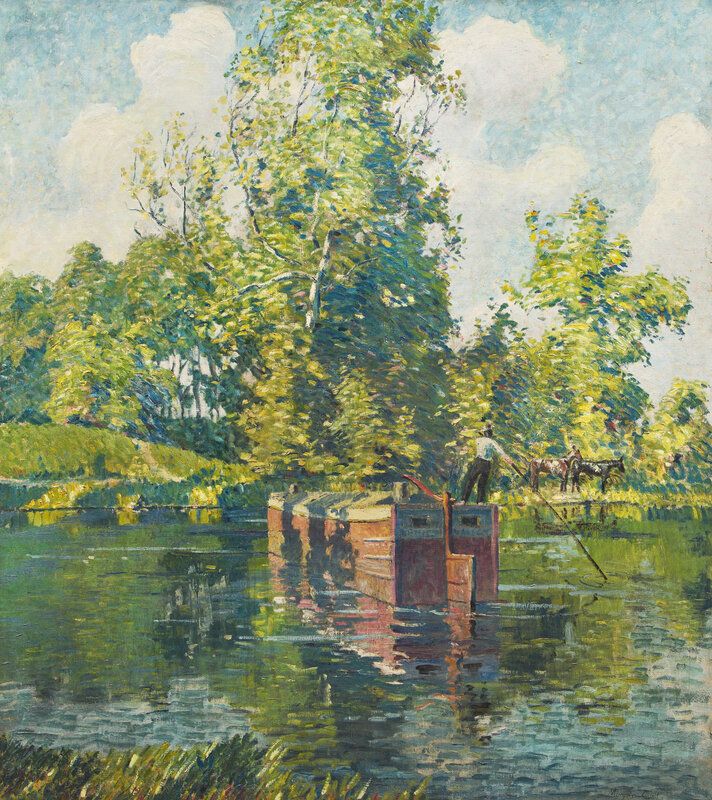
Freeman’s | Hindman is proud to present a selection of works from the Collection of Dr. Julian Katz and Dr. Sheila Moriber Katz, of Gladwyne, PA via a series of auctions throughout the Spring season. Julian and Sheila met at the University of Chicago and received additional training at Duke, Yale, and Harvard before moving to Philadelphia in 1969. They were caring and compassionate individuals who adored their 2 children and 6 grandchildren, and both Julian and Sheila took interest in other fields than medicine. Art remained a unifying passion throughout their more than 50 years of marriage. Julian was a leading academic gastroenterologist, author, and editor who was instrumental in defining the condition known today as lactose intolerance. During Vietnam, he joined the Navy, rising to the rank of Lieutenant Commander, and upon arriving in Philadelphia, he started a solo gastroenterology practice that he eventually developed into one of the leading gastroenterology centers in the nation. As a Professor at the Medical College of Pennsylvania and later Drexel University, he trained generations of medical students, residents, and fellows. A brilliant and compassionate clinician, when the population of his practice aged, Julian became board-certified in geriatrics as well. He also served as a member of the Philadelphia Board of Health. Sheila was a celebrated pathologist, business owner, poet, educator, lecturer, and mentor, and the first to identify the lethal bacteria known to cause Legionnaires’ Disease, an experience she described as like “touching the sun.” She received countless awards for work within her field, published extensively, and obtained millions of dollars in research grants, eventually becoming Dean of the Hahnemann University School of Medicine. A strong advocate for women in medicine, Sheila’s groundbreaking discoveries over her career also led to numerous other distinguished appointments including as Executive Director of the White House Medical Commission in 1999 under President Bill Clinton. The fine art pieces included in Freeman’s | Hindman series of Spring auctions represent work that Sheila and Julian collected throughout their lifetime and particularly enjoyed. Bold, enigmatic and cerebral, the works of Robert Rauschenberg, Will Barnett, Milton Avery and Purvis Young (among others), show the creative side of these eminent physicians and scientists, who always loved to learn and think. They also contribute to the lasting legacy of their keen eye for art. Featured Lots: Milton Avery (American, 1885-1965) - Draped Nude | Estimate $20,000 - $30,000, to be sold on June 2. Milton Avery (American, 1885-1965) - White Vase | Estimate $50,000 - $80,000, to be sold on June 2. Purvis Young (American, 1943-2010) - Hey Man When Purvis Comin? | Estimate $1,000 - $2,000, to be sold on June 4. Robert Gwathmey (American, 1903-1988) - Two Field Workers | Estimate $10,000-$15,000, to be sold on June 2. Robert Rauschenberg (American, 1925-2008) Bellini #3, 1988 | Estimate: $8,000-$12,000 to be sold on July 18. Darrel Austin (American, 1907-1994) - Girl Resting in a Meadow | Estimate: $1,000-$2,000 to be sold on June 4. Morris Blackburn (American, 1902-1979) - Abstraction with Blue Dot, 1946 | Estimate $2,000 - $4,000, to be sold on June 4. Ed Garman (American, 1914-2004) - No. 296 | Realized $33,020 in our May 11 Modern and Contemporary Art sale. Please note that a portion of the proceeds of each sale will go to the Julian and Sheila Katz Scholarship Fund at the University of Chicago Pritzker School of Medicine.
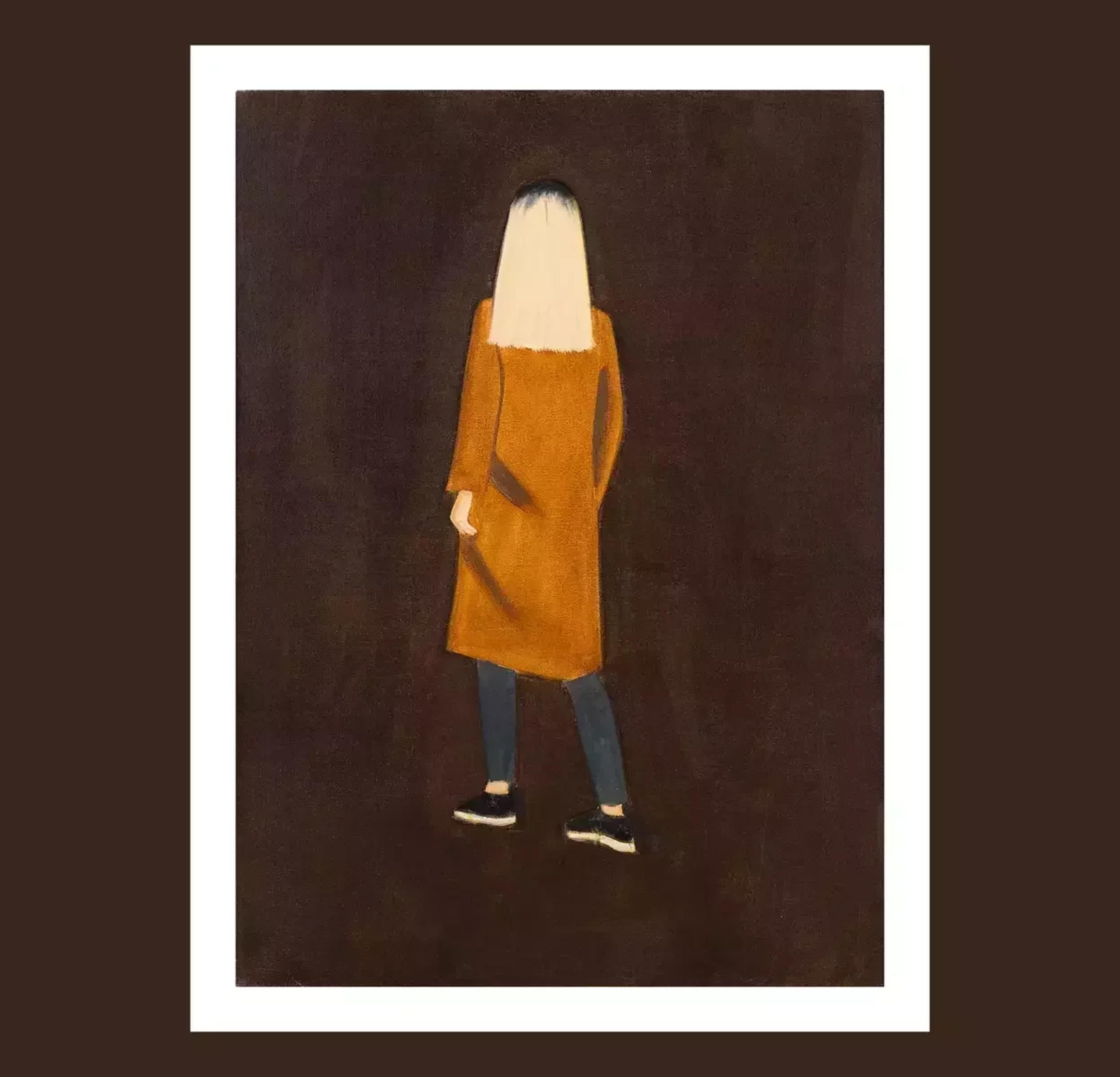
The subject of more than 200 solo exhibitions and international acclaim, the signature style of Alex Katz (American, b. 1920) is a deliberately vibrant visual language between realism and abstraction, ambivalence and intimacy. Coming of age alongside the titans of New York’s Abstract Expressionism of the 1950s, Katz boldly favored flatness of color and form rather than gestural primacy and raw emotion. His work is deceptively simple; his technique of painting wet on wet evokes a lustrous finish to his canvases, defying two-dimensionality even in their flatness. The bulk of Katz’s oeuvre can be divided into two categories: portraiture and landscape, and we are pleased to offer you an excellent example of each in Ariel (2016-17) and Golden Field #1 (2001). Part familiar figure and part otherworldly specter, Ariel is a quietly moody portrait of Ariel Vieth, a model and frequent muse of Katz’s. Her back is turned to the viewer, the shock of brightness in her hair balancing out the darkened background; you can somehow tell she is beautiful without even seeing her face. Ariel feels like spotting a friend across the street, like the anticipation of wondering if she will turn around and see you, too. Ariel is not the only recurring character in Katz’s work – in their 60–year marriage, Katz has painted over 250 portraits of his wife, Ada. "It's a conceit in a way," Katz said in an interview. "It's like you can paint the same river twice differently. I often paint in the same place. It's like painting Ada over and over again—to see if you can get something else out of the same subject matter." (Quoted in Alex Katz is Cooler Than Ever, Smithsonian Magazine, August 2009) This repetition is also found in Golden Field #1, the first in a series of landscapes drenched in a buttery yellow light. In both Golden Field #1 and Ariel, Katz is simply painting his environment, flash-in-the-pan moments he captures in thick brushstrokes and meditatively stylized forms. In both works, Katz shares his world, either in downtown New York City among the cultural avant-garde, or in the heart of nature at his home in coastal Maine. In looking at his work, the viewer is transported and feels as though they too are in on it, that they are someone who sees the specialness in otherwise normal moments, seeing beauty just as Katz can. "Realist painting has to do with leaving out a lot of detail,” said Katz in an interview, “I think my painting can be a little shocking in all that it leaves out. But what happens is that the mind fills in what's missing. It's about being able to see something in a specific way. Painting is a way of making you see what I saw." (Quoted in I prefer Stan Getz to Sartre, The Irish Times, March 3, 2007) Featured Image: Lot 13 | Alex Katz (American, b. 1927) | Ariel, 2016-17 | Estimate: $300,000 - $500,000 Lot 14 | Alex Katz (American, b. 1927) | Golden Field #1, 2001 | Estimate: $150,000 - $250,000
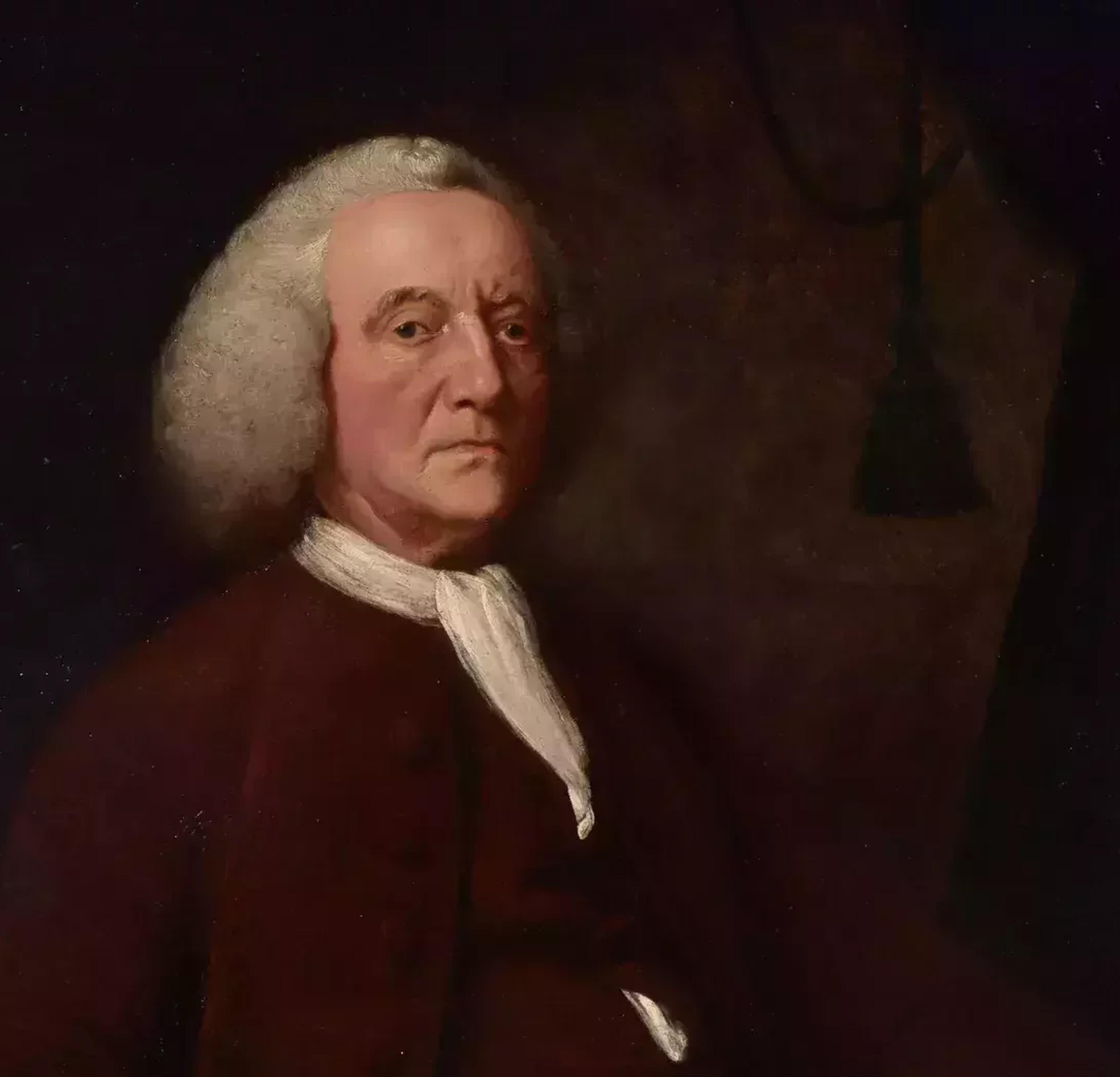
From different consignors and continents, a selection of remarkable and rare 18th century objects commemorating the great Founding Father, Benjamin Franklin, have found their way back to Philadelphia where they will be featured in our April 30 American Furniture, Folk and Decorative Arts auction. The first item, consigned from Italy, is a previously unrecorded portrait of Benjamin Franklin, attributed to the English portraitist Mason Chamberlin. Sharing many characteristics with the famous Chamberlin portrait of Franklin in the collection of the Philadelphia Museum of Art (1956-88-1), the Founding Father is seated in his study, wearing a powdered wig and brown suit. One hand rests on an open book while the other holds his iconic folding spectacles. The contours of the face, cleft chin, and eyes are unmistakenly Franklin’s. The portrait was acquired by the consignor in 1970 from a family friend, priest, and fellow collector, Don Ermanno Volta (1925-2016). Volta had purchased the portrait in Rome with an attribution to Pietro Longhi (Venetian, 1701-1785) and decided to sell it upon learning that the Longhi attribution was unsupported. The portrait is joined by a unique, double-sided composition snuff box attributed to Jean-Martin Renaud and purportedly presented to Franklin by French King Louis XVI. One side depicts the mythical Fame carrying portrait medallions of the two Founding Fathers, “Franklin Wassington [sic].” The other side, entitled “Americana Prosperitas,” depicts a family group watched over by Mercury with a trading ship beyond. Descending directly in the Bache-Scott Family to the present owner, the snuff box was included in the 1936 exhibition Benjamin Franklin and His Circle at the Metropolitan Museum of Art and was illustrated in the accompanying exhibition catalogue. It is also illustrated in B. Stephens's, H. Lewis Bullen's, and W. Rowlands's The Pictorial Life of Benjamin Franklin (1923) and discussed in Charles Coleman Sellers’s Benjamin Franklin in Portraiture (1960), pp. 387-388. The final item is an unglazed porcelain figural group depicting Louis XVI and Benjamin Franklin by Charles-Gabriel Sauvauge. It commemorates the treaties signed in 1778 by France and the United States, recognizing American Independence and guaranteeing trade rights between the two nations without British interference. Inscribed “Liberte Des Mers,” the king is shown in court dress in contrast to Franklin’s plain dress. Dating to about 1785, this figural group was included in the 1989 exhibition, La Revolution Francaise et L’Europe at the Musée de L’Impression sur Etoffes, Muhouse, France, no. 146. Featured Lots: Lot 34 | Attributed to Mason Chamberlin (English,1727-1787), An unrecorded portrait of Benjamin Franklin (1706-1790), circa 1778 Lot 30 | A unique commemorative Neoclassical double-sided composition "Americana Prosperitas" snuff box, attributed to Jean Martin Renaud (French, 1746-1821), circa 1785 Lot 31 | A rare commemorative unglazed porcelain figural group of French King Louis XVI and Benjamin Franklin, attributed to Charles-Gabriel Sauvauge (French, 1741-1827), Niderviller Factory (France, active 1754-1827), circa 1780
Action Picture is a unique screenprint and trial proof. It offers rare insight into Andy Warhol’s work from 1984 to 1986, shortly before his untimely death in 1987. The work reflects not only the greater shift in Warhol’s oeuvre from references drawn from mass culture to art historical sources, but also tells the fascinating story of Warhol’s collaboration with his publishers and his printer in the creation of his well-known Cowboys and Indians series. 1984 was an important year for the evolution of subject matter in Warhol’s artistic canon. It was this year that he began to diverge from appropriating images from popular culture (celebrity portraits, advertisements, his own polaroids, for example) and venture into using paintings from museum collections, or ‘high art’. In his print series Details of Renaissance Paintings (1984), for instance, he utilized paintings by Piero della Francesca, Sandro Botticelli, Leonardo da Vinci, and Paolo Uccello as his source material. In that year he also produced four unique screenprints based on paintings by Edvard Munch. It was also between 1984 and 1986 that Warhol created his magnificent series of paintings, The Last Supper, based on Leonardo’s iconic mural. In Action Picture, Warhol appropriated the center section of Charles Schreyvogel’s seminal painting Breaking Through the Line (Gilcrease Museum, Tulsa, Oklahoma), (fig.1), from the early 1900s, of a cavalry officer brazenly charging towards the viewer amid an altercation between Native Americans and American soldiers. This engagement with both high art and themes distinctly tied with the history of the American West proves to be unique in all of Warhol’s artistic oeuvre. However, interestingly, as the work was omitted from the final portfolio, it exists, much like the painting from which it was based, only in unique form. 36 trial proofs of this image were created, each experimenting with different colors and compositions that are wholly individual. In 1984, when Warhol embarked upon the project of creating Cowboys and Indians with the publishers Edmund Gaultney and Kent Klineman, he did not realize that the project would require two years of work involving battles over the content with the publishers and continual delays. Contract negotiations for the series were ongoing into 1985 and, when the dust settled, one of the unique provisions of the contract was that Gaultney and Klineman had final approval of all images in the suite. This seemingly small provision led to an unusually drawn-out production process whereby Warhol and his printer, Rupert Jasen Smith, created images of multiple subjects and an array of trial proofs where they would experiment with color and composition until they landed on an image that Gaultney and Klineman approved. In the end, there were 10 images published in the regular portfolio (John Wayne, Annie Oakley, General Custer, Northwest Coast Mask, Kachina Dolls, Plains Indian Shield, Mother and Child, Geronimo, Indian Head Nickel, and Teddy Roosevelt) (fig. 2). These final images hearken back to Warhol’s days as a portrait artist and his prints that utilize his polaroids as subject matter. It is only when you look at the proofs for the rejected images that it is possible to fully see Warhol’s intended artistic vision as it developed between 1984 and 1986, unimpeded by the external demands of his publishers. Indeed, when looking at the final selections for the portfolio of 10, each print on a white background, stark in their handling, Action Picture stands out as an appropriately titled scene. In this impression, the coloration of brash red set against cool blues and light pink emphasizes the composition which bursts with the same intensity, urgency, and emotion present in Schreyvogel’s painting, but brought forward for the contemporary viewer in Warhol’s own distinctive style. While it may not fit with Gaultney and Klineman’s vision for the portfolio, Action Picture and the other experimental trial proofs for this series provide small clues to the innerworkings of Warhol’s vision and the potential trajectory of his artistic output exploring high art and mythmaking in a distinctly American artistic framework. Header Image: Lot 30 | Andy Warhol (American, 1928-1987) | Action Picture, 1986 | Estimate: $60,000 - $80,000 Figure 1: Breaking Through the Line by Charles Schreyvogel Image Source Figure 2: Complete Cowboys and Indians Series
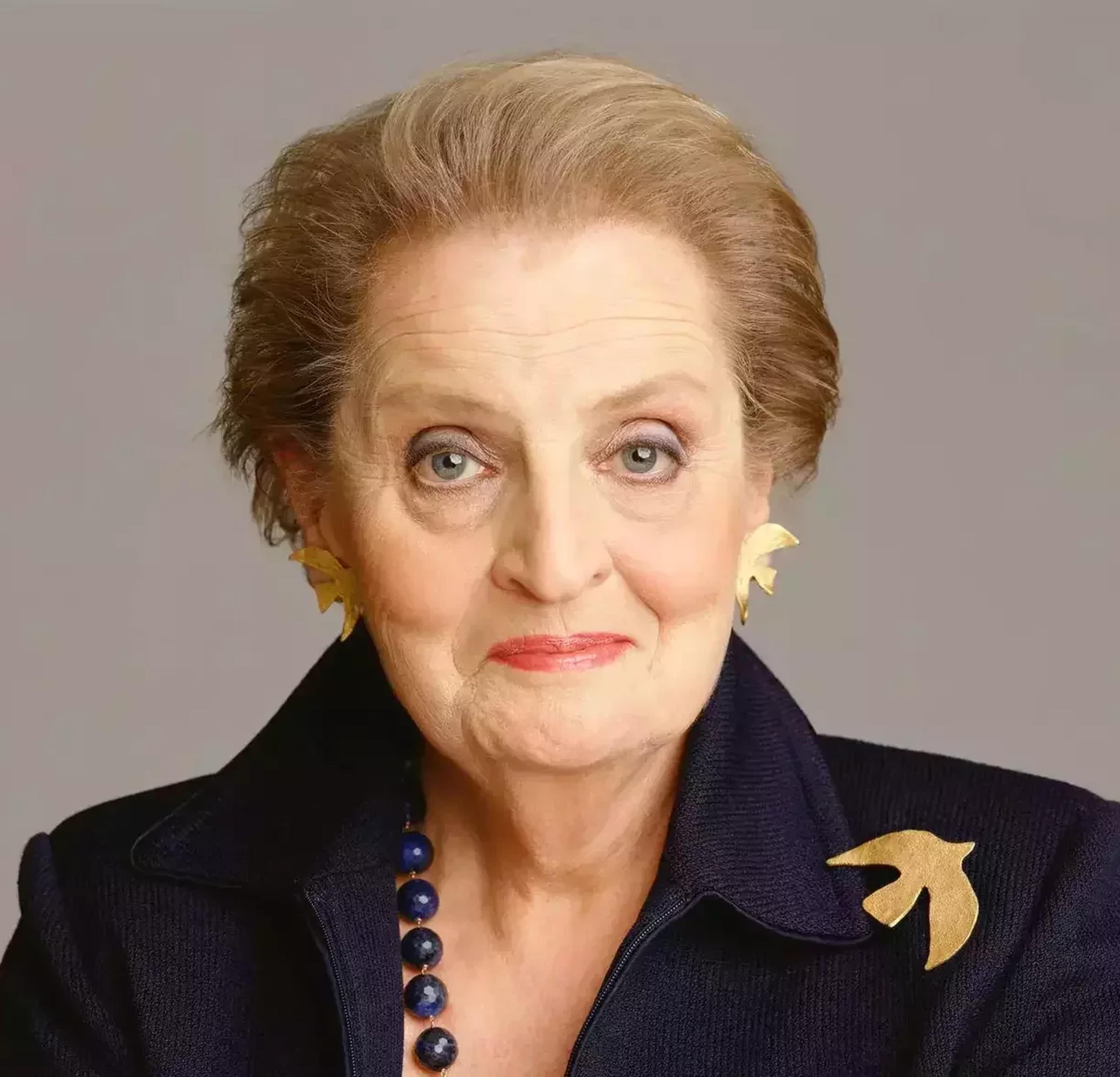
It is the distinct honor of Freeman’s | Hindman to present the private collection of the late former U.S. Secretary of State Madeleine K. Albright across a sequence of live and online sales this May. Featuring a range of personal property, from her distinctive pins to the beautiful fine and decorative arts that populated her Georgetown home and her offices, The Private Collection of Secretary Madeleine K. Albright shines a spotlight on the collecting sensibilities of this deeply influential national and international icon. “Madeleine Albright’s name and career are synonymous with reaching a pinnacle of female achievement” says Gretchen Hause, Senior Vice President, Co-Head of Department, Books and Manuscripts. “Presenting her biography in objects at auction is a professional and personal honor, and will no doubt excite new generations of global citizens.” Extraordinary Legacy, Trailblazing Style Madeleine K. Albright lived a life of service and leadership. She was appointed U.S. Ambassador to the United Nations in 1993 and shattered a glass ceiling when she was sworn in as the nation’s first female Secretary of State in 1997, becoming at the time the highest serving woman in the history of the United States government. Fiercely committed to democracy and human rights, Albright championed America’s alliances, promoted the expansion of NATO, supported non-proliferation efforts, and supported the expansion of free trade. Secretary Albright received the Presidential Medal of Freedom, America’s highest civilian honor, in 2012. During her trailblazing diplomatic career, Secretary Albright discovered the power of jewelry to convey foreign policy messages. Before long, she began selecting appropriate pins to communicate her point of view. As shared in her book Read My Pins: Stories from a Diplomat’s Jewel Box, she deployed pins within her “personal diplomatic arsenal” to express her hopes, mood, and often a pointed message. She donated a collection of her pins to the National Museum of American Diplomacy at the U.S. Department of State, but Freeman’s | Hindman is delighted to offer at auction many other signature pins and jewelry that she wore throughout her life – including those worn at celebrated events and special occasions. Also available are selections of decorative objects, fine porcelain, silver, and books that she collected during her travels around the world. Bring Home Part of Her Story The Private Collection of Secretary Madeleine K. Albright presents the singular opportunity to acquire some of the objects that Albright wore, lived with, and treasured throughout her life. Standout highlights include many of Albright’s hallmark pins; diplomatic and political memorabilia; historical books; designer scarves, hats, and handbags; and, antique furniture and decorative objects. Exhibitions: Chicago 2-9 April 2024 Monday-Friday 10 am – 4 pm 1550 West Carroll Avenue, Chicago, IL, 60607 New York 2-6 May 2024 Monday-Friday 10 am – 4 pm Saturday 4 May, 11 am – 4 pm 32 East 67 Street, New York, NY 10065 Auctions Live Auction, 7 May 2024, 10 am ET Online Auction, 8 May 2024 10 am CT 32 East 67 Street, New York, NY 10065 Head of Sale Gretchen Hause Press Inquiries Thomas Brown press@hindmanauctions.com

Pioneering Auction House, Hindman, to Merge with America's Oldest Auction House, Freeman's Today, the pioneering, full-service auction house Hindman announces that it will continue to expand its national footprint by merging with venerable, 200-year-old Philadelphia-based Freeman’s. With a combined six salerooms and 18 regional offices across the country, Freeman’s and Hindman stand to have the largest, coast-to-coast presence of any auction house in the United States, with plans to expand into international markets. The union of these two preeminent businesses represents the foundation of a dynamic and comprehensive company well-positioned to lead the upper-middle auction market. Under the name Freeman’s | Hindman, the company is combining their robust digital infrastructures into a singular website and highly targeted online initiatives. As one of the first actions, Freeman’s | Hindman will be opening its new permanent New York saleroom in January 2024. Located at 32 East 67th Street in the heart of the Upper East Side’s art district with up to 5,000 square feet of space available to the company, it is truly setting its sights on New York as a major center of growth. For Freeman’s, it is a return to the city with a physical presence, although both companies have had senior specialists working with clients in New York for many years. This move is in response to the strong demand they have established in this vibrant and key area of the art market. “I’m truly excited to bring together these two esteemed auction houses under one roof,” asserts Executive Chairman, Jay Frederick Krehbiel. “The merger strengthens our advantage in an increasingly competitive auction market and sets us up for continued growth across the United States and globally, especially with Freeman’s existing international relationship with Lyon & Turnbull.” Driven by a client-first approach, dedication to excellence, and innovative strategy, the two houses are natural partners. As America’s oldest auction house, Freeman’s adds more than two centuries of achieving market-setting results to Hindman’s 40-year record of realizing stellar prices while providing outstanding service, particularly to trusts and estates professionals nationwide. A strength also lies in both firms’ specialist teams, whose profound knowledge and unrivaled expertise span all fine art and luxury collecting categories. Alyssa D. Quinlan will serve as the merged company’s Chief Executive Officer after being appointed CEO at Hindman in January 2023. “On the heels of Hindman’s most successful year in 2022 and continued strength in 2023, I’m thrilled to build upon our momentum and oversee a merged Freeman’s | Hindman,” says Quinlan. “Our clients are always our top priority, and I am confident that a combined company will only benefit our buyers and sellers as we further expand both our national and global reach. I look forward to working with and learning from the Freeman’s team, as our shared vision will ensure a unique company culture, underpinned by integrity and professionalism, and overlaid with enthusiasm and empathy.” The new company will boast an extensive network and continue to offer a full suite of services including auctions, appraisals, private sales, and art advisory. By combining strengths, knowledge, and resources, the joint team will be better able to meet the evolving needs of their global client base without sacrificing accessibility. Freeman’s | Hindman will integrate technology including a combined online presence and a personal touch to offer adaptable solutions, provide dedicated attention, and deliver impactful, tailored experiences that belie the impressive scale of their operations. “This merger heralds an exciting new chapter, continuing Freeman’s long-standing tradition of embracing change and adapting in response to the times,” remarks Alasdair Nichol, Deputy Chairman. “Great things are bound to happen when passionate people with aligned goals collaborate, and I can’t wait to see what our two creative and client-centric companies achieve together.” Molly Morse Limmer, Deputy Chairman, says, “Hindman’s merger with Freeman’s is an incredible opportunity to pool knowledge and expand our expertise. I am eager to see even more international competition in the saleroom as we further elevate and diversify the material we bring to market.” In addition to the exciting plans for an expanded auction calendar, Freeman’s | Hindman is also considering other opportunities at a time of consolidation in the auction art market. Fraser Niven, President of the company said, “I will be focusing on ways to expand across the United States as well as overseas in line with our aim to provide our valued clients access to the international markets they desire. Both businesses have a formidable reputation for service in their local markets, which in Hindman’s case is extensive given its footprint. Freeman’s also has considerable experience in promoting locally consigned property to an international marketplace. This will only increase and develop in the future as our growth plans are achieved.” In 2024, marquee auctions will continue to be held in salerooms across the country, with plans to present a coordinated sale schedule in the coming months.
From several broken records to nearly a dozen single-owner collections, 2023 at Freeman’s brought many noteworthy successes. In nearly forty auctions across diverse collecting categories, Freeman’s 2023 sale season brought distinguished successes, from record-breaking results to the presentation of nearly a dozen single-owner collections. Outstanding Single-Owner Collections Bring Noteworthy Results Freeman’s kicked off the year with The Personal Collection of Vladimir Kagan, a rare opportunity to own the works of one of the 20th century’s most inventive and influential designers—an opportunity collectors recognized as such. The white-glove sale meant that every well-loved item in Kagan’s iconic collection now enjoys a new home with new owners. This success set the precedent for several other strong single-owner collections throughout the year, from the Wedgwood Collection of Dr. Ellis F. Rubin and Suzanne Borow Rubin to the Mira Nakashima Collection of Geoffrey Halaburt, the Estate of Angela Gross Folk, and the Papageorge Family Collection. The latter helped catapult Freeman’s American Week to new heights, achieving $7M over four consecutive sales this June. N.C. Wyeth’s Jetty Tree (Port Clyde, Maine) headlined the week’s American Art and Pennsylvania Impressionists sale; strong market demand drove the sale price eight times above its presale high estimate to achieve a record-breaking $2,450,000. The painting was on long-term loan to the Brandywine Museum of Art before arriving fresh to market at Freeman’s. “Works like Jetty Tree were important to Wyeth, as they provided him the opportunity to transcend the constraints of commercial work to create personally meaningful compositions,” says Freeman’s Chairman Alasdair Nichol. “Clearly, this work and its subject matter resonated with collectors. We’re honored to bring impactful canvases like this to market, and delighted that it far exceeded expectations.” N.C. Wyeth's Jetty Tree. Lot 40 in American Art and Pennsylvania Impressionists Featuring the Papageorge Family Collection In keeping with the Wyeth family’s tradition of artistic excellence, Henriette Wyeth’s Portrait of Peter Hurd (sold for $138,600) also broke previously held auction records for the artist; Henriette was the daughter of N.C. and sister of Andrew Wyeth, and an acclaimed American Realist. Strong Market Results for Books and Manuscripts The year saw consistently strong results in Freeman’s Books and Manuscripts sales, with particular demand for rare and early Americana, as well as objects with impressive provenance. The department’s leading lot—a volume from the personal library of George Washington that achieved a remarkable $441,000 in May—bears this out. As books from Washington’s library seldom come to auction, this volume represented a very rare market appearance, with corresponding results: the first edition of The Transactions of the Royal Humane Society exceeded its presale high estimate of $18,000 by more than 24 times following a spirited bidding war. “The market for presidential books, documents, and autographs is quite strong, and this exceptional result really drives that home,” says Darren Winston, Head of Freeman’s Books and Manuscripts department. “As rare as material like this is, it’s still Freeman’s bread and butter, right in our wheelhouse, and we’re thrilled with the result.” George Washington's signature on Transactions of the Royal Humane Society, which sold for $441,000. Additional Books and Manuscripts sales throughout the year boasted similarly strong collector interest, with a rare, inscribed, highly sought-after 1924 first edition of Ernest Hemingway’s in our time selling for $277,200 in February, and the department’s November sale achieving a 98.8% sell-through rate. Consistent Demand for Pennsylvania Impressionists Collectors eagerly anticipate Freeman’s twice-yearly American Art and Pennsylvania Impressionists sales, and with good reason: Freeman’s remains the nation’s premier destination for works by New Hope School artists. The market for Pennsylvania Impressionist paintings is robust and competitive, as evidenced in several of Freeman’s 2023 standout sales: Fern Coppedge’s autumnal Bucks County scene, The Mill at Bowman’s Hill (October), blew past its presale estimates to achieve $138,600 in June, and in the same sale, canvases by Daniel Garber, Edward Redfield, and George Sotter commanded strong prices. Three paintings by Francis Speight—who studied under Garber at the Pennsylvania Academy of Fine Art—exceeded presale estimates in the department’s December sale. The Philadelphia-area landscapes, particularly a striking scene of the city from the Manayunk Bridge, captivated collectors and achieved a total of $185,220. Looking Ahead: Freeman's Winter 2024 Season In January 2024, Freeman’s will present the first installation of What Do You See? The Collection of Sidney Rothberg, an esteemed single-owner collection that brings many works to the public for the first time in over four decades. Rothberg’s singular eye and penchant for experimentation birthed an extraordinarily diverse collection, with highlights from Paul Klee, Odilon Redon, and Chaïm Soutine, as well as underappreciated artists like Alice Baber and Bob Thompson. Œdipe, by Odilon Redon, to be featured in What Do You See? The Collection of Sidney Rothberg. With a full roster of sales bringing everything from jewelry and design to Americana and Asian art to market, Freeman’s 2024 sale season features unmissable opportunities for collectors across categories.
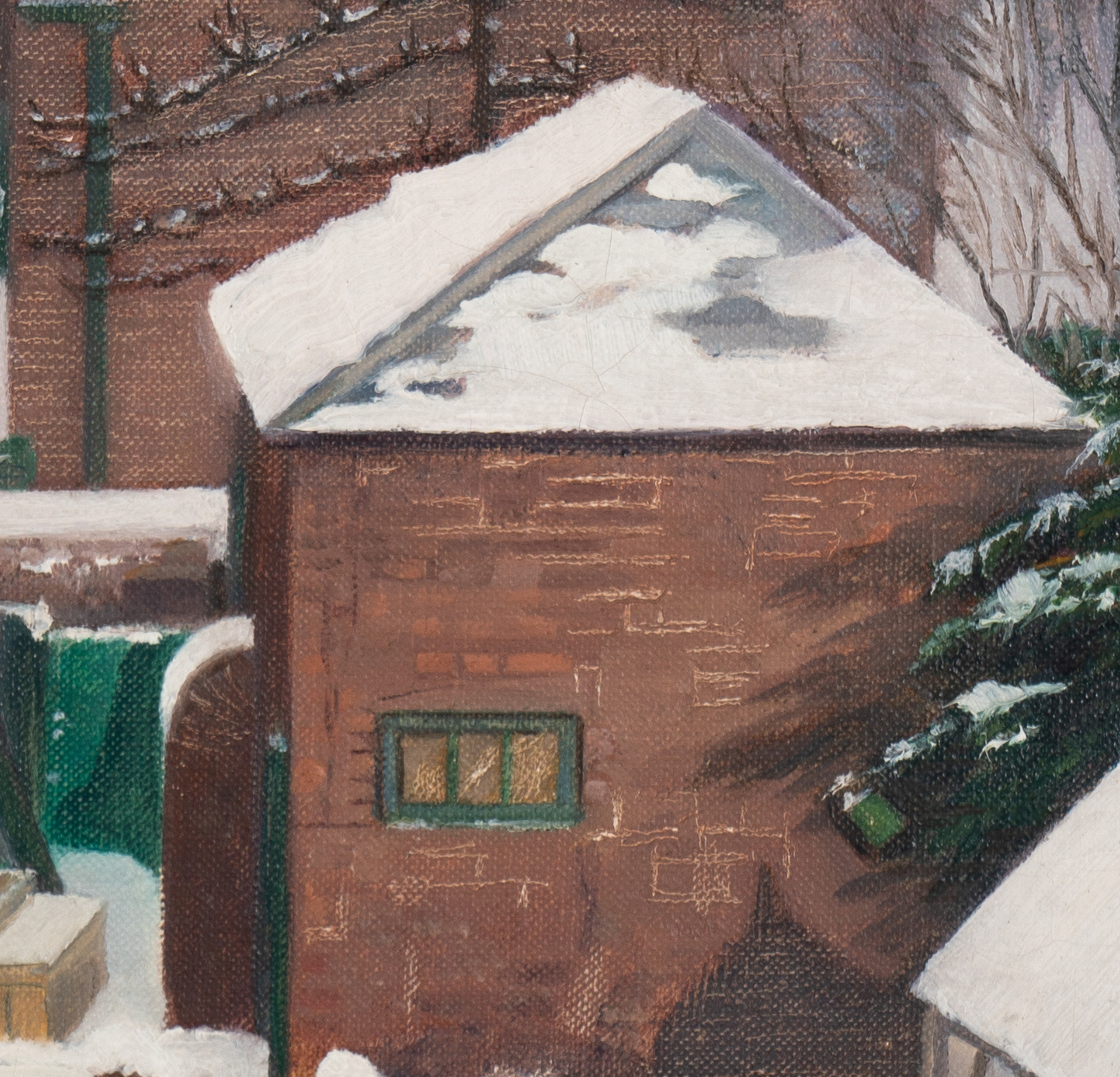
Hindman is thrilled to present work by enigmatic British modern artist Gluck this December 14 in our Modern & Contemporary Art auction. Explore the artist's background and practice below. Gluck (British, 1895-1978), born Hannah Gluckstein to an aristocratic family, shed their name down to a single syllable as they crafted their identity as a pioneering figure in British modern art. Known for their strikingly androgenous appearance and subversive fashion, they used their work to explore themes of crucial importance to their identity -- famously through reflections of gender and sexuality through vibrant biomorphic and geometric forms -- but also, here, a space held particularly dear to them. Though disapproving of both their personal and professional endeavors, Gluck’s father bought them a home with its own studio in 1926, a three-story red brick Georgian building called Bolton House in Hampstead Village, of which The Old Stable, Bolton House, Hampstead, was painted. This painting represents a unique bookend to Gluck’s storied exhibition history. Retained by the artist throughout their career, it was exhibited in two major solo exhibitions with The Fine Art Society, first in 1932 and then in 1973. For the first show, Gluck—a trailblazer in all aspects-- was able to patent their “Gluck Frame” for the exhibition. Designed in three tiers and specially produced by the artist’s approved frame-maker, Louis Koch, the frames gave the illusion that they were an extension of a room’s architecture, becoming an integral part of Modernist and Art Deco interiors. 1932 also marked the beginning of Gluck’s romantic and collaborative relationship with society florist and designer Constance Spry, after the pair was introduced by a mutual friend. Spry decorated the Fine Art Society galleries for Gluck's exhibition, the paneled walls of each room featuring Spry’s arrangements. Their relationship ended in 1936; Gluck tossed letters, diaries, and paintings into a bonfire at Bolton House. Gluck rejected forenames and honorifics, once resigning from an art society that referred to them as “Miss Gluck” on their letterhead. Homosexuality was illegal for men and unclassified for women at this time. Gluck’s work featured bouquets and flora, spellbinding landscapes, and portraits – frequently of their lovers – and these emotional, intimate depictions challenged a society that scorned the very idea, becoming a distinctive voice in early modern British art. Affiliating themselves with no artistic school or movement, Gluck showed only in solo exhibitions, before abruptly stopping their practice at the height of their fame to wage a “paint war” to improve the quality of available materials. After a long and all-consuming campaign lobbying for the use of cold-pressed oil and hand-ground pigments, Gluck succeeded in persuading the British Standards Institution to create a new standard for oil paints. They returned to painting in their seventies, mounting a well-received solo show in 1973 of fifty-two paintings spanning their entire oeuvre, their first since 1944 and also their last, in which The Old Stable, Bolton House, Hampstead was included. Even with a relatively small body of work throughout their life, Gluck’s enduring influence on the art historical cannon through their unapologetic embrace of queer identity, particularly through the championing of their own identity, cannot be overstated. In this example, a small-scale landscape, invitingly cropped and telescopically focused with the help of the Gluck Frame, offers a brief glimpse of the personal life and identity of this fascinating artist at home. Featured Image: Lot 84 | Gluck (British, 1895-1976) | The Old Stable, Bolton House, Hampstead, 1930 | Estimate: $5,000 - $7,000
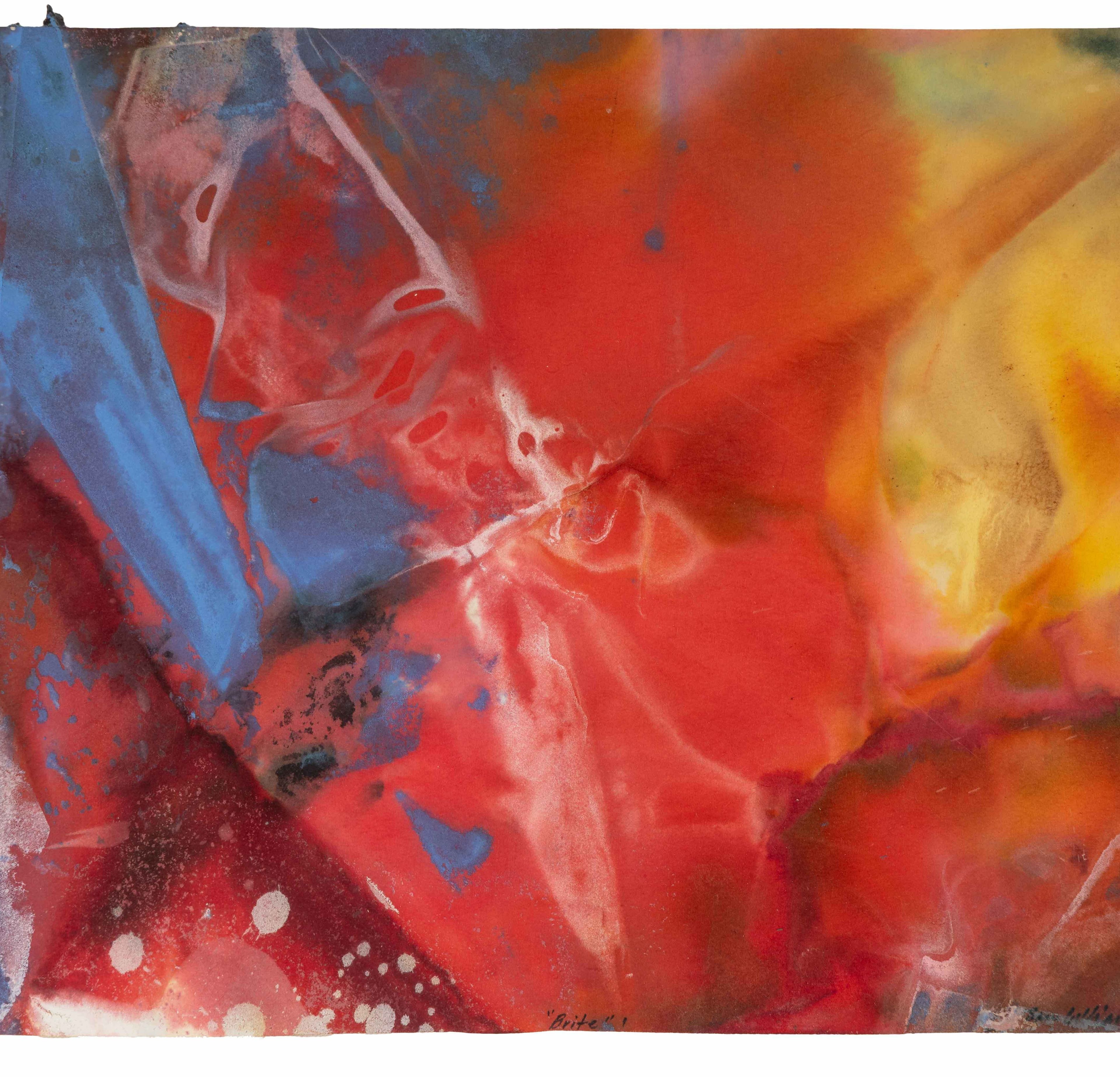
Hindman is honored to present a series of three works by innovative artist Sam Gilliam, available for auction this December 14th in our Modern & Contemporary Art auction. Join us as we explore this artist's practice and oeuvre. Sam Gilliam (American, 1933-2022) is an artist particularly appreciated for his use of experimentation in richly-hued paintings emphasizing color and reimaging physical space. Featured here is a work with acrylic on fiberglass paper, “Brite” I (1971) that fascinatingly capitalizes on these themes central to Gilliam’s mature career, while also displaying the development of Gilliam’s reputation to international heights. Lot 14 | Sam Gilliam (American, 1933-2022) | Phelps, 2016 | Estimate: $20,000 - $40,000 Born in Tupelo, Mississippi in 1933, Gilliam moved to Kentucky at the age of 9, growing up in Louisville and later pursuing his artistic studies at the University of Louisville. He and his family moved to Washington D.C. in 1962 for his first wife’s job, where he began to mix with the local artistic scene. In D.C., he was ranked among the Washington Color School, a movement in part a response to New York Abstract Expressionism in which artists focused on strongly prioritizing color over other formal qualities. Among this movement, Gilliam was particularly noted for his approach to lyrical abstractionism, which can be easily seen in “Brite” I. In this work, weightless yellows, pinks, and blues blossom from a primordial black and blue background, shot through with milky, ethereal strands of white. As described by Ann Mbuti, “It is often said that Gilliam’s painting style is inspired by jazz, since this musical genre is determined equally by clearly defined structures and by improvised variations and deviations. Structure and virtuosity merge and experimentation is an essential part of further development.” This element of randomness in Gilliam’s compositions allows for the examination of interesting effects of color, with the balancing of different pigments, all heavily saturated, as they seep into each other. Rather than an explosion, the effect in Brite I is unfrenzied—a calming, absorbing unfurling of color undefined by spatial limitations. Lot 13 | Sam Gilliam (American, 1933-2022) | Phelps, 2016 | Estimate: $20,000 - $40,000 In the late 1960s, Gilliam would begin to produce what would become some of his most recognizable work, what he referred to as “sculptural paintings” or “suspended paintings,” but would more commonly be called “drape paintings,” in which unstretched canvases were suspended or draped over walls or from ceilings, rejecting previously understood ideas of the ways in which paintings exist in space and also in which the support of the painting becomes a part of the painting itself. In 1971, the year of “Brite” I, these drape paintings would be the subject of an exhibition at the Museum of Modern Art in New York: Projects: Sam Gilliam. Though smaller in scale and on paper, “Brite” I reflects a similar occupation with support. Though with a mostly defined, clean edge, some elements at the upper and lower edges escape the perfect crop, breaking through this neat divide as organic forms. In this, Gilliam questions the implied divide between the work’s beginning and end, allowing the painting to escape the artificially established bounds of the page and bleed into space. Meanwhile, the choice of fiberglass paper adds a certain opaque luminescence which lends to the shimmering suspension of the color fields therein. During this period of Gilliam’s oeuvre, he was making strides in both his local and international reputation (he would represent the United States at the Venice Biennale the next year in 1972), and Gilliam and his dealers would continue to find avenues to further his career development. One way to promote Gilliam’s work to more private collectors was the inclusion of works at the nearby Baltimore Museum of Art’s Rental Gallery, as consigned by Barbara Fendrick of the Fendrick Gallery in Washington D.C., one of Gilliam’s dealers and main advocates in his career in D.C. The Baltimore Museum of Art Rental Gallery allowed for works to be rented by patrons in one- to two-month stints, with an option to purchase. As noted on the label on “Brite” I, this work, as consigned by Fendrick, was available for purchase in May of 1975 at the now-astonishing price of only $580. This work thus not only illustrates the absorbing principles of Gilliam’s experimentation with color and space but also offers an interesting record of Gilliam’s establishment into the local art consciousness. Featured Image: Lot 12 | Sam Gilliam(American, 1933-2022) | "Brite" I, 1971 | Estimate: $30,000 - $50,000
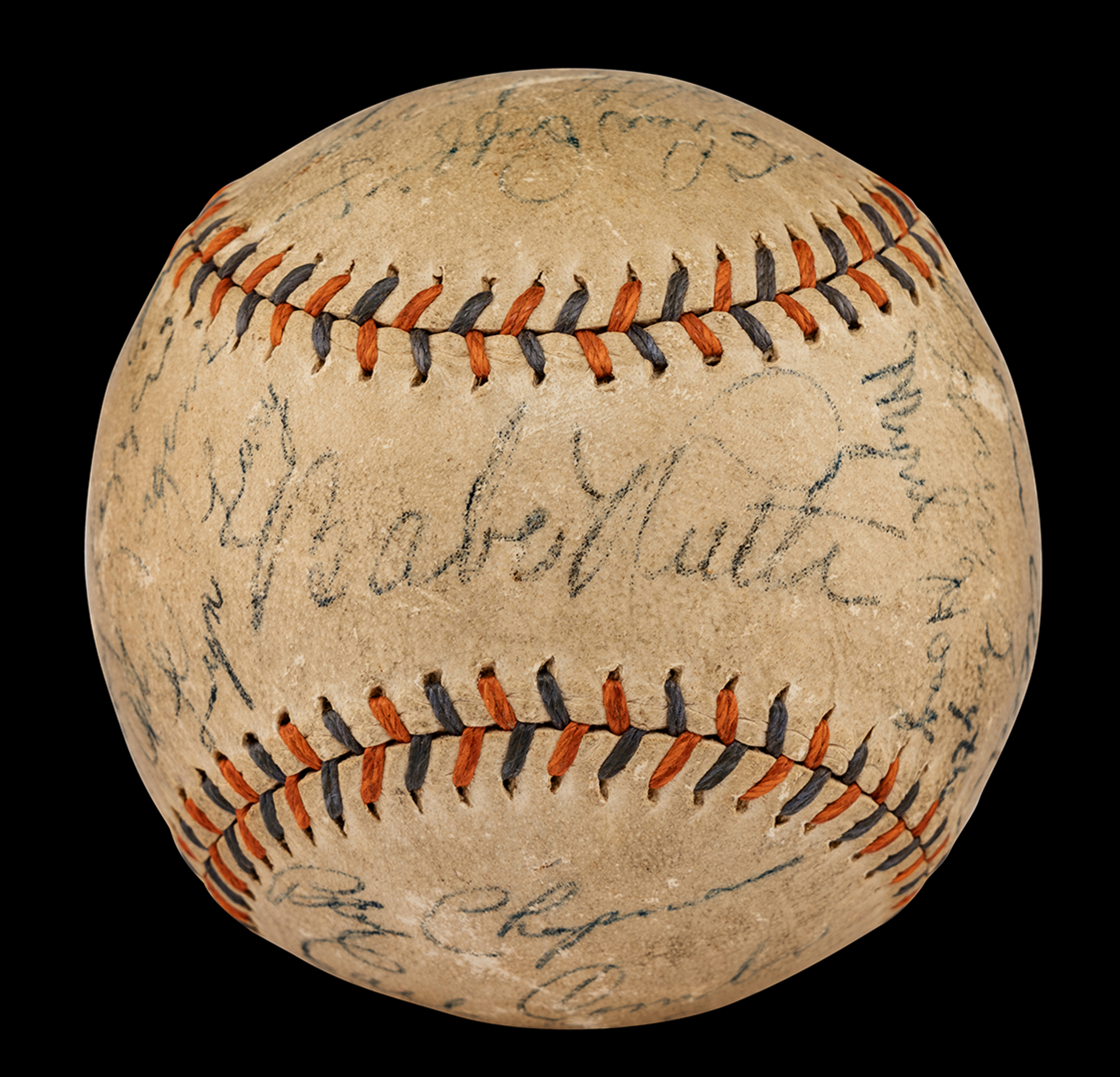
Sports collectibles and memorabilia continues to see incredible growth at Hindman—from 2021 to 2022, Sports Memorabilia sales increased by a remarkable 137%. 2023, in particular, has been a standout year for the firm, as we’ve already nearly matched our sales total of 2022. In March 2023, Hindman sold an unopened box of 1986-1987 Fleer Basketball cards for $114,000, more than $30,000 above the pre-sale estimate. The unopened box featured 36 impeccably preserved packs of cards as originally issued by the factory before the 1986-87 NBA season, one of the most historically significant in the sport’s history. An unopened box presents the ultimate aura of mystery and potential value in the card collecting hobby as they may contain multiple valuable cards that are likely in Mint condition. Adding to the value of the box Hindman sold in March was a Baseball Card Exchange authentication that revealed that one of the packs contained a No. 57 Michael Jordan rookie card, perhaps the most coveted card in the hobby. Overall, across 84 lots, the March sale was impressively 94% sold by lot and 117% sold by value. An October 26, 1984 Chicago Bulls vs. Washington Bullets Michael Jordan NBA Debut Ticket Stub / Chicago Stadium Box Office Example (PSA Authentic) Sold for $16,800 Similarly, our sale in June included cards and memorabilia from luminaries like Michael Jordan, Mickey Mantle, Willie Mays, and LeBron James. Importantly, we offered an exceptional and ultra-rare example of a 1910 Honus Wagner Baseball Card (illustrated on the following page) which sold for $114,000. Only 32 examples of the 1910 Tip Top Bread Wagner have been certified by SGC Grading with this particular issue receiving a 3 Very Good designation. There are a total of seven 3s in the SGC population with only seven graded higher. Further, an October 26, 1984 Chicago Bulls vs. Washington Bullets Michael Jordan NBA Debut Ticket Stub realized $16,800 against a pre-sale estimate of $8,000 - 12,000. An Unopened Box of 1986-87 Fleer Basketball Cards (36 Packs) Featuring All Original Wax Packs As Issued By Fleer With One Michael Jordan Rookie Card No. 57 Showing On Top of Pack and Four Jordan Stickers (BBCE Authenticated) Sold for $114,000 Additionally, given the broad appeal of the material, we also feature early sports photography and memorabilia in our American Historical Ephemera & Photography sales. For example, 19 cabinet cards of baseball players from the early 20th century skyrocketed past pre-sale expectations to sell for $100,800. 19 cabinet cards of baseball players, some representing Cleveland Offered in the American Historical Ephemera & Photography sale, and sold for $100,800 Looking ahead, Hindman is excited to present Having a Ball, a single-owner collection of signed baseballs curated to honor our National Pastime. Hindman’s Director of Sports Memorabilia, James Smith, says, “collectors will find legendary names featured like Ruth, Gehrig, and Cobb along with hard-to-find team signed issues from throughout the 20th century. The passion it took from this private collector to assemble this remarkable collection will undoubtedly make this auction a Fall Classic and a must for baseball enthusiasts and sports fans.” The star of the sale is a 1934 New York Yankees Team Signed Autograph Baseball, including the signature of Babe Ruth who was in his last season with the team, estimated to sell between $8,000 and $12,000. Featured image: Lot 258 | A 1934 New York Yankees Team Signed Autograph Baseball Featuring Babe Ruth and Lou Gehrig (PSA and Beckett Authentication Services Letters of Authenticity) | Estimate: $6,000 - $8,000
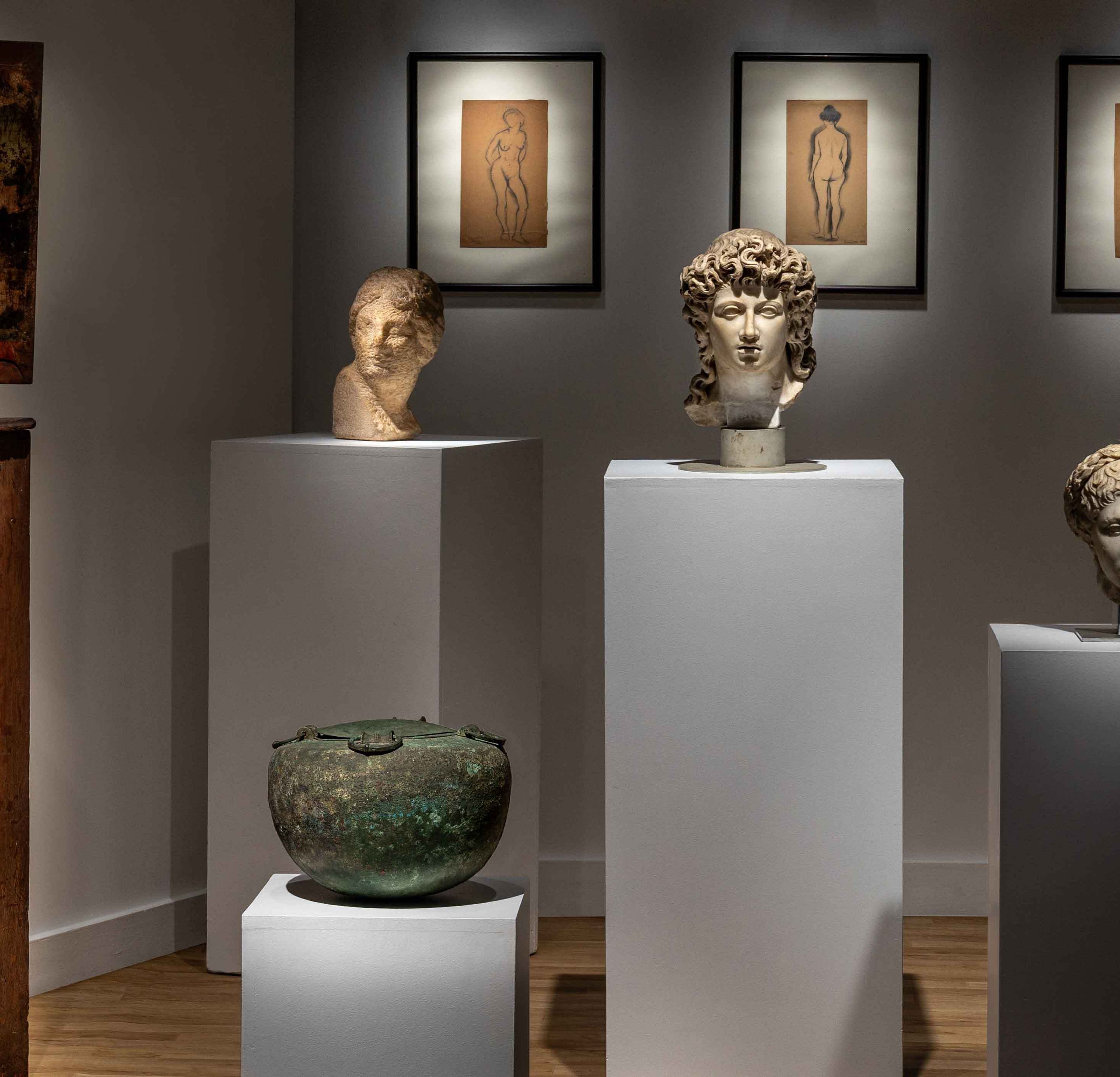
To Our Dear Clients and Friends, Hindman is proud to offer select items from the collection of Ernest and Ella Brummer over a series of auctions, commencing with the highly anticipated Antiquities & Ancient Art sale on December 5. The collection also features fine jewelry, furniture, decorative arts, and fine art to be offered in auctions from December through March of next year. Archival imagery of Ernest Brummer. Ernest Brummer was a renowned art dealer who, along with his brother Joseph, founded the historically significant Brummer Galleries, which held paramount importance in both New York and Paris during the early to mid-20th century. The galleries played a pivotal role in shaping the tastes and collections of art enthusiasts and museums alike. With locations in two of the world's artistic hubs, the Brummer Galleries became vital conduits for introducing European art to American audiences and vice versa. Their carefully curated exhibitions and extensive collection of artworks, ranging from ancient artifacts to modern masterpieces, not only enriched the cultural landscape of both cities but also fostered a deeper understanding of art history among the public. Moreover, the Brummer Galleries acted as influential intermediaries, connecting prominent artists and collectors, thereby contributing significantly to the global art market and paving the way for artistic exchange and appreciation across continents. A Romano-Egyptian Black Basalt Male Portrait Bust Estimate: $80,000 - $120,000 Antiquities & Ancient Art - December 5, 2023 The Antiquities and Ancient Art auction presents a unique opportunity for connoisseurs and scholars alike. One of the standout pieces in this esteemed collection is A Romano-Egyptian Black Basalt Male Portrait Bust (estimate: $80,000 - $120,000). Its enigmatic appearance and historical significance make it a captivating subject for academic study. With a lineage traceable through esteemed collections and notable exhibitions, this collection of ancient art offers a rare glimpse into the ancient world, underscoring the auction's scholarly importance and the Brummers' legacy of preserving and sharing exceptional pieces of historical and artistic value. A selection of jewelry from the Brummer Collection is to be offered on December 6 in Important Jewelry Important Jewelry - December 6, 2023 Hindman’s Important Jewelry sale on December 6 presents an opportunity for connoisseurs and the passionately curious to acquire unique pieces of jewelry history, rarely available to the collecting public. The sale will offer thirteen Renaissance through revival-style jewels and objects from the storied Brummer Collection including nine figured pendants, considered among the masterpieces of the late 16th century jewelry. A French Limestone Figure of the Foolish Virgin | Estimate: $6,000 - $8,000 European Furniture & Decorative Arts - February 8, 2024 Included in the February 8 European Furniture & Decorative Arts auction is a mid-15th century French limestone figure of the Foolish Virgin (estimate: $6,000 - $8,000). The heavily draped figure represents one of ten subjects from the Parable of the Ten Virgins, a popular subject during the Medieval period. A selection of jewelry from the Brummer Collection to be offered in Jewelry Through the Ages: Part I in March 2024 Jewelry Through the Ages: Part I - March 19, 2024 This sale promises a dazzling array of wearable art and engraved gems from the Brummer collection. Particularly noteworthy are the exquisite Sassanian stamp seals, impeccably preserved and showcasing the artistry of ancient civilizations. These seals provide a unique glimpse into Sassanian culture, adding depth and historical significance to the auction. These collections further enrich the sale and highlight the widespread appeal and historical importance of jewelry and wearable art throughout history. Sincerely, Jacob S. Coley Director, Antiquities & Ancient Art
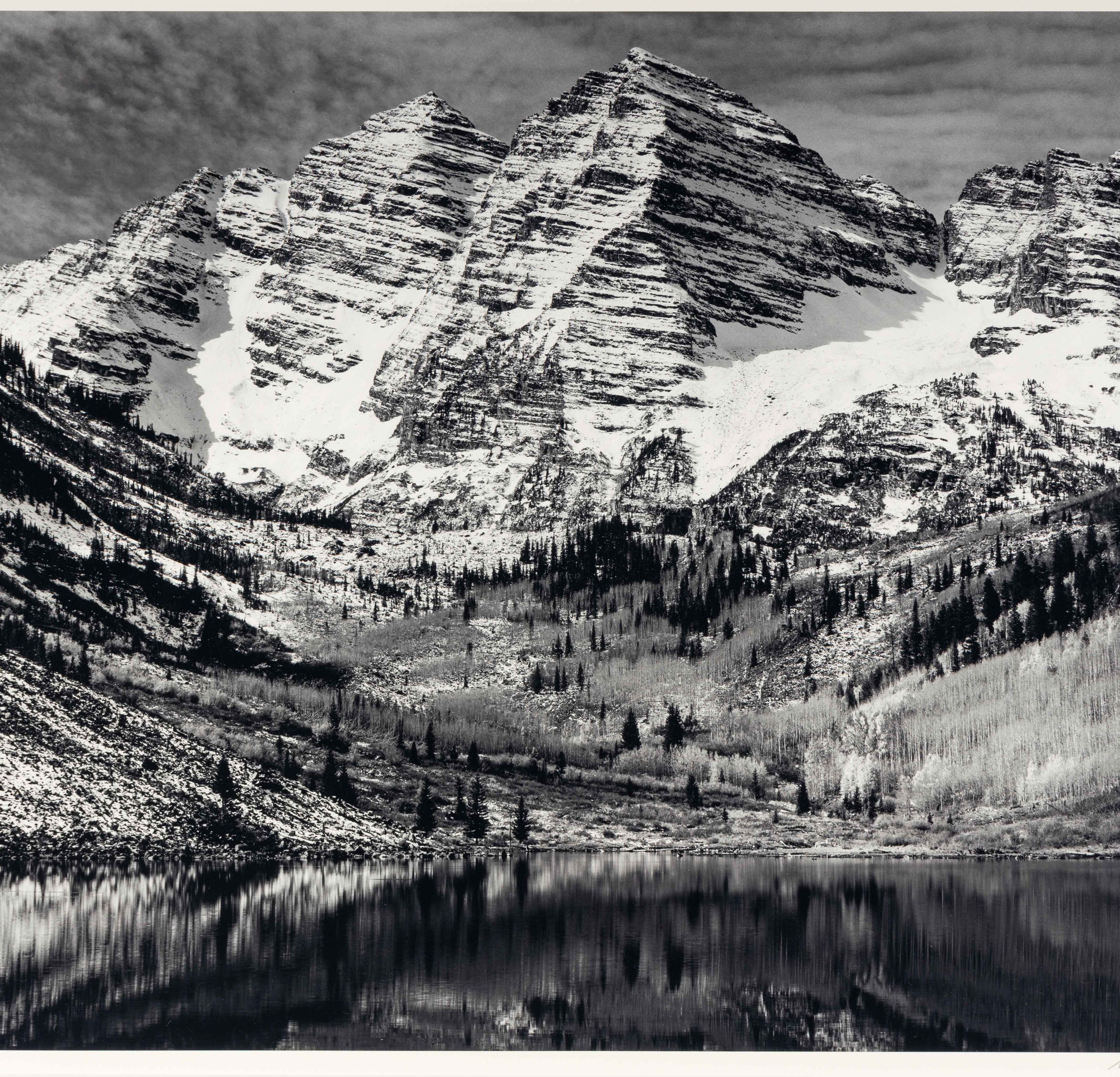
Hindman is pleased to present the work of Ansel Adams this November 28 in our Photographs auction. Join Director, Senior Specialist, Photographs Laura Paterson as she details the grandeur and skill of his work. Ansel Adams' meticulously crafted images of the formidable expanse and variety of the Western American landscape have entranced a huge and disparate international audience for well over a century. The sheer expansive beauty of his work accounts for its perennial popularity, even in these volatile times. From his towering mountain ranges to nuanced plant studies, Adams’s black and white photographs, particularly iconic works taken in the 1930s, 1940s, and 1950s, such as Clearing Winter Storm, Yosemite, 1937; Moonrise Hernandez, New Mexico, The Tetons and Snake River, Grand Teton National Park, Wyoming, 1942; Winter Sunrise from Lone Pine, Sierra Nevada, California, 1944; Mount McKinley from Wonder Lake, Denali National Park, Alaska, 1947; and Maroon Bells, near Aspen, Colorado, 1951, all being offered in Hindman’s forthcoming photography sale on November 28, have provided generations the chance to judge the importance and value of nature through his eyes. Lot 18 | Ansel Adams (1902-1984) | Moonrise, Hernandez, NM, 1941 | Estimate: $35,000 - $45,000 A master technician and perfectionist, who switched from music to photography as a young man, Adams’s creative process was demanding – involving carrying cumbersome equipment into often hostile terrain, and enduring long waits for the best light when he got there. All these challenges had to be overcome before he could undertake the elaborate, often extraordinary, technical feats he accomplished in his darkroom. Adams credited his impact not to his technique, but to his eye, however. He wrote: “The whole world is, to me, very much ‘alive,’ all the little growing things, even the rocks, I can’t look at a swell bit of grass and earth, for instance, without feeling the essential life – the things going on – within them. The same goes for a mountain, or a bit of the ocean, or a magnificent piece of old wood.” Lot 15 | Ansel Adams (1902-1984) | The Teton Range and Snake River, Grand Teton National Park, Wyoming, 1942 | Estimate: $30,000 - $50,000 A staunch environmentalist, Ansel Adams’s preoccupations were Yosemite, the national park system, and the preservation of wilderness. He focused on what he termed the spiritual-emotional aspects of parks and wilderness and relentlessly resisted the Park Service’s exploitation of the natural world which he believed led to its overdevelopment. Although he claimed that his photographs were not specifically created to further the cause of environmental conservationism, the sheer glory of his depictions of the natural world undoubtedly led to the protection of vast swathes of hitherto endangered territories. It is undeniable Adams’s primary subject matter, the extraordinary natural beauty of the American West, captured simply using a camera, still resonates today. Collectors of American art and photography continue to prize his photographs above all others, a unique appeal that was summarized by photo historian, friend, and fellow photographer John Szarkowski: “The love that Americans poured out for the work and person of Ansel Adams during his old age, and that they have continued to express with undiminished enthusiasm since his death, is an extraordinary phenomenon, perhaps even unparalleled in our country’s response to a visual artist.” Featured Image: Lot 25 | Ansel Adams (1902-1984) | Maroon Bells, Near Aspen, Colorado, 1951 | Estimate: $50,000 - $70,000
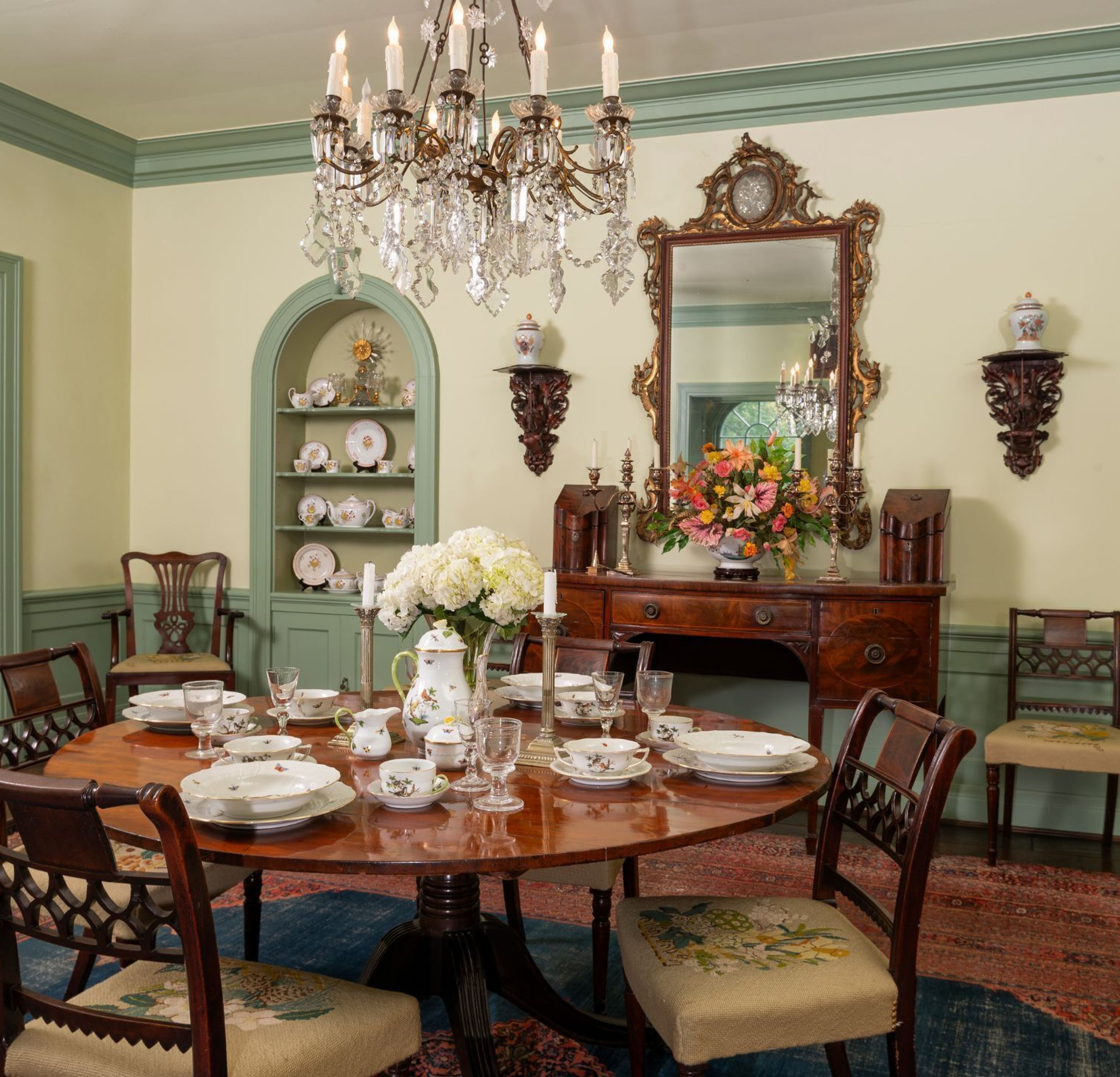
Charles ‘Skip’ Fleischmann III’s great-grandfather, the first Charles, founded the Fleischmann Yeast Company in 1868, several years after immigrating to Cincinnati from Vienna. This began the legacy of the Fleischmann family in the United States, with many notable members making their mark. Charles exhibited at the 1876 Centennial Exposition which led the company to become the largest producer of yeast in the world. Charles’ elder son Julius was a businessman in his father’s footsteps but also an avid sailor, a baseball and equestrian enthusiast, and Cincinnati’s youngest mayor, elected at 28. Julius’ daughter Louise became the president of the Hamilton County League of Women Voters and an advocate for maternal health, among numerous other accomplishments. Image of Fleischmann Home Interior From 1931-32, Julius Fleischmann Jr and his wife Dorette took a nearly year-long trip around the world on their yacht Camargo, and they brought along their newborn daughter Dorette, and four-year-old son, Charles. It was perhaps this trip that helped to spark Charles’ fascination with history and travel. He was a voracious reader who by age ten had read all volumes of the Encyclopedia Britannica from beginning to end. He majored in Classics at Yale, working summertime archaeological digs in Gordion, Turkey. Upon graduating from college and before enrolling in law school, he attended the American School of Classical Studies in Athens. His wife, Blair Fleischmann shared his enthusiasm for history. While initially drawn to early Americana, over time their interests broadened to include the material culture of Europe, especially England. They participated in numerous forums and workshops, first at Colonial Williamsburg and later at the Attingham Trust Summer School in Shropshire, England. They developed lifelong friendships with like-minded people in Europe, and for many years spent the month of May in England, visiting friends and traveling around on their own, always at a leisurely pace and always on back roads, stopping to see historic houses and gardens open to the public. Image of Fleischmann Home Interior Though he was perhaps more private in terms of civic life than his predecessors, Charles, along with Blair, continued the family legacy of serving the city of Cincinnati through philanthropic work. Over the years, the Fleischmann Foundation helped to support the Cincinnati Art Museum, the Cincinnati Symphony Orchestra, the Cincinnati Ballet, the Cincinnati Historical Society, Playhouse in the Park, and other civic organizations – with Charles also serving on the board of many. Image of Fleischmann Home Interior These interests and travels resulted in the marvelous, eclectic collection offered here. While these lots represent only a small percentage of the art that Charles and Blair collected – they donated more than 3,000 objects to the Cincinnati Art Museum – they do exemplify their varied interests and unique collector’s eye. Early 19th-century maritime painting and sailor-made artworks were evident areas of enthusiasm, but highlights come from diverse categories including Chinese Export porcelain, contemporary art, English portraiture, American furniture, presentation silver, and Grand Tour objects – just to name a few. Charles was a scholar of his own collection – as evidenced by the envelopes of research attached to the back of each painting and the endless books on art and history that lined the shelves of studies and hallways. It seems that every addition was thoughtful and meant to be revisited, with a spot in the home already in mind. These are the objects that the couple enjoyed, studied and lived with comfortably in their 1928 Indian Hill home, and with an artistic flair, embodied in the fanciful Italian villa nestled on the property’s lake. The collection presented here celebrates a couple whose family legacy and interests were far-reaching and worldly but who endeavored to use their resources and energy to benefit their hometown, elevating Cincinnati’s artistic and historic institutions with their efforts. Hindman is pleased to offer at auction the lifetime collection of Mr. And Mrs. Charles Fleischmann III.
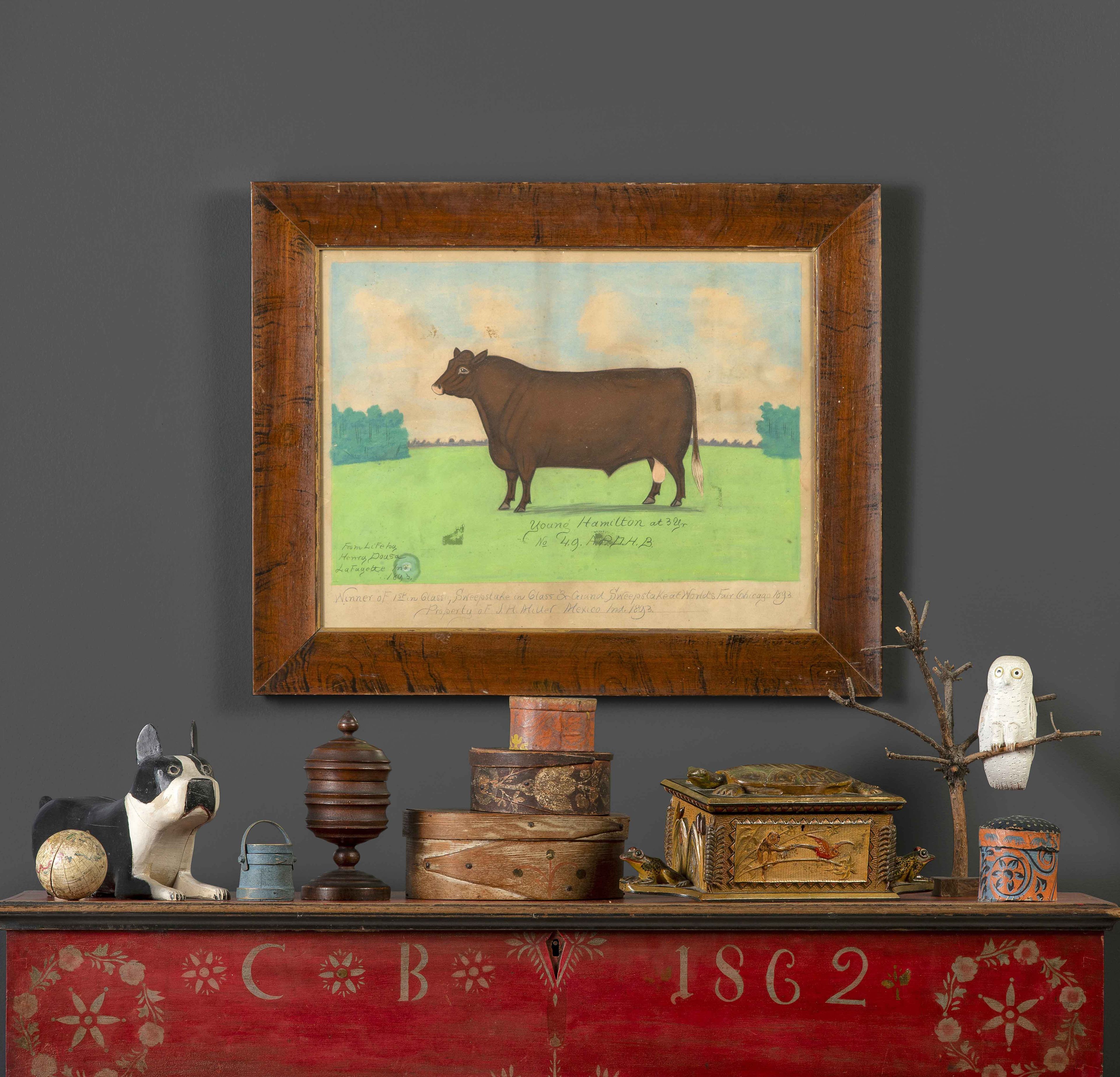
Hindman is honored to present The Donald F. Moylan, M.D. Collection of American Furniture, Folk & Decorative Arts, Part I this November 3 in Cincinnati. Join Wes Cowan in celebrating Dr. Moylan's eclectic collecting tastes and their decades-long friendship. I first met Don at an antique show in Winnetka, Illinois not long after I had started my business (Cowan’s Auctions, Inc.) in the mid-1990s. Don and his partner of nearly a decade, Bob Ketelhut had taken a booth, and I was drawn to the variety of folk art and other antiques they had displayed. I can still remember the thrill of purchasing a rare – and now long gone -- newspaper with blaring headlines announcing the assassination of President Abraham Lincoln. Sometime later I purchased a pair of immense stoneware eagles from Don that sat in my home for nearly 20 years. When Cowan’s began selling American furniture, folk and decorative art, Don was a buyer and consignor – a relationship that lasted more than two decades. In those early days, Don owned a used box truck that he used to haul around purchases and deliver property to auction. As a highly successful urologist, Don’s neighborhood wasn’t exactly déclassé. I suspect that more than one neighbor wondered why the truck was parked in his driveway. It wasn’t much to look at but did the trick – at least until it didn’t. On one trip to Cincinnati Don called to let me know the truck had given up the ghost. I can’t remember the outcome – whether we met him and picked up the consignment, or if the truck was towed and ultimately fixed so that the consignment could be personally delivered. I well remember my first trip to Don’s home; it was an early initiation into an advanced collection. And honestly, I probably didn’t realize just how advanced it was. Now, twenty years later, I have come to recognize it for what it is: one man’s quest for connoisseurship, and a passion for discovery, research and appreciation of Americana. Surface, form, and condition were his watchwords. Don’s love for the hunt, and his equally abiding love of research was evident then and has only become more apparent over the years. Don’s journey began in the early 1970s after his wife Holly introduced him to a friend whose father was a collector. Their mutual interest was piqued, and soon they were visiting local antique shows and eventually, planning vacations to the east coast and making acquaintances of legendary dealers like John Walton and others. Together they traveled widely and bought everywhere. It was through his friends Walton and Jim Rutkowski that Don learned to buy great, not just good. As his knowledge grew, his refinished purchases were replaced by ones with historic surfaces. As this catalog attests, Don’s interests were (and still are) eclectic. Folk art portraits were an abiding concern, and not a single wall in Don’s home didn’t display at least one, if not more delightful visage of a some long-gone American. But folk art carvings, interesting smalls, Both formal and painted country furniture, furniture in near original surface, or an eye-catching form filled his home. And, of course, living in Michigan, Don was naturally drawn to paintings of the Great Lakes shipping industry. At a time when many great collections were assembled with the help of dealers, I think it’s fair to say that Don sourced much of his material himself, scouring auctions throughout Michigan and the Midwest. (He once confided that he thought about 60% of the collection was found in the Wolverine state). With the rise of the internet, Don found treasures further afield, eventually growing to items from more than 30 states and four foreign countries! And he’s still at it. In a recent conversation, Don had been offered a collection of 50 pieces of stoneware: He was considering the deal. Sincerely, Wes Cowan

The renowned French jewelry designer and decorative artist Line Vautrin’s elegant yet whimsical pieces exude a spirit of the fantastical. An autodidact, Vautrin taught herself metalsmithing and successfully opened a shop in Rue de Berri, Paris, after a successful showing at the 1937 Paris International Exposition. Like many artists working during the war years scarcity of materials led Vautrin to varied materials not necessarily associated with luxury. Her early creations included jewelry, belts, powder compacts, and buttons. In the post-war years, Line Vautrin emerged as an iconic celebrity figure and bolstered an art de vivre for French audiences. Her pieces were a joyful reprieve often invoking shapes from nature-creating objects shaped like leaves or shells. Lot 10 | Line Vautrin (1913-1997) | Mirror, c. 1965 | Estimate: $50,000 - 70,000 Vautrin's distinctive style emerged when she developed a material called talosel, consisting of layers of cellulose acetate carved and scratched, and worked with fire with the inclusion of mirror fragments. This breakthrough allowed her to create larger objects, particularly her iconic mirrors. Hindman is honored to present two exceptional pieces by Line Vautrin in our November Modern Design auction that were selected by the late Irish architect and interior designer David Collins for a Private Manhattan Residence. Collins, who favored French design, had a passion for Vautrin’s work and owned a number of her works. Lot 11 | Line Vautrin (1913-1997) | Table Lamp, c. 1965 | Estimate: $10,000 - 15,000 Iain Watson, CEO of David Collins Studio in London, regards the residence as one of the designer’s late masterpieces. “This apartment interior, created by David Collins over two decades ago for his close friends living in Manhattan, has all the hallmarks of The Studio’s extraordinary oeuvre, including a mix of period references, texture, colors, and luxurious finishes. This home looked to redefine timeless glamour for New York living.” The mirror and lamp on offer are a testament to Vautrin’s heightened craft of hand-working materials. The interior border of the mirror displays confident gauged lines to the resin, reminiscent of bark texture, in contrast to the delicate shimmering petals. This particular mirror stands on the larger side of Vautrin’s catalogue that usually did not exceed one meter in overall diameter for these works. The scale, a deliberate choice, is influenced both by her artistic preferences and also by the practical considerations of time and material constraints inherent in working with the resin medium. The cylindrical table lamp features tiled and worked gold talosel resin. The effect of multiple layers of the unique talosel material create a rich patterned mosaic appearing as if the object was forged and cast. These two fantastic examples are fresh to market and will be the cornerstone of Hindman Auctions November 14th Modern Design sale. Featured Photo: Evan Joseph
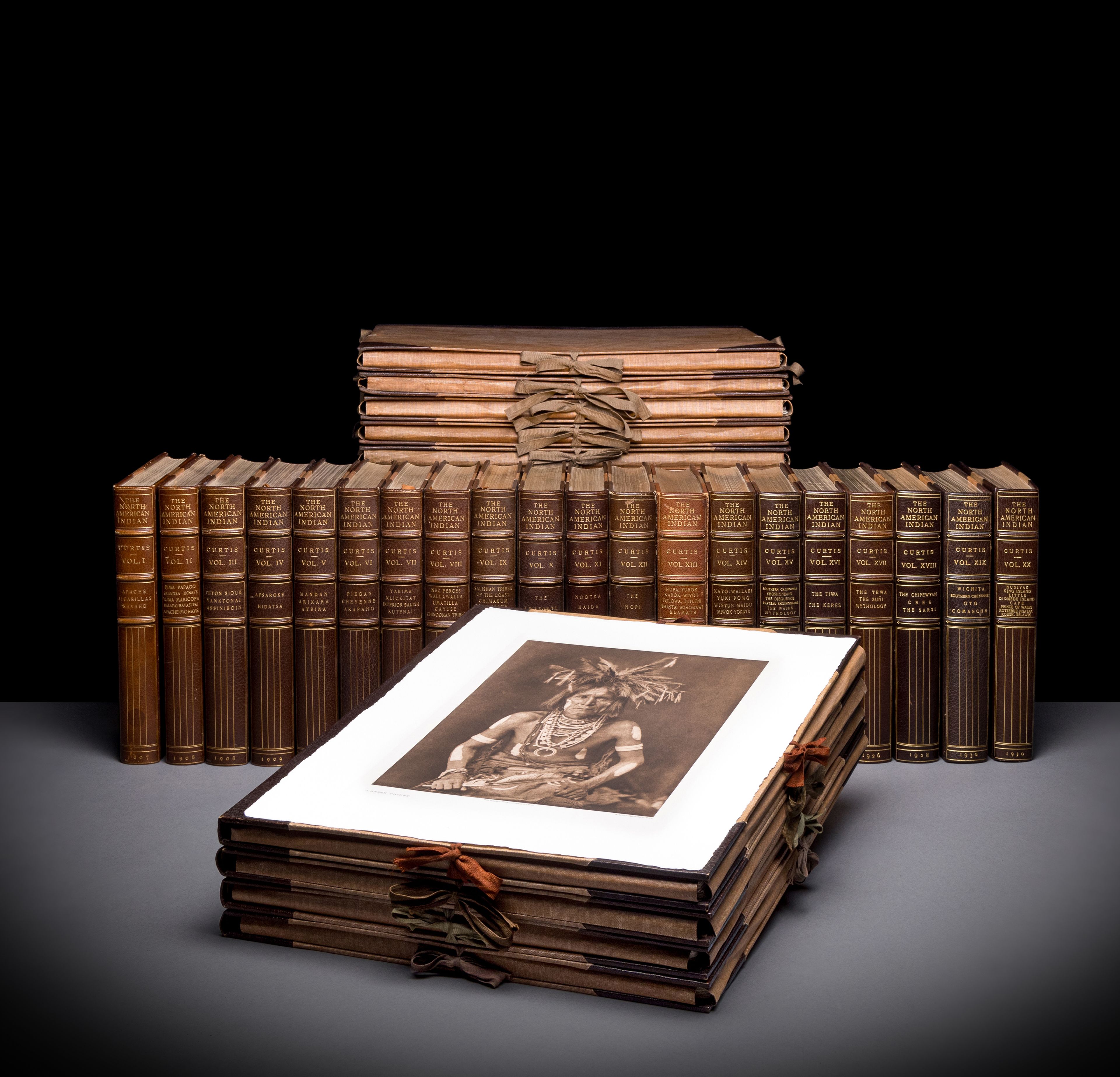
Hindman is honored to present The North American Indian by Edward S. Curtis in our upcoming November 9 auction, Fine Books from the Dorros Family Collection. Join us in celebrating this complete work of over 40,000 photographs documenting Native American peoples. Edward Sheriff Curtis was born on a farm near Whitewater Wisconsin in 1868, and moved with his family to Minnesota in 1874. His life there, living near the Chippewa, Menominee and Winnebago tribes, piqued his interest in American Indians. While in Minnesota, he also developed an interest in photography, and at the age of 12, he built a rudimentary camera consisting of two boxes, one inside the other, based on instructions he found in Wilson’s Photographics; he became an apprentice photographer in St. Paul at age 17. Curtis’s father’s ailing health prompted the family to move to Washington Territory in 1887. In Seattle, he partnered with Rasmus Rothi in a photographic studio, acquiring a 50% share for $150. Less than a year later, he partnered with Thomas Guptill to establish a new studio, Curtis and Guptill, Photographers and Photoengravers, on Second Avenue where he was known for producing the finest photographic work in the city. While in the Pacific Northwest, Curtis became acquainted with the Native American tribes in the area. In particular, he learned about a Lushootseed woman, Kikisoblu, also known as Princess Angeline, who was the last living daughter of Chief Seattle. “When Curtis saw Angeline moving along the shore, the visible nearly dead…she looked at once like the perfect subject. There against the deep waters of Puget Sound, there with the snow-mantled Olympic Mountains framed behind her…with all of that, Curtis saw a moment from a time before any white man had looked upon these shores. He saw a person and nature, one and the same in his mind, as they belonged. A frozen image of a lost time: he must take that picture before she passed” (Timothy Egan, Short Nights of the Shadow Catcher, p.6). While photographing Mount Rainier in 1895, Curtis had a chance encounter with a lost party and guided them to refuge at Camp Muir. The party included George Bird Grinnell, then the editor of Field & Stream and an acknowledged expert on the Plains Indians, C. Hart Merriam, Chief of the U. S. Division of Biological Survey. At Merriam’s suggestion in 1899, Curtis was appointed the official photographer of the Harriman Alaska Expedition, and the following year, he accompanied Grinnell to Montana to photograph the people of the Blackfeet and Piegan tribes. Near the end of that summer, Curtis told Grinnell that his mind was set that he would embark on a plan to photograph all intact Indian communities left in North America, to “capture the essence of their lives before that essence disappeared” (Egan p.50). Curtis believed that “the record, to be of value to future generations must be ethnologically accurate” (qtd. by Egan, p.50). PUBLICATION AND SUPPORT: THE RISE AND FALL OF THE NORTH AMERICAN INDIAN One of the early supporters of Curtis’s work was President Theodore Roosevelt, who Curtis had met through a series of encounters in 1904. Curtis and Roosevelt bonded “over their mutual interests in the outdoors and the changing American West. The two also shared the then widely accepted but mistaken belief that the Indian Nations of the U. S. were a ‘vanishing race’” (Tim Greyhavens, “Duty Bound to Finish,” 2018, p.5). “The years 1904-05 were watershed times in the development of what would become Curtis’s life-long project” (Greyhavens, p.5). Curtis gained support for his work after mounting several successful exhibitions in Seattle and New York, and by the end of 1905, Roosevelt provided Curtis with a letter of introduction to help him find financial support for the project. Curtis's introduction to J. P. Morgan, who would become the largest financial supporter of his work, came through Morgan’s daughter Louise Satterlee, who had seen his exhibition at the Waldorf-Astoria hotel in New York in 1905. Curtis wrote a letter to J. P. Morgan outlining plan to “make a complete publication, showing picture and including text of every phase of Indian life of all tribes yet in a primitive condition, taking up the type, male and female, child and adult, their home structure, their environment, their handicraft, games, ceremonies, etc.; dividing the whole into twenty volumes containing fifteen hundred full page plates, the text to treat the subject much as the pictures do, going fully into their history, life and manners, ceremony, legends and mythology, treating it in rather a broad way so that it will be scientifically accurate, yet if possible, interesting reading” (qtd. in Greyhavens, p.9). Morgan offered $75,000 for a series on the North American Indian, to contain 1,500 photographs in 20 volumes, and in return, he was to receive 25 complete sets of the work and 300 original photographs. The first two volumes appeared in 1907 and 1908, and immediately “the acclaim was seismic. In appearance and texture, the books were among the most luxurious ever printed” (Egan p.154). The images, printed in sepia tones from acid-etched copper plates produced by John Andrew & Son in Boston and printed by the Cambridge University Press, “were better than fine oil paintings” (Egan p.154). The New York Times acclaimed “nothing just like it has ever before been attempted for any people. He has made text and pictures interpret each other, and both together present a more vivid, faithful and comprehensive view of the North American Indian as he is to-day than has ever been made or can possibly made again…In artistic value the photogravures are worthy of very great praise. They are beautiful reproductions of photographs that in themselves are works of art” (qtd. in Egan, p.154). In late 1909, noticing the financial deficits of Curtis’s project, Morgan directed that a new enterprise be formed. The newly-formed organization, North American Indian Company, would manage the finances and business side of Curtis’s work. After J. P. Morgan’s death in 1913, his son continued the family’s financial support of the project, ultimately providing at least half of the $1.5 million it took to complete the work. Though Curtis had received funding from other sources, the cost of the project, in part due to his failure to sell subscriptions, as well as debt from his divorce, crippled his business. By 1928, desperate for cash, Curtis sold the rights to his project to Morgan. In 1930, shortly following the publication of the final volume of The North American Indian, the North American Indian Company went bankrupt. In 1935, the Morgan family sold nearly everything related to The North American Indian to Charles Lauriat Books in Boston for $1,000 plus a percentage of future royalties. LEGACY: “A BROAD AND LUMINOUS PICTURE” Of the 500 planned sets, an estimated 272 were finished. “Only in recent years has the scope and depth of Curtis’s scholarship come to be appreciated. The North American Indian, the monumental work of a self-educated man, ‘almost certainly constitutes the largest anthropological enterprise ever undertaken’” according to Mick Gidley (Egan p.322). In all, Curtis took more than 40,000 photographs, recorded over 10,000 songs, wrote down vocabularies and pronunciation guides for 75 languages, and transcribed an untold number of myths, rituals, and religious stories from oral histories. Edward Curtis never profited from the production of his expansive and comprehensive publication, and lost his friends and marriage to his obsession, but “he always believed his words and pictures would come to life long after he’d passed – the artist’s lasting reward of immortality. A young man with an unlived-in face found his calling in the faces of a continent’s forgotten people, and in so doing, he not only saw history, but made it” (Egan p.325). "Many Native Americans Curtis photographed called him Shadow Catcher. But the images he captured were far more powerful than mere shadows. The men, women, and children in The North American Indian seem as alive to us today as they did when Curtis took their pictures in the early part of the twentieth century. Curtis respected the Native Americans he encountered and was willing to learn about their culture, religion and way of life. In return the Native Americans respected and trusted him. When judged by the standards of his time, Curtis was far ahead of his contemporaries in sensitivity, tolerance, and openness to Native American cultures and ways of thinking" (Laurie Lawlor, Shadow Catcher: The Life and Work of Edward S. Curtis, p.6). His life-work, The Native American Indian, stands as a monument of American photography and illustrated-book production. References: Howes C-965; Truthful Lens 40. See Timothy Egan, Short Nights of the Shadow Catcher, 2012. See Tim Greyhavens, “Duty-Bound to Finish: Edward S. Curtis and His Quest for Money to Complete The North American Indian,” December 2019. See Laurie Lawlor, Shadow Catcher: The Life and Work of Edward S. Curtis, 2005