
New & Noteworthy
Stay up to date with news, highlights, & features from across Freeman's.
Stay up to date with news, highlights, & features from across Freeman's.
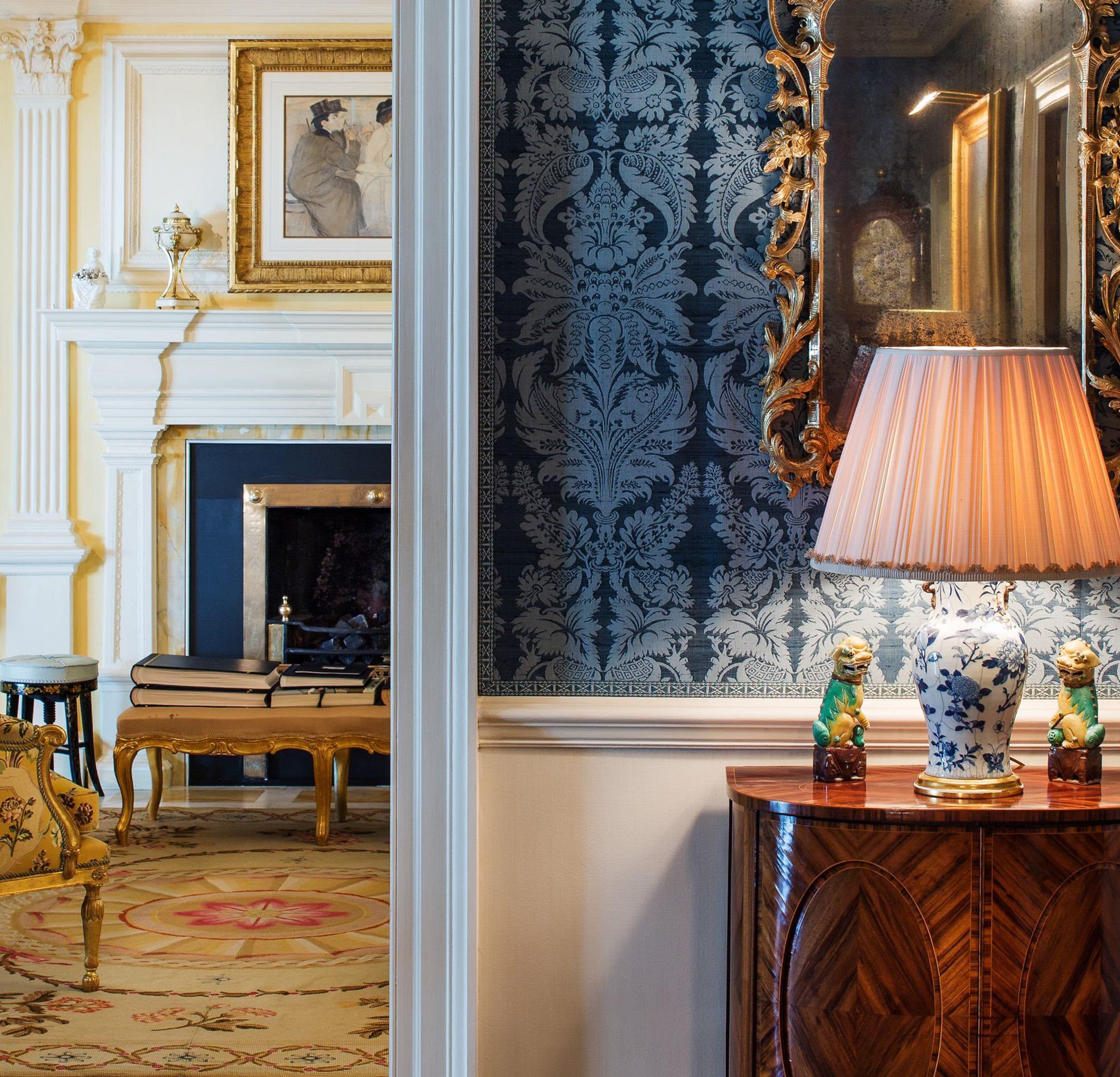
To Our Dear Clients and Friends, 2022 was a historic year for Hindman. After celebrating a milestone 40th anniversary in October, we achieved record revenues for the second year in a row, with $100 million in sales over 140 auctions. We also broadened our reach in key regions across the country with three new locations opening in 2022 including Miami, Boston, and New York City. I’m pleased to share news that Gemma Sudlow, star auctioneer and industry veteran, will launch our full-service New York location. I’m looking forward to partnering with Gemma and her team to build upon Hindman’s existing network of collectors, advisors, and institutions in the art market capital of the world. Looking ahead to 2023, I am excited to announce the appointment of a new CEO at Hindman. As we advance into the company’s fifth decade, I am passing the reins to the extremely capable hands of Alyssa D. Quinlan who has served as Chief Business Development Officer and Executive Vice President for the last three years and worked at the firm for over ten years. With a background in banking coupled with her time at an international art advisory firm, Alyssa has re-energized our Business Development efforts across the country, expanding our core business to record levels. Further, she was instrumental in re-launching our appraisals department with Hindman Appraisals, which will be entering its second year as an independent entity in 2023 allowing us to readily provide impartial and objective appraisals. Meanwhile, I will transition into a new role as Hindman’s Executive Chairman. I leave the position of CEO with full confidence that the firm will grow in new and exciting ways under Alyssa’s leadership. Likewise, in the new year, Hindman will be hitting the road once again. Our Specialist and Business Development teams are looking forward to a full season of attending the many shows, conferences, and fairs that make the art world so vibrant. You can expect to see Hindman at several events throughout the year including the Winter Show in New York, EXPO Chicago, the Charleston Antiques Show, and the Las Vegas Antique Arms Show, to name a few. Hindman’s success and steady growth are no accident—they are the collective effort of our hardworking and tenured team of 175 professionals across our 16 locations. We are consistently presenting fresh-to-the-market property at auction while utilizing leading-edge technology to make bidding and buying easier from anywhere in the world. Still, as we continue to innovate and expand our reach across the globe, our top priority is, and always will be, providing dedicated attention and holistic, end-to-end solutions for our loyal clients. Lastly, we want to thank you for your continued support of Hindman. As we begin the new year, we will bring the same commitment to service and dedication to maintaining the highest standards of integrity and ethics in the industry, as we help you navigate your own personal collecting journey. Early indications once again point to a strong year at Hindman, so we hope to see you at one of our 130 auctions in 2023, and indeed for years to come. Sincerely, Jay F. Krehbiel Executive Chairman To explore our 2023 auction schedule, click here. Header Photo by Tom Rossiter
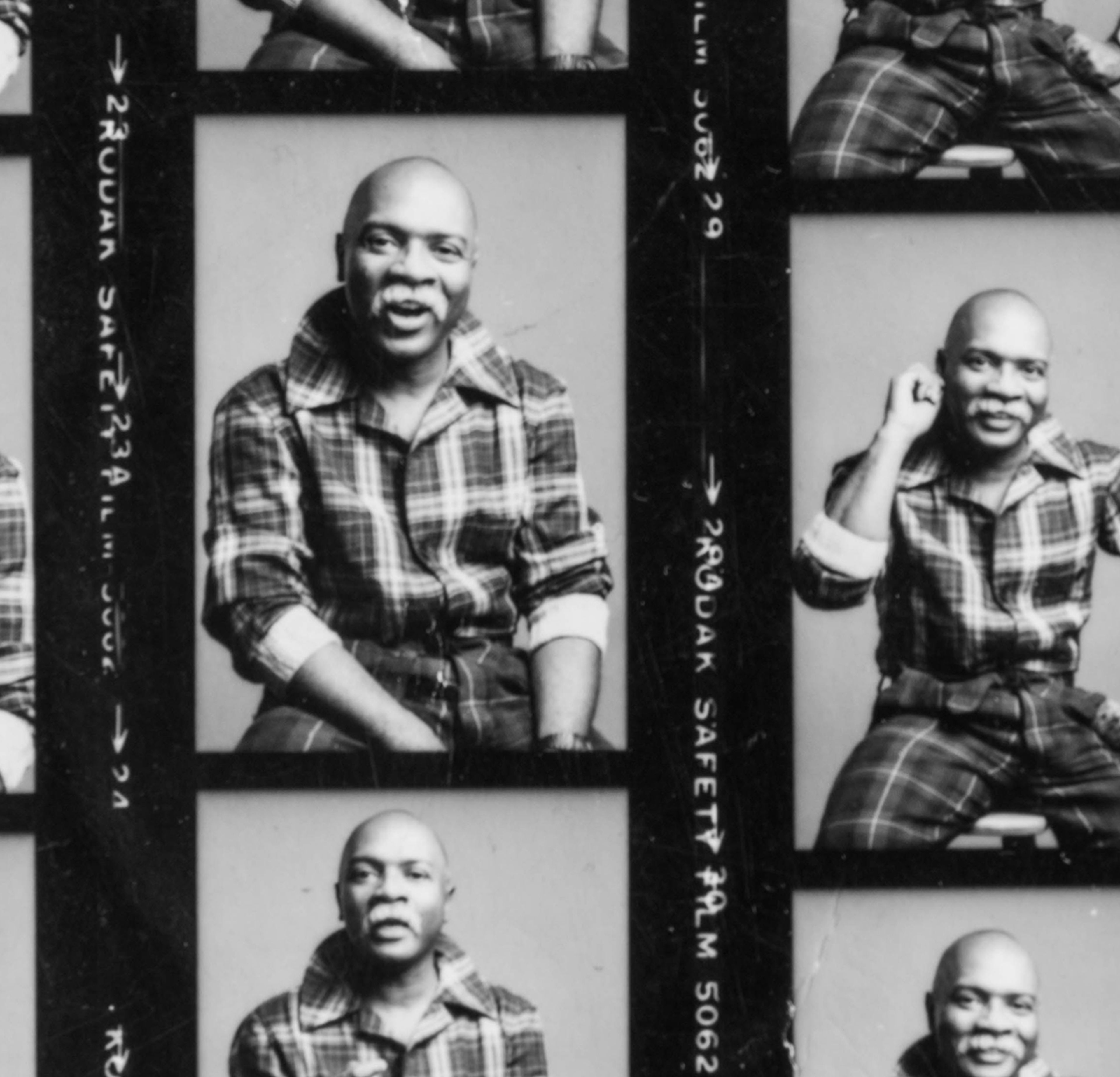
Hindman is pleased to present our first Couture & Luxury Accessories auction of the year, Spring Fashion & Accessories this March 14, 2023. Featuring property from three notable collections, here is your first look at this historic auction. Black Fashion Designers Hindman’s March 14 Spring Fashion auction celebrates two hundred years of fashion history with important collections that are new to the market and gathered from around the United States. Headlining the sale is a collection of designs created by Arthur McGee (1933-2019), an American fashion designer known as the “Grandfather of Fashion Designers of Color”. In addition to the 45 ensembles in this sale that were created by Arthur McGee between the 1970s and the 1990s, the sale also includes McGee’s archive, with design sketches and inspiration, hundreds of photographs from throughout McGee’s career, a collection of letters written to the designer, business documents, and several prestigious awards given to McGee later in his career. The auction also contains several designs from other black fashion designers who worked in the United States during the mid-20th century, some of whom were inspired by Arthur McGee, including Scott Barrie, Willi Smith, Jeffrey Banks, and Fabrice Simon. A Touch of the Gilded Age Hindman is also very proud to bring to auction a rare collection of Chicago history items connected to two emblematic protagonists of the Gilded Age: Bertha and Potter Palmer. Their possessions and belongings are now in the collections of important museums, such as the Art Institute of Chicago and the Chicago History Museum. Carefully preserved in the family for generations, these items, which also include material related to the Chicago 1893 World’s Columbian Exhibition, document the Palmers' private and public spheres through a rare collection of embroidered sheets and linens used in the family’s home, to artifacts that document Bertha Palmer’s travels and activities as the President of the Board of Lady Managers at the 1893 World’s Fair. Also included in this collection are several high fashion and haute couture garments created for Bertha and Potter Palmer’s children and grandchildren, including several rare designs by the Parisian house of Callot Soeurs. Treasures from a Historic Museum The sale also boasts an important collection from the Valentine Museum in Richmond, Virginia, deaccessioned from the museum to benefit collections care, preservation, and future acquisitions. Opened in 1898, the Valentine Museum was one of the first museums in Richmond and is now dedicated to collecting, preserving, and interpreting Richmond’s history. The items offered in this collection document over 150 years of fashion history, including designs from throughout the 19th century and more contemporary works by designers such as Paquin, Pingat, Henriette Favre, Liberty of London, Jean Desses, Norman Hartnell, Balenciaga, Hanae Mori, Halston, and Chanel.
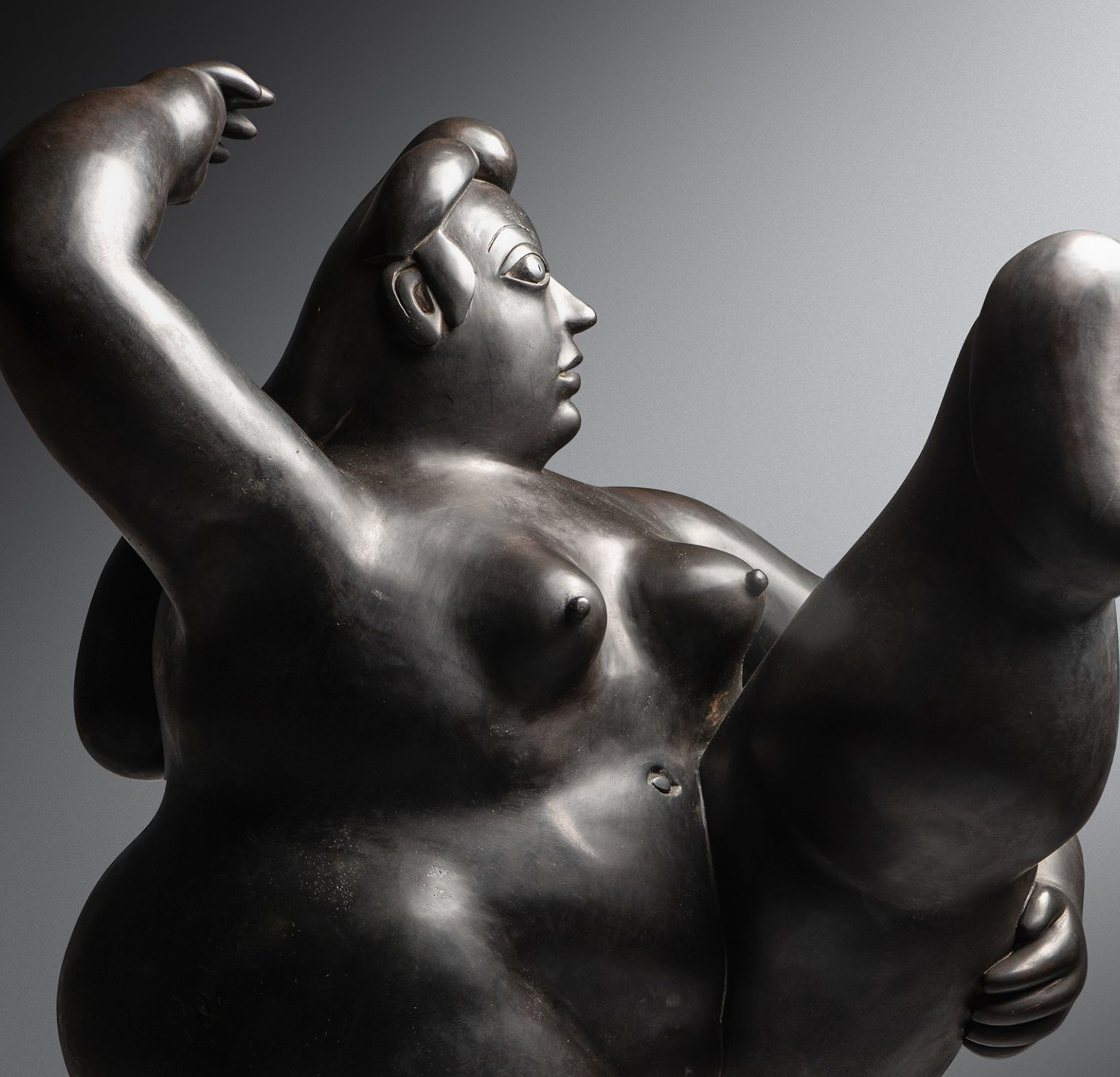
Married in January of 1988, Ted and Sherri Pincus loved to travel the world and began collecting art early in their marriage. Ted was the Chairman and CEO of the Financial Relations Board, an international public relations firm based in Chicago, with offices throughout the United States. Sherri, his wife, has extensive experience as a professional chef, cooking teacher, and cookbook author. During one trip, they visited a large, outdoor Fernando Botero exhibit in Florence, Italy and decided that one day they would acquire one of his pieces for their collection. Purchased in 1998 from Irving Galleries in Palm Beach, Florida, the lovely Ballerina appealed to them because of her voluptuous grace and balance. Ballerina, 1981, is representative of Botero’s distinctive style of volumetric, over-sized shapes with unexpected shifts in scale. Drawing from art historical themes that range from the Middle Ages, the Italian quattrocento, and Latin American colonial art to the modern trends of the 20th century, the artist’s large cast of characters form one of the most unique bodies of work in 20th and 21st century art. Botero’s interest in art began in Colombia, where he was born in 1932. It was here that he was exposed to pre-Columbian and Spanish colonial art and began to make his own drawings and watercolors at an early age. In 1952, he was awarded a Second Prize at the National Salon in Bogotá. With the money Botero earned from this award, the young artist traveled to Europe, where he encountered the work of the Old Masters, as well as the avant-garde art of Picasso and Braque. As a result, much of his work contains references to such European masters as Jan Van Eyck and Peter Paul Rubens and embraces the Renaissance tradition of abundantly fleshed nudes and statuesque figures. It was also during these formative years in Europe that Botero began to simplify his images and developed his signature style of monumental, smoothly rounded figures and inflated shapes that expand across the composition. In the 1970s, Botero’s dedication to the expression of volume and mass led to the translation of his oversized images on canvas into sculpture, producing enormous bronze figures and animals. The simplicity and dimensions of Ballerina can be linked to pre-Columbian works, in which broad torsos and flared hips and thighs are common features. Likewise, the dancer’s almond-shaped eyes that stare resolutely ahead recall those of the Tolita-Tumaco figures from ancient Columbia and Ecuador. However, Botero has modernized his sculpture in its subject matter. With her left leg and right arm upraised, Ballerina gracefully balances on her powerfully muscular right leg. The stance is similar to those of Degas’ dancers, who are seemingly suspended in uncertain mid-motion, in danger of losing balance. With his desire to represent tangible volume in monumental form, Botero’s dancer instead confidently possesses the space in which she exists. The artist has distilled the essence of shape and volume, the figure’s plastic form a celebration of strength and vigor. “Sculpture enables me to create real volumes,” Botero once reflected. “Sculpture is like a caress. You touch the form, you can give the forms the softness, the sensuality you want. It’s magnificent.” Join us this December 14th for our Post-War & Contemporary Art auction featuring Ballerina by Fernando Botero.
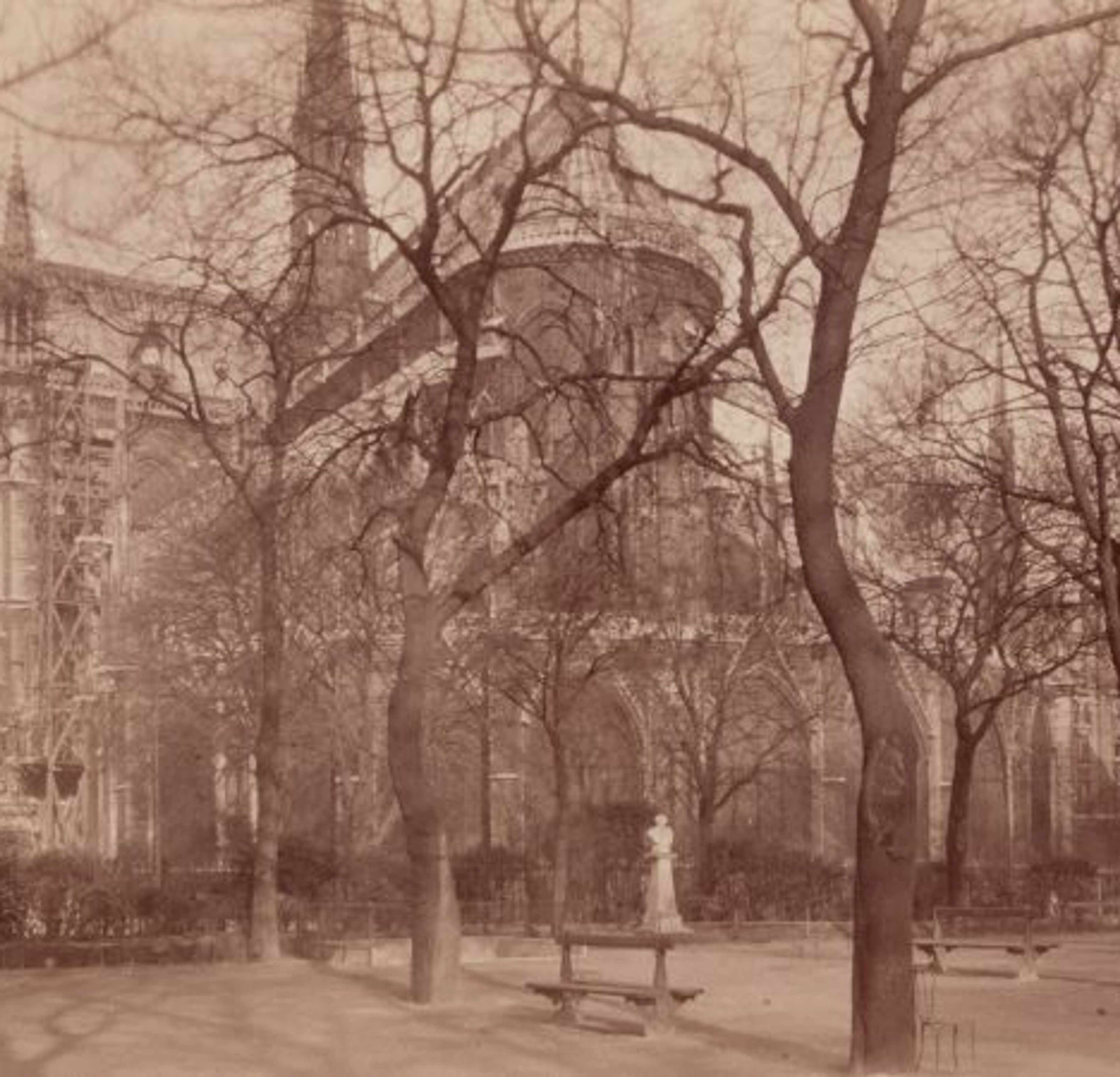
“The Atget prints are direct and emotionally clean records of a rare and subtle perception, and represent perhaps the earliest expression of true photographic art.” – Ansel Adams Born in Libourne, near Bordeaux in 1857 and orphaned as a child, Jean Eugène August Atget was raised by an uncle. He left school in his teens, working first as a cabin boy at sea before training as an actor at the National Conservatory of Music and Drama in Paris. In the late 1880s, Atget abandoned the stage for art, first taking up painting before turning to photography where he found inspiration in the street life and architecture of the capital. Atget’s initial intention was to supply photographs (or “documents”, as he termed them) to artists, architects and stage designers as source material for their own work. His focus expanded around 1900, however, in the face of the increasing modern transformation of Paris and consequent demolition of the city’s older neighborhoods in favor of grand facades, broad boulevards, and public parks. Atget became determined that his photographs should now become an enduring and encyclopedic record of the city’s rapidly vanishing architectural and cultural history. Atget’s ambitious goal was accomplished using rudimentary, cumbersome and increasingly obsolete equipment. Rising before dawn, Atget lugged a bulky view camera, a tripod and glass negatives in their heavy wooden holders – almost forty pounds of equipment — through the city and into the surrounding countryside, often as far as Versailles and Saint-Cloud. These glass plates were later developed in his workroom and contact-printed on albumen papers on his roof. Atget’s living was always meager; he sold to whomever saw merit in his work – to libraries and historical societies, who embraced its documentary aspects, and to other artists who admired its other more painterly qualities. Before World War I, enthusiasts included Henri Matisse, George Braque and Andre Derain. By the mid 1920s, Atget had become a favorite of the Surrealists, particularly Man Ray, who found his “naive” pictures revelatory and had a number of them published in La Révolution surréaliste in 1926. Berenice Abbott, Man Ray’s assistant, also a devotee, recalled that: “My excitement at seeing these few photographs would not let me rest. Who was this man? I learned that Atget lived up the street from where I worked — at 17 bis rue Campagne Premiere and that his prints were for sale. Perhaps I could own some. I wanted to see more and lost no time in seeking him out. I mounted the four flights to his fifth-floor apartment. On the door was a modest handmade sign, ‘Documents pour Artistes’. He ushered me into a room approximately fifteen feet long, the ordinary room of a small apartment, sparsely and simply furnished. Atget, slightly stooped, impressed me as being tired, sad, remote, appealing. He was not talkative. He did not try to ‘sell’ anything. He showed me some albums, which he had made himself, and I selected as many prints as I could afford to pay for from my meager wages as a photographer’s assistant.” Abbott remained Atget’s committed champion after his death, fighting to preserve his archive of around 5,000 vintage prints and more than 1,000 glass plate negatives, and initiating their transfer to New York City. Thanks to this intervention, Atget’s work was highly influential on successive generations of American photographers, from Walker Evans to Lee Friedlander. The Museum of Modern Art, New York, purchased Atget’s archive from Abbott and Julien Levy in 1968 and it is from this core group that this extraordinary selection of photographs, being sold on behalf of The Museum of Fine Art, Houston, originates. The selection presented here offers some significant highlights from Atget’s career – richly toned studies, all inscribed in pencil in his distinctive spidery hand – of such familiar Paris landmarks as Notre-Dame, Fête de la Villette, Moulin Rouge and Versailles, as well as a fascinating glimpses into less familiar places and preoccupations – a shadowy stairwell on the rue des Archives, a stark alleyway in the Gobelins, primroses in full bloom, a wintry tree at St. Cloud, or a jocular flower-seller. This auction offers collectors the unique opportunity to acquire significant examples of Eugene’s Atget’s work from a distinguished source, and Hindman is honored to have been entrusted with this important sale. Join us this December 6th for Eugène Atget Photographs Sold by the Museum of Fine Arts, Houston.
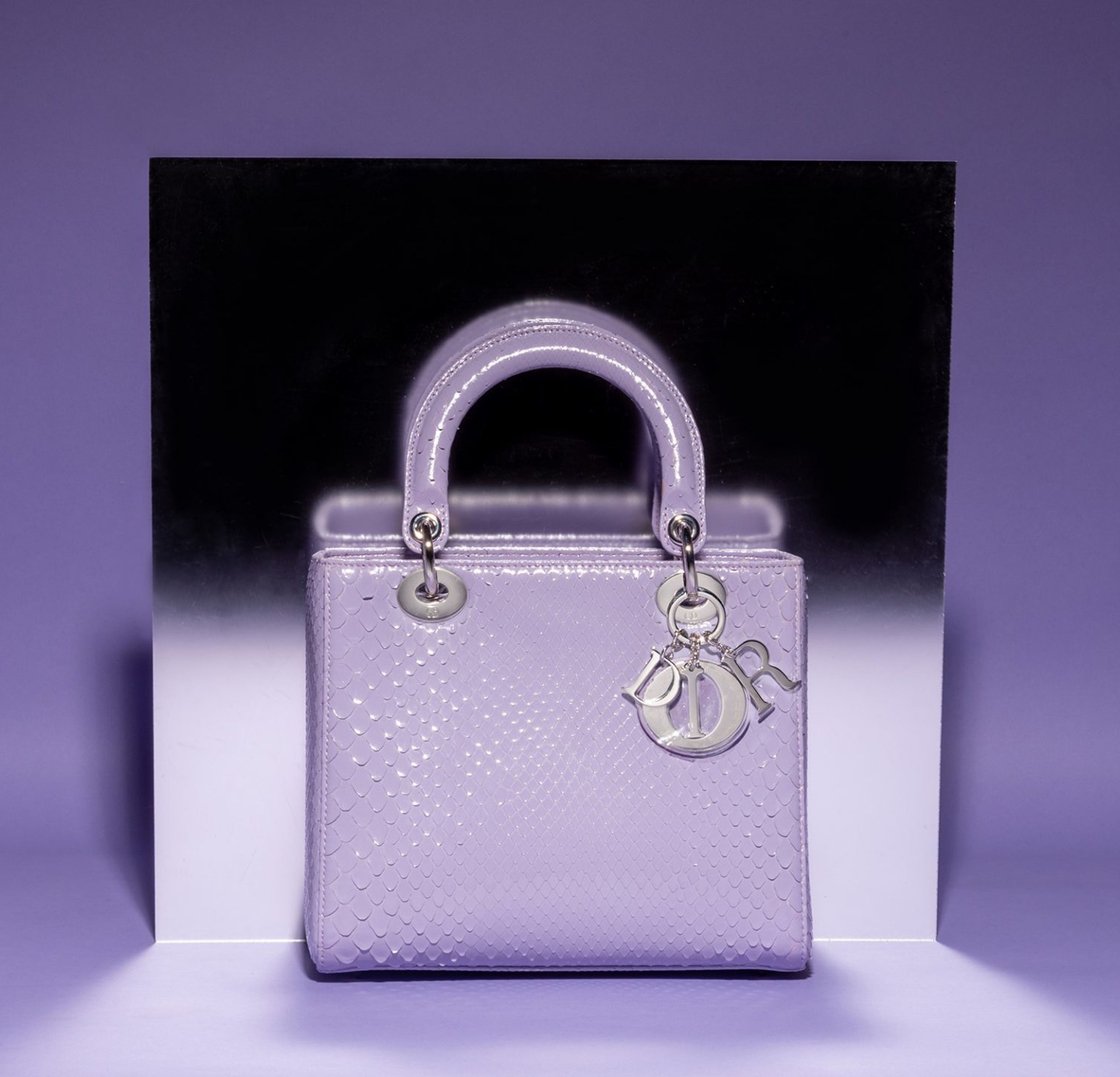
Hindman is pleased to present our Luxe Holiday auction this December 1st. Featuring a single-owner suite of Dior handbags, including a selection of the house’s rarest output by John Galliano, Raf Simons and Maria Grazia Chiuri, this auction is brimming with designer gems for any collection. With selections from Dior, Chanel, Hermès and Judith Leiber to name a few, the luxury handbags showcased in this sale were inspired by and are designed by powerhouse women in the industry. Join us as we explore the myriad of muses behind some of the most iconic bags of the 20th and 21st centuries. Princess Diana and the Lady Dior Bag The Dior Lady Bag first debuted in 1995 as the Chouchou bag, and was presented to Princess Diana by Bernadette Chirac, then-First Lady of France. It was renamed in 1996 to honor the late princess. It was launched during Gianfranco Ferré’s tenure using the ‘cannage’ pattern inspired by the cane-backed chairs favored by Christian Dior in his salons. The bag has since been canonized as a house staple, reinvented each season by successive creative directors. Diana’s favorite handbag, this purse would frequently be seen carried by this member of the British Royal family and most recently was featured in the smash hit tv show The Crown on Netflix. The Lady Dior bag honors the timeless style of Diana with its classic silhouette and is the hallmark of this year’s Luxe Holiday auction. Elizabeth Taylor and Judith Leiber Judith Leiber, the first woman member of the Hungarian Handbag Guild, fled Nazi occupation with her family during World War II and eventually went on to establish her own line in 1963. Expertly designed and flawlessly handcrafted, her popular handbags are made with Swarovski crystal and have gained international acclaim. Leiber’s quirky and fun handbags have been sported by celebrities like the Kardashians, Lupita Nyong’o and Beyonce. With 50 to choose from at Hindman, these novelty purses offer the collector an opportunity to stand out in the crowd. Adding to the star power in this auction, lots 342, 354, 355, and 356 feature selections from Elizabeth Taylor’s handbag collection. An icon of the silver screen, Taylor’s fashion sense and lavish lifestyle allowed her to amass an impressive collection of couture and luxury goods throughout her lifetime. Her commitment to glamour is seen in the wonderful handbags showcased in this sale, which include Judith Leiber and Fendi. Grace Kelly and the Hermès Kelly Bag Highly prestigious and exclusive, the Hermès Kelly bag was originally designed in the 1930s by Robert Dumas. The handbag features a trapezoid shape with two triangular gussets, a cutout flap, and a handle with two side straps and was made famous by Grace Kelly, Princess of Monaco. Intended as a functional bag, the Kelly was created for the independent, energetic women of the time. Its classic silhouette has made it one of the most sought-after bags of our modern era alongside its sister handbag, seen above, the Birkin. Worn by Kelly until her death in 1982, this handbag (lots 199, 200, 201, 202) is a staple for any luxe collector who wants to own a piece of history.
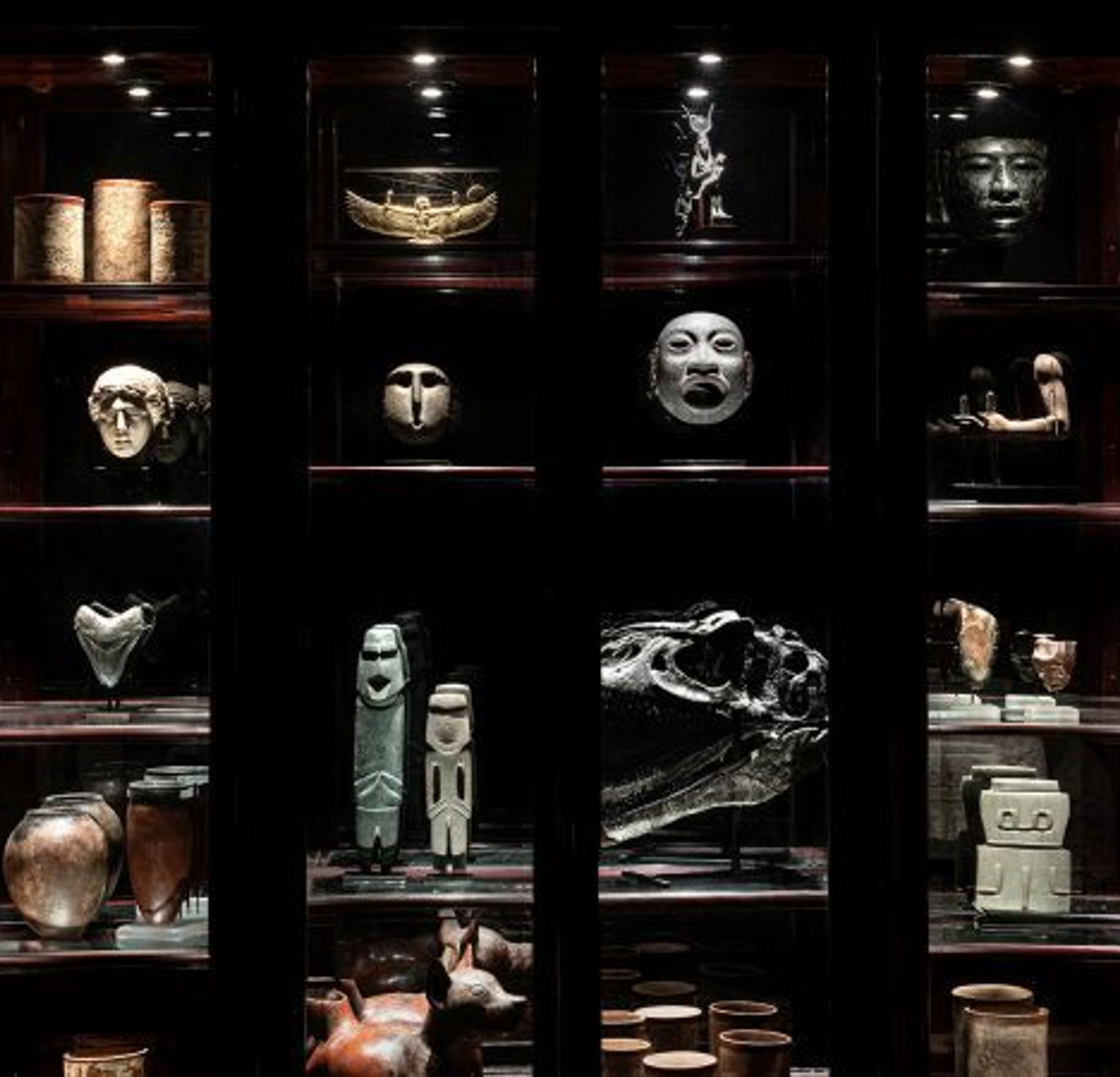
From the birth of our solar system to man’s exploration of it, Hindman’s Ancient Art & Natural History: A Cabinet of Curiosities examines the natural wonders of our world and the evolution of our species within it. The inspiration came from Europe’s Age of Enlightenment and the creation of Wunderkammers. In 1565, Samuel Quiccheberg published his seminal work on the collection and display of objects titled Inscriptiones, which would later serve as the rationale for the world’s first encyclopedic museums. According to Quiccheberg, the ideal collection was ‘a theatre of the broadest scope, containing materials and precise reproductions of the whole universe’. Seen here is a timeline with wonderous objects sought to inspire others to develop their own cabinets of curiosities.
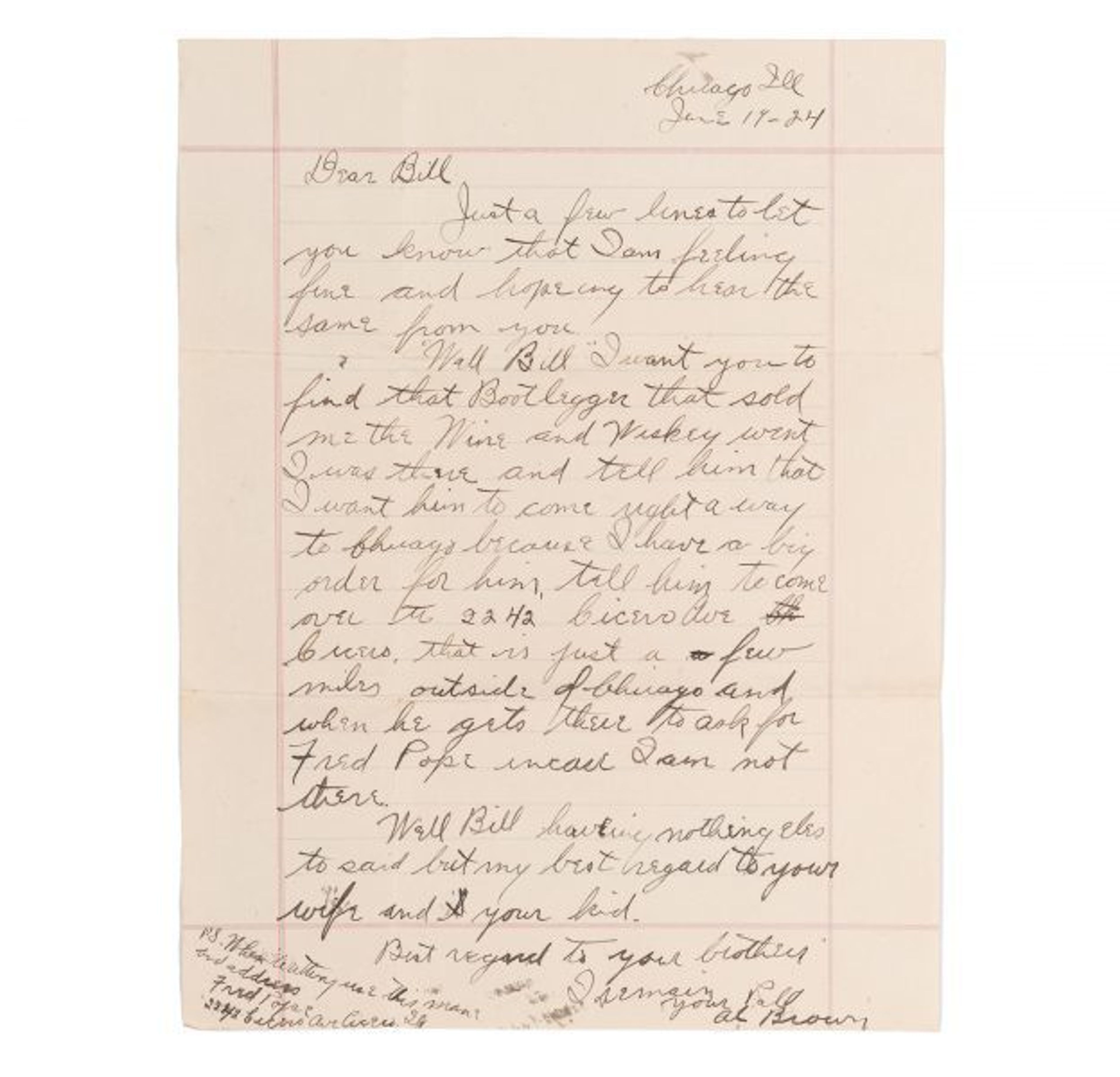
CHICAGO – Hindman will present one of the most significant groups of letters written by notorious American gangster Al Capone to ever come to market in its November 9th Books & Manuscripts auction. These letters illuminate “Scarface’s” thinking during prohibition and his years with the Chicago Outfit. Al Capone letters are highly rare, with examples from this prohibition period being virtually unobtainable. Only four Al Capone letters have been sold at auction in at least the last 50 years, none of which featured content as compelling as exhibited here, both in terms of the time they were written and the stories they tell. “These letters, written by Capone to his friends, mark some of the most pivotal moments in his time with the Chicago Outfit, discussing the 1925 attempt on his life, bootlegging, and the establishment of Cicero as the gang’s new headquarters just outside of Chicago in 1929,” commented Hindman’s Vice President & Senior Specialist for Books & Manuscripts Gretchen Hause. “We know of no examples of Capone letters to come to market from this prime period of his life, when his influence on organized crime in Chicago was at its apex.” These three letters written from Capone to his trusted friends William and Lowrene Sell, owners of the gangster’s favorite Wisconsin resort getaway, remained in the family for several generations, but will now be offered for sale for the first time. Highlighting the group is an exceptional handwritten letter from Capone, written from Cicero in 1924 (lot 560; $12,000-18,000). Capone writes urgently to William (Bill) Sells imploring him: “I want you to find that bootlegger…tell him I want him to come right away to Chicago,” and noting that he “[has] a big order for him.” Another letter in the offering was written by Capone two days after the January 1925 assassination attempt on his life to let the Sells know that he’s alright (lot 561; estimate: $10,000-15,000). North Side Gang members attempted to kill Capone at a South Side, Chicago restaurant, and while Capone escaped injury, the letter demonstrates that he is still clearly shaken, including a line that reads: “Well Pal things have been so darn exciting that I haven’t had time to change clothes.” In a 1929 letter (lot 562; estimate: $3,000-4,000), Capone writes to Sells to inquire about real estate in Wisconsin, a state in which both he and his brother would eventually own homes. Accompanying these letters is a Colt New Army & Navy Revolver Model from 1896 (lot 564; estimate: $5,000 – 7,000) that is believed to have been used by Capone, alongside modern reprints of photographs in the family’s collection showing Capone, his associates, and a female companion. An archive of ephemera (lot 563; estimate: $800 – 1,200), including photographs, negatives, and matchbooks from Capone will also be featured. Bidding for the November 9th auction will begin at 9am CT, and will be available in-person at Hindman’s Chicago saleroom, via absentee bid, via telephone, and online via Hindman’s Digital Bid Room. Additional information about the auction can be found here. Featured image: Al Capone, autograph letter signed (as “Al Brown”), to Bill [Sells]. Chicago, IL, 14 June 1924. Estimate: $12,000-18,000
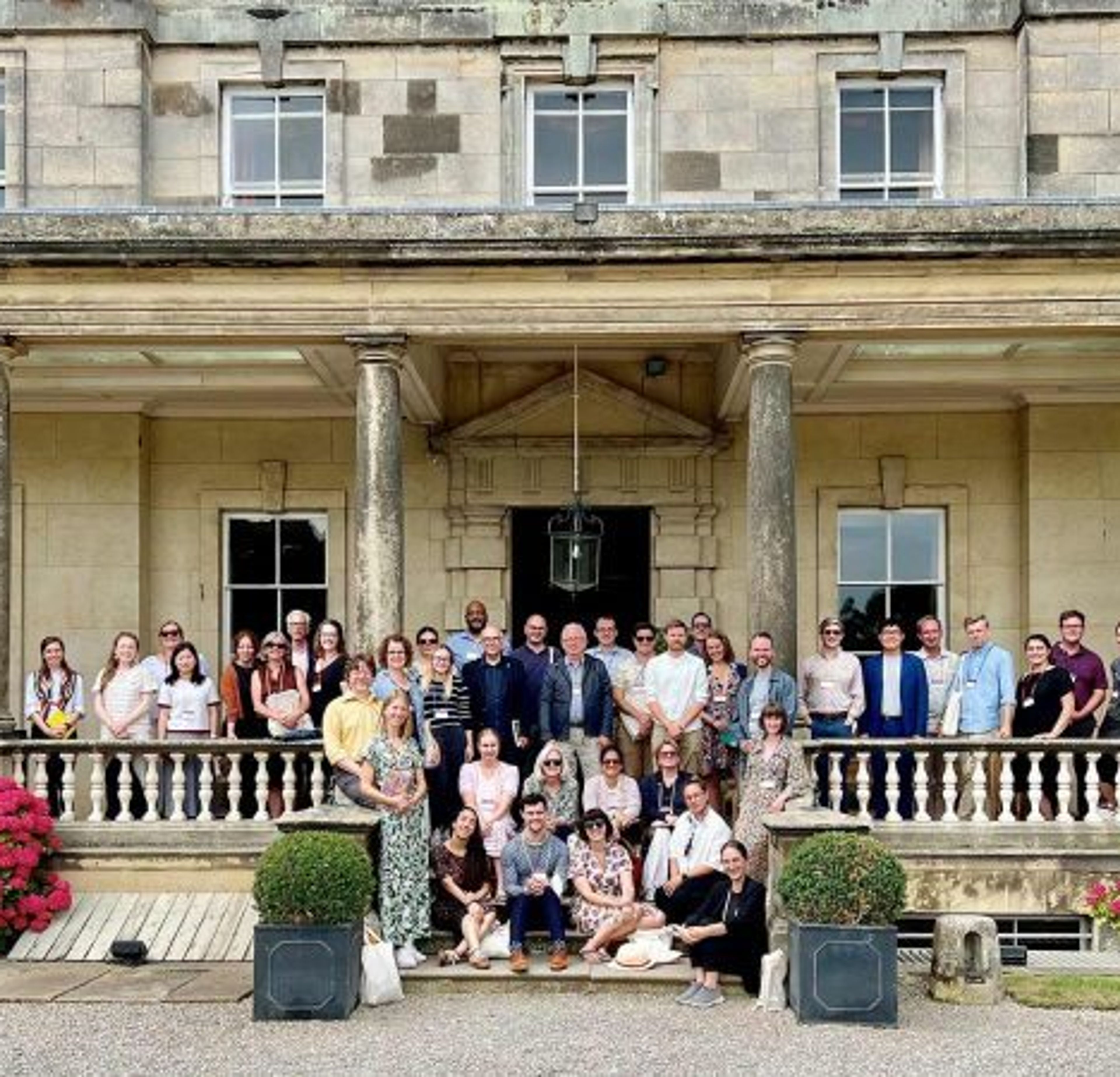
Ahead of Hindman’s decorative arts auctions next week, Corbin Horn, Vice President and Senior Specialist of European Furniture & Decorative Arts, reflects on his time attending the Attingham Trust’s Summer School in England. As one of the most respected programs for those working in museums, decorative arts, and preservation, this 18-day course gave Horn and his fellow students the opportunity to explore renowned country houses in Sussex, Oxfordshire, Derbyshire, Northamptonshire and Yorkshire, and also attend seminars to learn from other professionals in the field. From visiting the legendary Chatsworth House to learning from curators and scholars, Horn provides more insight on this memorable experience. Q. What is the Attingham Trust, and what is the mission of their Summer School course? A. The Attingham Trust is an educational charitable organization founded in 1952 in the United Kingdom. For 70 years they have offered specialized courses for professionals engaged in the care, study and interpretation of historic houses and their collections. The most intensive of these courses is the Attingham Summer School. I have known of the Attingham School for many years, and I was encouraged by Hindman’s CEO to apply. The program’s main purposes are to examine the architectural and social history of British country houses, to study the contents of these buildings and their surrounding landscapes, and to encourage debate on the conservation and presentation of these collections today. I was accepted to the program in 2020, and after two years of COVID postponements, I spent 18 days in England with 47 other museum, architecture and preservation professionals visiting houses throughout the counties of Yorkshire, Derbyshire, Oxfordshire, Northamptonshire and Sussex. Q. As one of Hindman’s Specialists in European Furniture & Decorative Arts, what intrigues you about these houses? How will the Attingham experience influence your career moving forward? A. Any person engaged in stewardship of 17th and 18th century Decorative Arts will be intrigued by great houses. The stately homes of Europe were the patrons of those craftspeople. The objects which we antiquarians study and collect today were, in most cases, originally supplied for the owners of country houses in Europe and the United Kingdom. Hands-on experience with collections that have been undisturbed for 400 years was invaluable. In the auction and appraisal industries, much of our work involves writing about the condition of objects and identifying what alterations have taken place during the centuries. The opportunity to handle an object in the same condition as when it was first made is a rare one, indeed. My most meaningful takeaways from the Summer School are the relationships to people. I was able to network with Curators and Scholars at all levels of career experience from around the world, but also to engage with others and understand how each of us views and interprets works of art and historic objects differently. Q. What were highlights of the Summer School experience? A. There were so many highlights, and it would be hard to choose a favorite site. Wentworth Woodhouse near Rotherham is a fascinating cross section of a nearly-ruined country house, the result of a lost family fortune and of a community’s shift away from coal mining. The house was recently purchased by a newly-formed preservation trust and is still in the early stages of revitalization. Chatsworth House is probably England’s best-known stately home, still owned and inhabited by the Cavendish family since 1549. The home features an extensive contemporary art collection which has been assembled by the present Duke of Devonshire and is incorporated throughout historic rooms in whimsical ways. Chatsworth is a massive operation, covering 105 acres and employing hundreds of staff members. Uppark House, situated in West Sussex, is a late 17th century home and National Trust property which suffered a catastrophic fire in 1989. Thankfully, much of its collection was saved because visitors at the house volunteered to hand-carry its contents onto the lawn during the fire! Mostly I learned that, although these houses were built in extremely remote locations, they were not isolated. They were socio-economic engines that powered cities and villages across the country, and sometimes the world. British country houses are seats of history spanning multiple centuries. Q. You have several auctions coming up this Fall season. What can bidders expect from them and are there any lots about which you are particularly excited? A. Our October 18-19 European Furniture & Decorative Arts sale features property from various owners throughout the United States. Michael L. Wilkie, late owner of one of the most renowned penthouses in Chicago and the nation, resided at 1500 North Lake Shore Drive, a Rosario Candela building. Wilkie’s pair of massive giltwood sofas, lot 1052, date to the mid-18th century and have carved details in the manner of William Kent. They were unquestionably made for the state rooms of an English country house. I wish we knew which one. I am also looking forward to our October 18 auction of Gold Boxes and Vertu from the Estate of a Prominent Kansas City Collector. Hindman Senior Specialist Nick Coombs has masterfully researched and catalogued this collection, which is centered around 18th and 19th century snuff boxes, boîtes-à-portrait, nécessaires and more. Collecting vertu objects was a gentlemanly pursuit enjoyed by the owners of great houses throughout Europe.
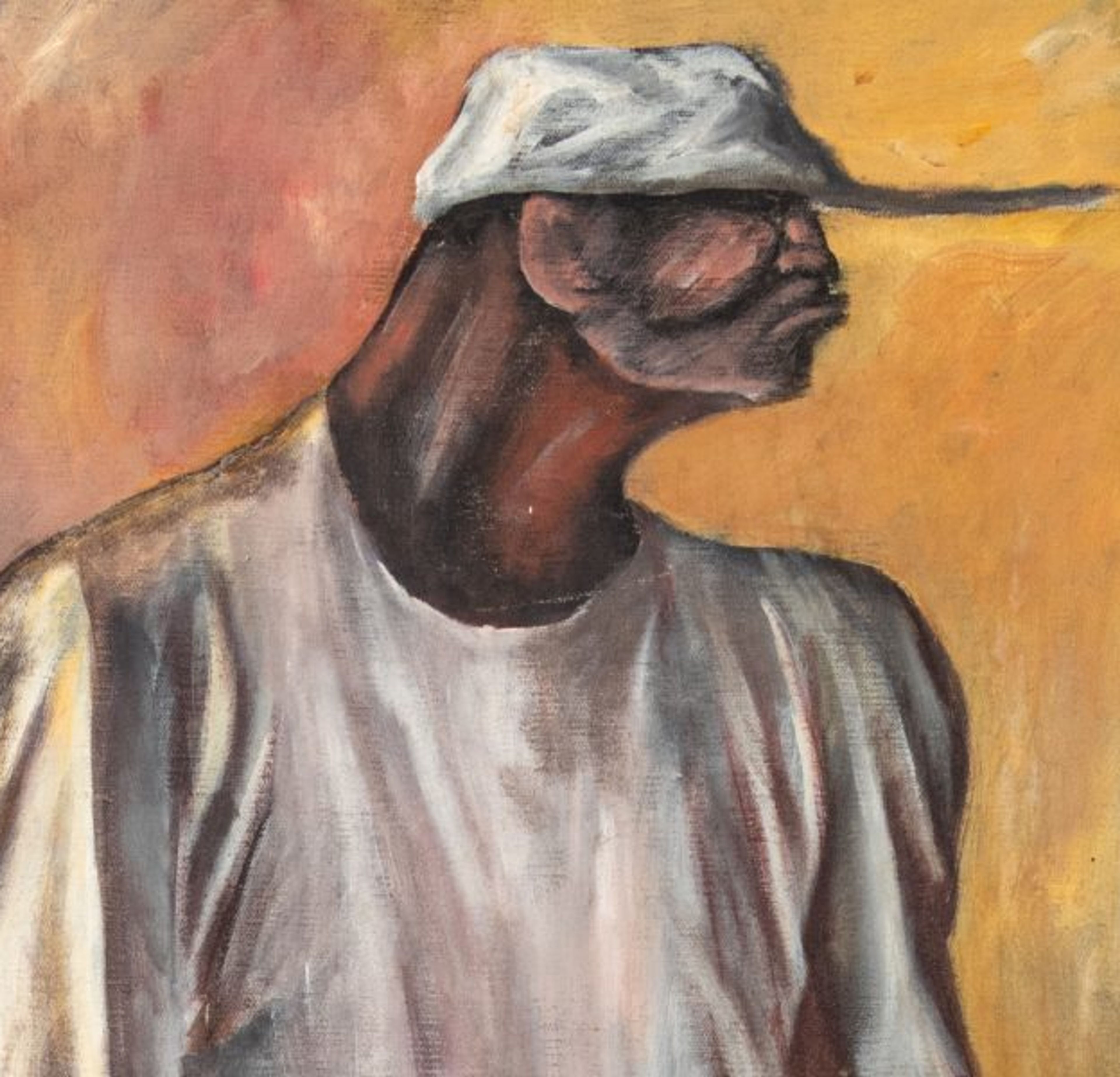
Singers. Athletes. Musicians. Ernie Barnes captured them all in his paintings featuring his highly distinctive elongated characters, many of which have grabbed the attention of the art world and beyond this year with their record-setting prices. This week, Hindman is pleased to offer Ernie Barnes’ Untitled (The Stare) (lot 50; estimate: $80,000 – $120,000), a quintessential example of the artist’s work, and a glimpse at why Barnes has shined at auction this year. While only recently skyrocketing to international recognition, Barnes’ reputation as a multi-talented artist who drew inspiration from numerous areas of life – sports, performing arts and church to name just a few – has always set him apart. From the dance floor to the pew, or in this case, the ballfield, Barnes’ compelling depictions of everyday life never fail to win over fans. “Untitled (The Stare) is renaissance man Ernie Barnes throwing 100 mph, straight painterly gas,” shared Zack Wirsum, Hindman’s Director and Senior Specialist for Post-War & Contemporary Art. “This striking stylized portrait of an elongated and powerful pitcher delivers all the Neo Mannerist heat you could ask for.” The present work will be offered in Hindman’s September 28th Post-War & Contemporary Art auction.
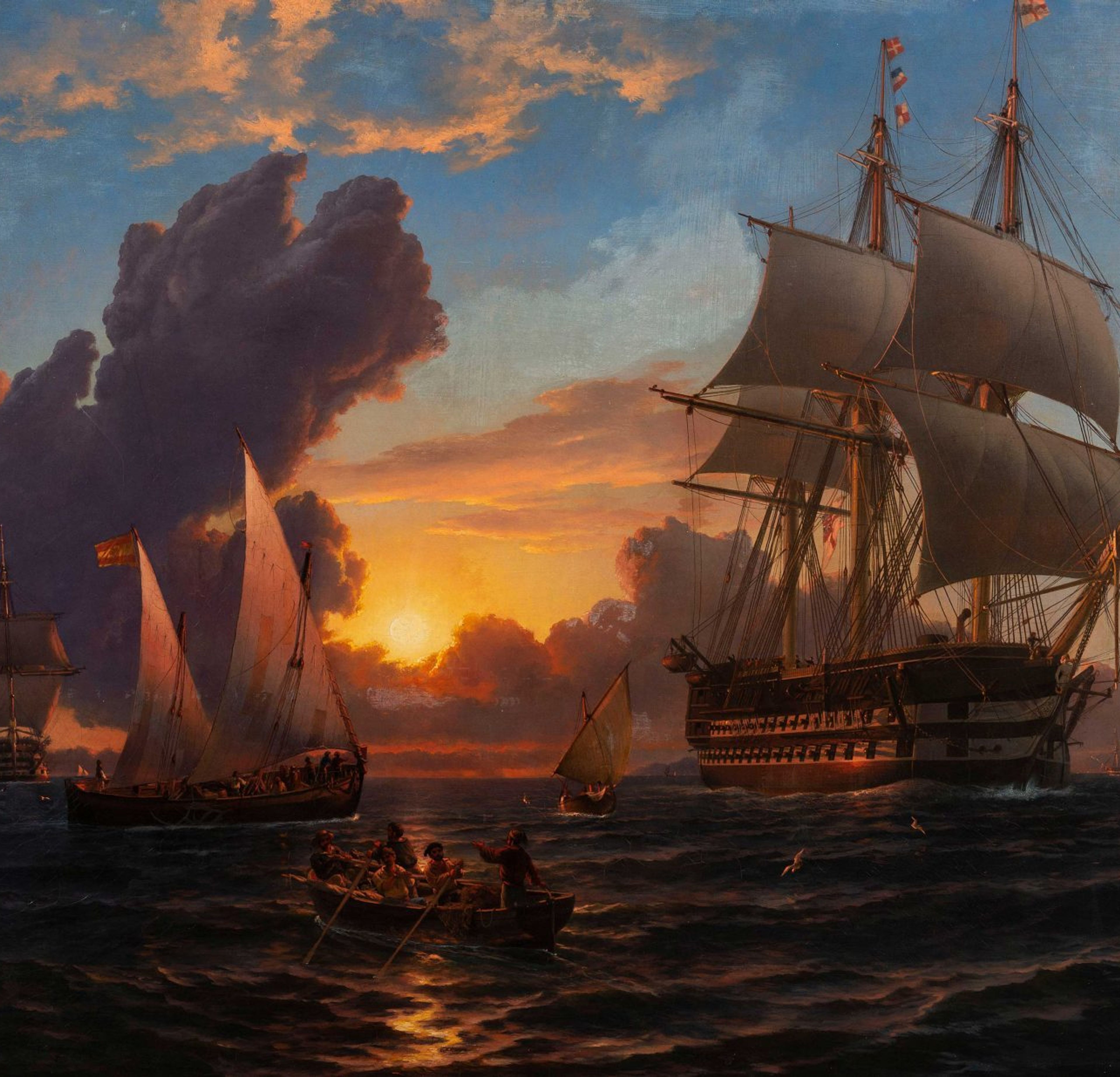
CINCINNATI – On September 14 and 15, Hindman will offer an array of furniture, paintings and decorative arts that reflect numerous critical figures and moments in American history. Highlighting this fall’s American Furniture, Folk and Decorative Arts auction will be two Andrew Clemens sand bottles, for which Hindman holds the world auction record. A selection of portraiture and paintings will be offered, featuring a portrait of the actor and abolitionist Ira Aldridge, a trailblazing figure in the theater who used his platform to promote the abolitionist cause in America. Portrait of African American Shakespearean Actor and Abolitionist Ira Aldridge As the first African American Shakespearean actor to gain international recognition, Aldridge was a pioneering figure in the theater and used his platform to advance the abolitionist cause in America. Born and educated in New York City, Aldridge gained early acting experience through the African Grove Theatre, the first African American theater company in the United States. Aldridge went on to achieve both critical and commercial success in the English provinces and throughout continental Europe and Russia. He performed over 40 major roles and received international accolades over the course of his four-decade career. This portrait (lot 1030) depicts Aldridge as Mungo in The Padlock, a farcical libretto loosely modeled after the short story El celoso extremeño by Miguel de Cervantes. The two-act performance premiered in 1768 at London’s Drury Lane Theatre, where a white Englishman in blackface performed the role of Mungo, a black servant from the West Indies. Aldridge transformed the role of Mungo, once a racist caricature, into a more dignified portrayal, meant to convey the character’s humanity. Aldridge was an outspoken abolitionist, and often capitalized on his platform to directly address his audience on the evils of slavery and other societal inequities. Lot 1030 | American or English School. Circa 1830. Portrait of Ira Aldridge as Mungo in ‘The Padlock. Estimate: $30,000 – $50,000 Magnificent Maritime Items Featuring the Collection of Legendary Dealer Norm Flayderman A selection of maritime paintings and objects from the Collection of legendary dealer Norm Flayderman is one of the most anticipated offerings in the auction. Flayderman was known for being a renowned antique arms dealer, prolific author and collector. These works reflect his passion for finding items rich with decorative history, as well as his impressive knowledge of nautical history. Gangway boards identified to 19th century ships, paintings of sailing vessels, nautical instruments and thematically decorated American and English pottery will be presented. Highlighting this selection will be a pair of eagle, shield and seal of Cincinnati carved walnut ship’s gangway boards from 1892 (lot 1167; estimate: $10,000-15,000), which are likely from the USS Cincinnati (C-7), a protected cruiser for the United States Navy. A USS Tallapoosa eagle, shield and cannon carved, brass-mounted walnut gangway board is likely a Civil War artifact (lot 1168; estimate: $4,000-6,000). A painting attributed to Charles Henry Seaforth (lot 1183; estimate: $8,000- $12,000) is a striking painting from the collection. A cast brass and steel anchor form mantel clock garniture (lot 1175; estimate: $3,000- $5,000) is another highlight. Lot 1265 | Solon Francis Montecello Badger. City of Georgetown. Estimate: $4,000 – $8,000 Additional standout maritime paintings include Solon Francis Montecello Badger’s City of Georgetown (lot 1265; estimate: $4,000 – $8,000), and other China trade paintings. Prominent Sculptor Henry Merwin Shrady’s Washington at Valley Forge Lot 1055 | Henry Merwin Shrady (American, 1871-1922). Washington at Valley Forge, 1904. Estimate: $40,000 – $60,000 Items that reflect important early historical moments in the founding of the nation will be offered, and Henry Merwin Shrady’s Washington at Valley Forge (lot 1055; estimate $40,000-60,000) is among the most significant. Henry Merwin Shrady was a mostly self-taught artist who came to prominence during the American sculptural renaissance of the Beaux-Arts period. Renowned for his early animal bronzes, he quickly became known as a monumental sculptor. In 1906, Shrady won a competition that led to his equestrian statue of George Washington at Valley Forge being placed near the entrance of the iconic Williamsburg Bridge in Brooklyn, New York. This particular example, cast by the Roman Bronze Works, was once a part of the artist’s personal collection and is being offered by one of his great grandchildren. Fine Furniture, Decorative Arts & Silver As usual, William and Mary, Queen Anne, Chippendale, Federal and painted country furniture is expected to draw attention. An 18th century William and Mary figured maple drop leaf dining table is an example of fine craftmanship (lot 1004; estimate: $3,000 – $5,000). Other designs expected to see competitive bidding are a Classical Style tiger maple slant front desk of Minnesota origin (lot 1133; estimate: $6,000 – $9,000) and a rare Chippendale walnut tall case clock (lot 1045; estimate: $3,000 – $5,000) attributed to Jacob Frye. A rare North or South Carolina “Colored Republicing Club” stoneware cooler (lot 1361; estimate: $5,000 – $7,000) has a powerful history. After the Civil War, white Southerners aligned themselves with the Democratic party, while African Americans chose their liberators, the Republicans. Eventually in the years following the war in both the North and South, “Republican Clubs,” or “Union Leagues” were formed, and with suffrage, African Americans began to take on larger roles in local, state, and national politics. The cooler offered here is symbolic of a period in Southern politics when African Americans became increasingly disenfranchised from the suffrage granted them by the 14th Amendment to the Constitution in 1868. Lot 1004 | A William and Mary Figured Maple Drop Leaf Dining Table. Estimate: $3,000-$5,000 A fine group of silver will also be offered. A coin silver presentation pitcher from the Kentucky State Agricultural Society is one notable item (lot 1253; estimate: $10,000 – $20,000). The society was chartered by the legislature in 1856, and awarded cash premiums and silver cups, etc. for livestock, farm production, agricultural implements and machinery, as such “to arrouse a feeling of State pride” and to consistently showcase and improve the state’s most productive industry – agriculture. Lot 1253 | A Kentucky State Agricultural Society Coin Silver Presentation Pitcher. Estimate: $10,000 – $20,000 How to Bid & Preview Times Bidding for the September 14th to 15th auction will begin at 10am ET time and will be available live, via absentee bid, phone and online through Hindman’s Digital Bid Room. Additional information can be found via the auction page. Preview Location: Hindman Cincinnati 5030 Oaklawn Drive Cincinnati, Ohio 45227 Times: Monday, September 12, 12:00 pm – 5:00 pm Tuesday, September 13, 12:00 pm – 5:00 pm Wednesday, September 14 8:00 am – 10:00 am Viewings also available by appointment now. Please call 513.871.1670 to set up a time to preview the sale.
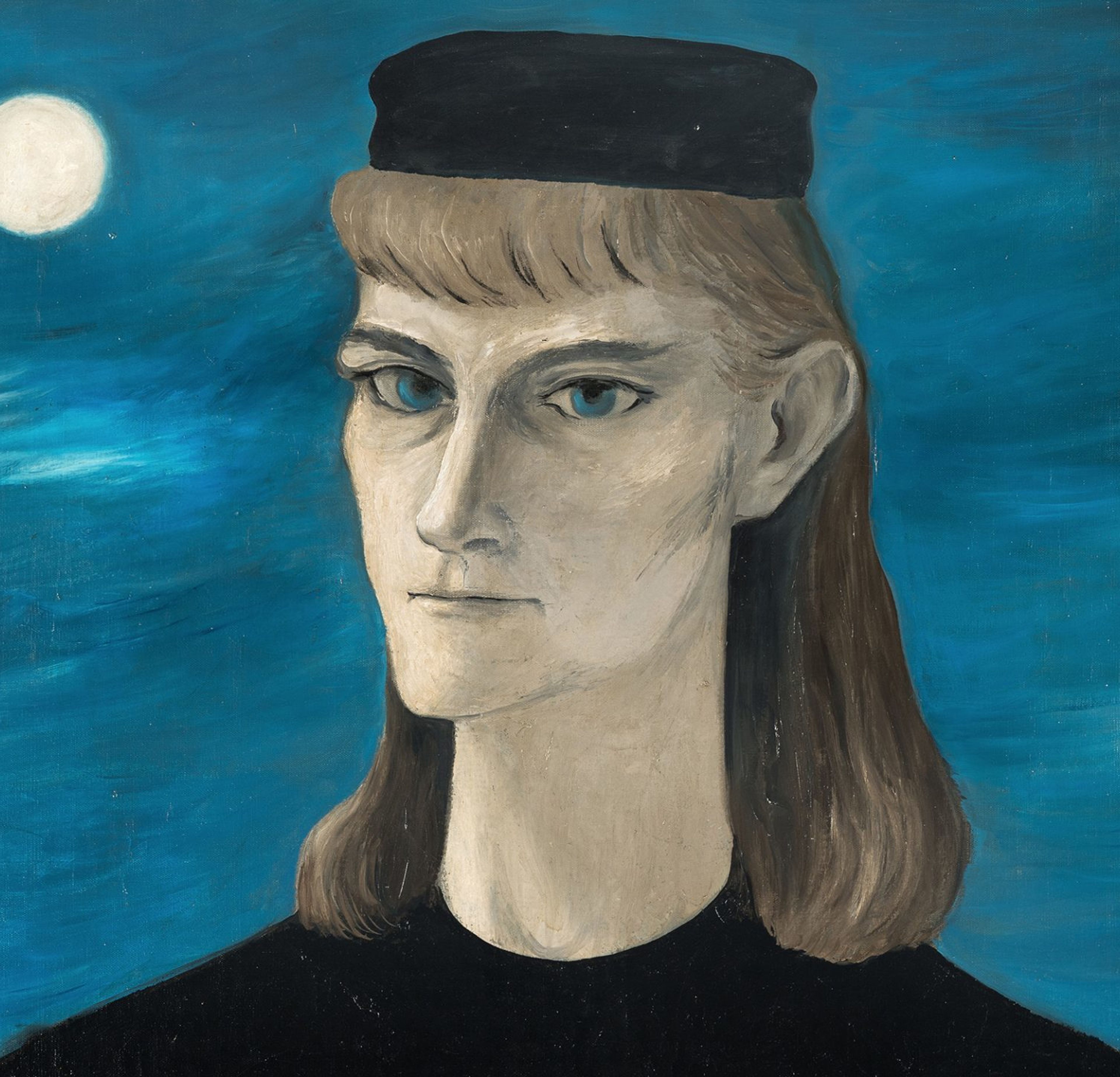
CHICAGO – Hindman Auctions is pleased to announce that we will present the most significant selection of Gertrude Abercrombie paintings to ever come to market in Casting Spells: The Gertrude Abercrombie Collection of Laura and Gary Maurer, a single-owner auction on September 28. As the preeminent collectors of Abercrombie works, Laura and Gary Maurer’s collection of 21 magical and mysterious career-spanning works by the enchanting artist will provide bidders a unique opportunity to compete on the broadest offering of works and some of the physically largest paintings by the “Queen of the Bohemians.” Over the past decade, interest in American Surrealism has surged. Many of Abercrombie’s paintings, including a number in this offering, were featured in major solo exhibitions at Karma Gallery in New York, Illinois State Museum in Springfield, and the Elmhurst Art Museum. A brilliant and willfully eccentric Chicago-based Surrealist artist with close ties to the jazz music scene, her works often evoke themes such as witchcraft and sorcery, and abound with owls, moonlit landscapes, walking paths, cats, and eggs. Until recently, Abercrombie’s work was under considered, but the market has caught up, and she is among the most sought-after female artists today. Hindman has continually paced the market for Abercrombie’s works, and currently holds the world auction record for a painting by the artist. “The Maurer Collection stands out because of how comprehensive it is, both in terms of the timeline and subjects it so beautifully captures. The selection spans Abercrombie’s entire career from one of her earlier pieces to one of her last paintings, dated 1971,” shared Susan Weininger, the leading Abercrombie scholar. “Significant examples of the artist’s most important themes are all represented, from self-portraits to mysterious landscapes through which the artist wanders, to meticulously painted and evocative still lifes and interiors, and more.” This alluring offering captures a wide swath of Abercrombie’s oeuvre from the late 1930s to the 1970s, featuring seminal works ranging from her spellbinding self-portraiture to her transcendental landscapes, and from her iconic doors to her beloved cats. Highlighting the selection is a self-portrait from 1953 titled Self and Cat (Possims) (estimate: $300,000-500,000), an Abercrombie masterpiece that depicts a mystical Abercrombie alongside her favorite witch’s familiar Possim. Abercrombie’s 1942 Solitude (estimate: $120,000-180,000) is another major painting that will be offered. Abercrombie was also celebrated for her poignant miniatures that she often created as gifts. Her 8-by-10 inch Untitled (Blue Screen, Black Cat, Print of Same) from 1945 (estimate: $50,000 – $70,000) is a prime example. “As the door opened into the Maurers’ home, I was immediately thrown into the dizzying Abercrombie sanctuary they created,” commented Hindman’s Vice President of Fine Art Joseph Stanfield on his first viewing of the collection. “Upon seeing Abercrombie’s unique storytelling and iconography so fully presented in the selection, I was completely under Abercrombie’s spell.” The Maurer Collection will travel to New York City for a preview in early September. In August, Hindman will announce additional details about the previews in New York and Chicago and collection highlights. Press contact: hannacunningham@hindmanauctions.com Featured image: Self and Cat (Possims) | Estimate: $300,000-500,000
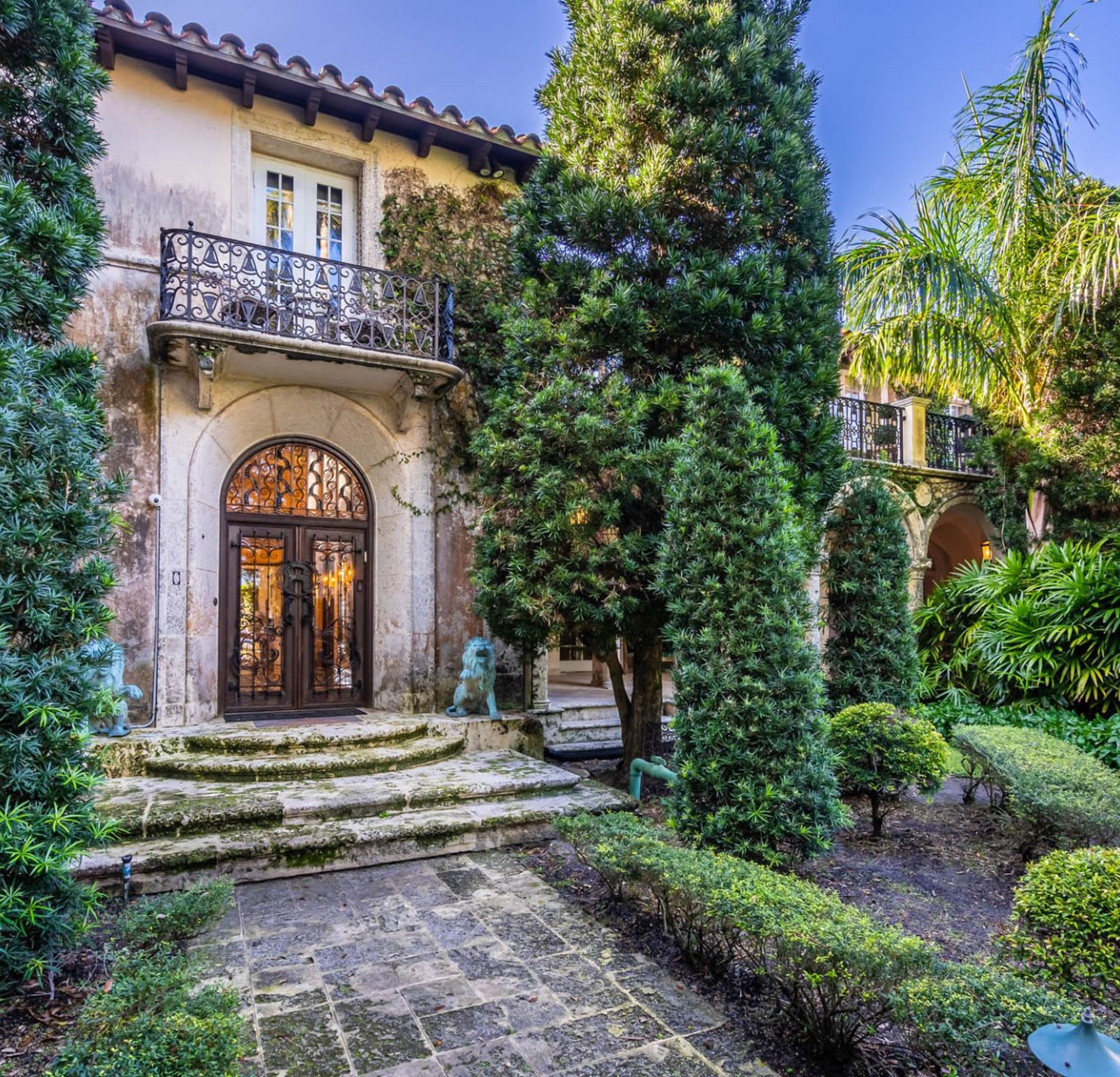
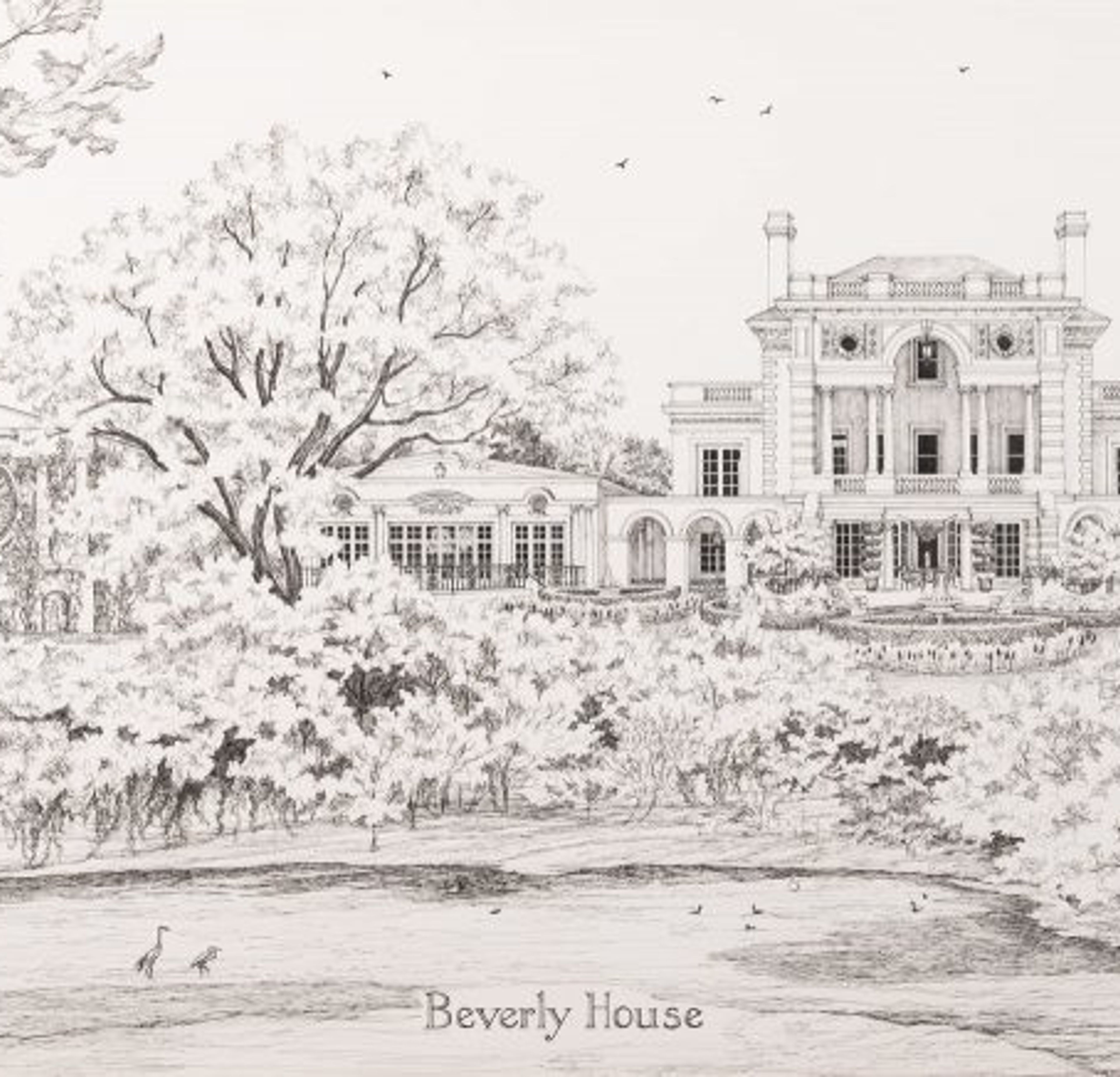
Hindman is proud to offer property from Casa de Sueños in an exclusive single-owner sale on May 31st in Palm Beach, Florida. A 1930s Mediterranean Revival estate overlooking Biscayne Bay, it was originally built for a President of General Motors and then acquired in the late 1990s by the current owners Loren and J.R. Ridinger. The couple are the founders of Market America—a revolutionary product brokerage and internet marketing company—while Loren is also a well-known fashion, beauty, and business leader recognized by Vogue, Haute Living, and Forbes magazines. Using historical photos of the estate, the couple acquired period furniture, art, and decorative objects to help realize their vision of contemporary life in a historic setting. Our auction features much of what they collected over the past 20 years for the home. We will host an auction preview open May 18 – 30. The preview will be curated by New York and Palm Beach based designer Liz McDermott, whose firm serves residential clients worldwide. McDermott has been a contributing trend editor for Modern Luxury and serves on the board of the French Heritage Society, based in Paris. Below, browse photos from this remarkable home and get a glimpse of some of the exciting property that will be available May 31. Click HERE to view all lots and to register for the auction. “I feel that I have lived through every era in this house.” LOREN RIDINGER
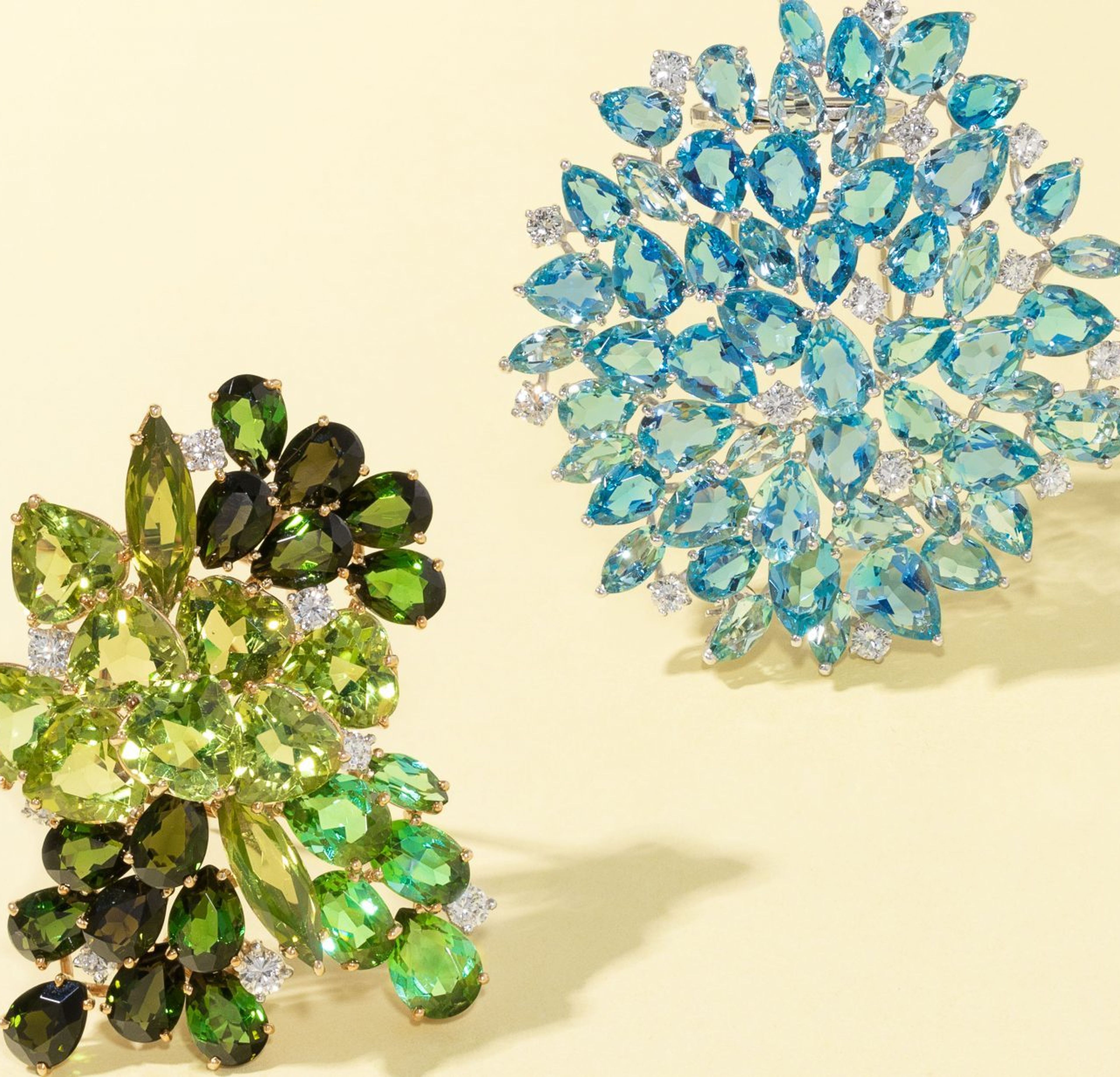
Hindman is pleased to offer three beautiful brooches by Olga Tritt from a private collection (Lots 130-132, lot 130 not pictured). Each of them includes their original box and receipt from 1969 or 1972. Tritt immigrated to New York from Russia in 1910. Trained from an early age as a watchmaker, she soon put her skills to work selling jewelry and watches from her own shop, filing a patent for her brand in 1922. She was a clever businesswoman who established a following among important New York clients including the Duchess of Windsor. Lot 131 | Olga Tritt, Peridot, Tourmaline and Diamond Brooch | $3,000 – 5,000 Olga Tritt jewelry is characterized by large colored gemstones often paired with step cut diamonds for a geometric look. She traveled the world gathering the gems she used in her bold designs—the Caribbean for pearls, India for rubies, sapphires and emeralds, and Brazil for aquamarines and tourmalines. Her travels informed her style, with influences from Indian Mughal jewelry as well as European Art Deco. Tritt promoted her business on the radio, in print advertisements in Vogue and the New Yorker and her jewelry was shown on models in fashion magazine editorials, most notably actress Helen Bennett who wore jewels by Olga Tritt paired with pants and Moroccan slippers in a photo by Horst P. Horst. Lot 132 | Olga Tritt, Aquamarine and Diamond Brooch | $3,000 – 5,000 The Brazilian government commissioned Tritt to design jewelry using Brazilian gems for the 1939 World’s Fair in New York. The showpiece was an extraordinary aquamarine and diamond necklace. In the 1930s, Tritt opened a second shop in Palm Beach, Florida, which remained open following her death, managed by her daughter, until the end of the 20th century. Today she is little-known because she did not sign many of her pieces and not many survive. Hindman is thrilled to put her pieces in the spotlight in the May Important Jewelry auction.
Decorative Arts & Fine Art from Cox Estate to Be Offered Across Four Auctions From January to March Hindman is pleased to offer property from the Estate of Edwin L. Cox (Dallas, Texas), a renowned philanthropist and businessman. Not only was Cox a prominent figure in Texas civic life and a distinguished entrepreneur in the American energy industry, he also was a fervent benefactor of major cultural institutions who built an extraordinary collection of French Impressionist masterpieces. More than 20 masterpieces from Cox’s personal collection set four world auction records in Christie’s May 2021 sale, ‘The Cox Collection: The Story of Impressionism.’ “Hindman is known for marketing single-owner collections in a way that tells the entire story of a person’s collecting legacy,” said Hindman Vice President and Senior Specialist of European Furniture and Decorative Arts Corbin Horn. “Cox left a distinct mark through his consummate collection. We are pleased to be able to offer Cox’s decorative arts, which are as intriguing as his collection of Impressionist art, across several sales categories during the next few months.” Various lots offered in the January 13 and 14, 2022 ‘Chicago Collections’ sale Cox served on the boards of museums such as the National Gallery of Art in Washington D.C., the Library of Congress Trust Fund and the Dallas Museum of Art. He was also a key supporter of Southern Methodist University’s business school, the SMU Cox School of Business. Bidders will have multiple chances to acquire compelling items from this legendary name in Hindman’s Winter and Spring 2022 sales. Property from the Cox Estate will be presented across four auctions from January to March this year, beginning with ‘Chicago Collections’ on January 13th – 14th. Additional property will be presented in the February 2nd and 3rd ‘European Furniture & Decorative Arts’ auction, the March 25th ‘Asian Works of Art’ auction, and the March 29th ‘Chinese & Himalayan Works of Art’ auction. Various lots offered in the January 13 and 14, 2022 ‘Chicago Collections’ sale Highlights from the Cox collection at Hindman include works of art by Peter Ellenshaw and Constantin Kluge, as well as Chinese famille verte porcelain, fine carpets and a variety of European decorative arts. Additional information on the ‘Chicago Collections’ auction can be found here, and information on property from the Cox Estate that will be offered in upcoming auctions can be found on hindmanauctions.com. Bidding for the January 13th – 14th ‘Chicago Collections’ auction begins at 10am CT each day and is available via absentee bid, by phone, and online through the Digital Bid Room, Hindman’s online and mobile bidding platform. Previews are available by appointment and can be made by calling (312) 280-1212. Various lots offered in the January 13 and 14, 2022 ‘Chicago Collections’ sale
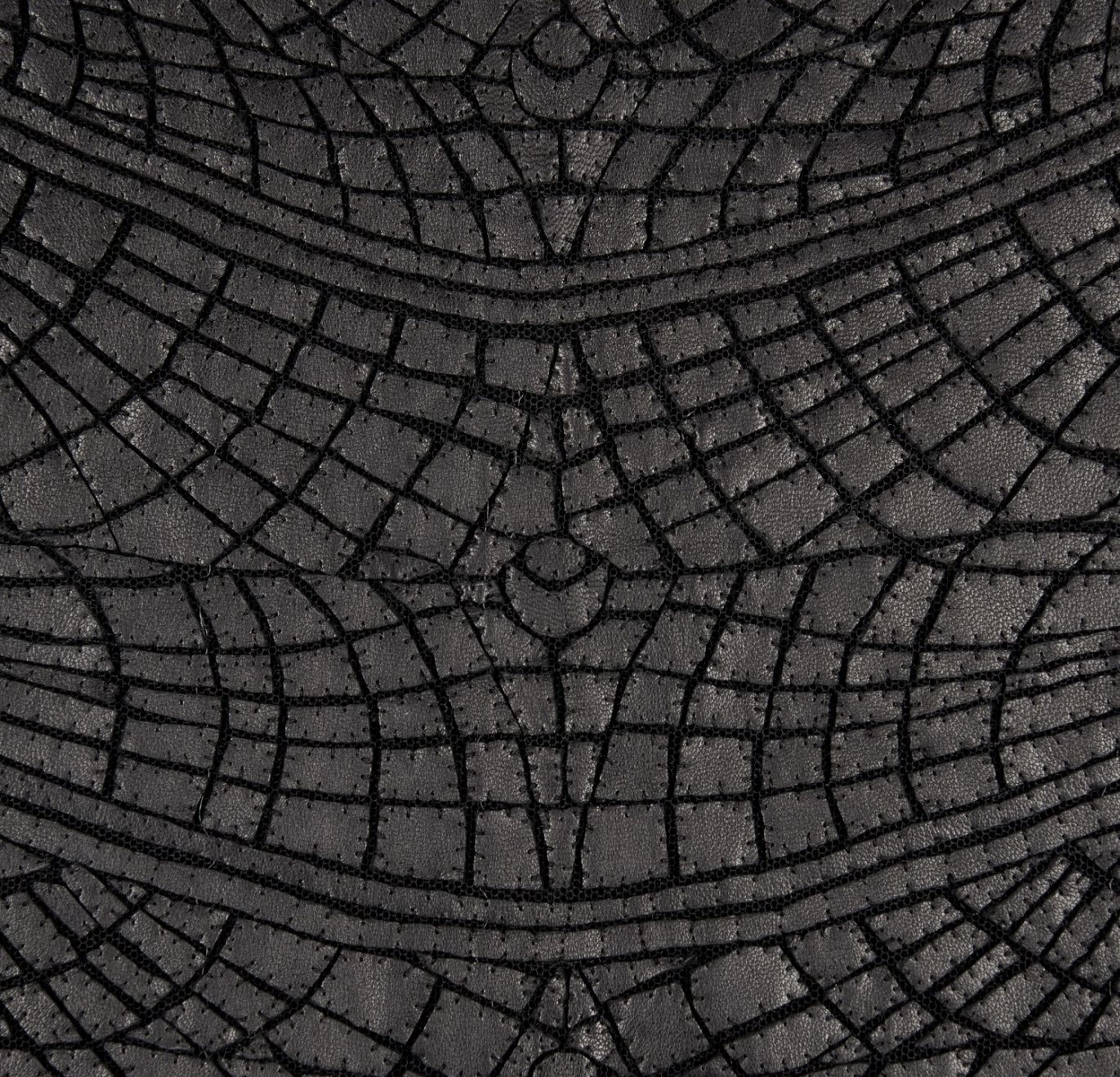
Philanthropist and collector, Michelle Smith was renowned equally for her charitable efforts and for the vision of elegance and sophistication that influenced all areas of her life. She passionately supported causes in education, culture, health and the arts. After succeeding her father in January 2010, Smith served as president of the Robert H. Smith Family Foundation, supporting nonprofit organizations, universities, and cultural institutions through fundraising and charitable giving. Smith’s commitment to sustaining and nurturing the arts is evident in her work with the Smithsonian’s National Gallery of Art and the Whitney Museum; she also funded arts and business programs at the University of Maryland. Smith fostered key partnerships among organizations, bringing her curated approach to life and utilizing her relationships as she served on many boards of trustees and directors, including the Aspen Institute and The Foundation for Art and Preservation in Embassies. Every facet of her world was shaped by refinement and beauty: at home, in art, and in fashion, over time acquiring a significant collection of contemporary haute couture. She treated couture as any other collecting category; the breadth and depth of her collection indicate an appreciation for the history of the craft, as well as a focused attention to a key group of designers: Dior, Ralph Rucci, and J. Mendel. Each of these designers is known for their craftsmanship and the ways in which their work demonstrates the extraordinary labor and care required to create these garments, ranging from ready-to-wear to fashion’s most exclusive tier: haute couture. The very notion of haute couture relies on the work of les petites mains, the highly skilled artisans who craft these garments in designers’ ateliers. Each haute couture garment is custom made to the unique specifications of the client in a Paris atelier, as sanctioned by the strict edicts of the Chambre Syndicale de la Haute Couture. The care and labor poured into each of these pieces is evident in each embroidery, appliqué, and weave. To see a collection of contemporary haute couture, so thoughtfully curated and cultivated, illustrates Michelle Smith’s pursuit of excellence, in fashion and in life. “Couture was a world defined by relationships and lineage,” explains journalist Robin Givhan, noting that women were historically introduced to this world socially, often by their mothers.[1] Traditionally, couture clients have become loyal to one or two labels, as did Michelle Smith with Ralph Rucci and Dior. Smith’s exposure began close to home and sparked a lifelong joy for collecting: her own mother was a couture client, also a patron of Dior. Lot 1 | Balenciaga Haute Couture Wool Coat, c.1960 A 1960s Balenciaga haute couture wool coat commences the sale, refined and subtle. Deceptively simple, this coat is cut with few pattern pieces, many of which are hand-sewn together with minimal seams. The silhouette of the coat is supported by internal layers of padding that extend down the front and back of the body, from the shoulder. These unusually placed pads help smooth the silhouette over the shoulders and chest and widen the silhouette of the chest and back to achieve the Cocoon shape of the 1940s-1960s, which Balenciaga helped introduce. This coat, and Balenciaga’s innovations, set forth important changes in clothing construction, revered by the likes of Ralph Rucci and Christian Dior. Smith’s longstanding love for Dior is evident in a collection spanning decades. Christian Dior came to the fore of fashion with the debut of his New Look in 1947. Since then, and under the leadership of highly influential creative directors, the label has reigned modern fashion by remaining responsive, adaptive, and generative. Smith’s collection features contemporary Dior haute couture from her wedding dress, 1979 (worn in 1980, lot 21), through 2018, collecting most heavily from 2008 onwards. These garments, rarely seen at auction, tell a story of the house of Dior’s creative output as they have designed for increasingly modern women in an ever-changing world. Lot 22 | Christian Dior Haute Couture Wedding Dress, Fall/Winter 1979 Since 2016, Maria Grazia Chiuri has sat at the helm of Dior, the first woman creative director, breathing new life into the label through minimalist edge with strong, feminist underpinnings. She has introduced a strong emphasis on craftsmanship by women artists and makers, and collaborates closely with workshops worldwide.[2] Chiuri’s clothes embody a refined elegance, at times eye-catching and bold, at others, quiet and sophisticated. Of the autumn/winter 2018 collection, “These are serious clothes, Chiuri seemed to be saying, made by the finest hands and meant to be appreciated by women who are beyond the flimflam and easy glam of our times.”[3] In Smith’s collection, the item most closely resembling Christian Dior’s iconic bar suit most explicitly subverts the house’s traditional codes. The cinched, corseted jacket and voluminous, knife-pleated skirt are reintroduced as a jacket free of internal structure and – for the modern woman – pants (lot 31). This, for Chiuri, represents freedom. The garments are restrained so the wearer can speak; “Chiuri’s offerings are for people who make noise in the world by wearing clothes that murmur elegantly.”[4] Lot 30 | Christian Dior Haute Couture Domino Pattern Wool Coat, Spring/Summer 2018 Smith developed close relationships with designers, working closely with American couturier Ralph Rucci to create custom garments to her unique specifications. Rucci’s pieces featured within this collection represent some of his finest work, featuring luxury materials hand-worked in spectacular detail. “His work expresses at all times an exuberance combined with restraint,” wrote André Leon Talley of couturier Ralph Rucci. “It is at once colossal and fragile, a Rucci construction of peerless seams and details. In his passion for ‘old school’ ideals, he refuses to compromise. The high standards of classical verities established by the masters of Paris haute couture are essentially the foundation of everything Rucci achieves.”[5] Rucci’s approach to fashion is one of profound thoughtfulness and exactitude. In his materials, construction, and techniques, Rucci honors the traditions of French couture. Reverent to his influences, Rucci credits Charles James, Cristóbal Balenciaga, and Madeleine Vionnet among the designers who have shaped his vision, evident in lot 81. Equally, contemporary visual art, Asian aesthetics, and classical antiquity play a key role in the Rucci visual pantheon. These components, combined with his commitment to artistry and quality, have enabled Rucci to hone and mature his creative expression over forty years, and earning recognition by the Chambre Syndicale de la Haute Couture, who invited him to show at Parisian haute couture as the second American in history. Lot 81 | Printed and Embellished Silk Jacket, Attributed to Ralph Rucci: An abstract screen-printed design is emphasized and textured by embroidered beads in this adaptation of a classic silhouette by Rucci. The sloped shoulder and structured form pay homage to Balenciaga, a perennial inspiration for the designer. For Rucci, transitioning to haute couture was a natural progression. He acquires only the finest textiles, furs, and surface treatments, working with François Lesage for embroideries and sourcing silk gazar from Maison Bucol in Lyons, France, as had Balenciaga. His clothes are for people who see fashion as a work of art. The extraordinary craftsmanship of each garment indicates a profound appreciation for the skill and labor of the most sophisticated artisanship. Rucci derives inspiration from his clients themselves, developing symbiotic relationships between artist and patron. Deeda Blair, a longtime client, appreciates his work for its “deceptive simplicity,” clothes that quietly reveal their “great intricacy.”[6]In Rucci, Smith found qualities that aligned so closely with her own discerning eye, as Hamish Bowles describes: “unimpeachable good taste, a nuanced color palette, flattering silhouettes, and his legendary workmanship.”[7] Lots 109 and 129 | J. Mendel Mink Fur Banded Jacket and J. Mendel Natural Scan-Glow Mink Vest Smith demonstrated an appreciation for modernists with an eye towards the classic. As she collected contemporary couture under the Dior heritage label and Rucci’s influences from the canon of fashion, so too did she apply this mindset to her taste in luxury fur. Creative director Gilles Mendel is the fifth-generation proprietor of furrier J. Mendel, ushering a label founded in 1870s St. Petersburg into the twenty-first century. Mendel adopted the craft of his forefathers and honors the time-honed traditions inherent in the brand. Only the finest pelts are used: broadtail, chinchilla, and barguzine sable among them, rare and of Russian imperial heritage. These materials are of the utmost luxury and require the work of highly skilled specialists who use sewing machines more than fifty years old. These tools and their expertise are time tested, and it is Gilles Mendel who introduces the cutting edge to the heritage brand. “My father’s world was if you wanted the most extraordinary lynx coat, the most fabulous chinchilla, the way they were assembled you wouldn’t even see a seam,” says Mendel. “I started to create seams.”[8] His cutting, deconstructing, and reshaping of exotic pelts and skins makes them fresh and modern, marking a twenty-first century approach to luxury fur. A Life in Couture: The Collection of Michelle Smith presents a curated selection of top designers whose work has shaped and transformed fashion. These garments illustrate the keen eye and exacting tastes of an individual who sought perfection and innovation in all areas. Hindman is thrilled to share this collection, available for bidding on September 21. [1] Robin Givhan, The Battle of Versailles: The Night American Fashion Stumbled into the Spotlight and Made History (New York: Flatiron, 2015), p. 14 [2] Alexis Okeowo, “Maria Grazia Chiuri’s Feminist Mission Goes Beyond Slogans,” Elle, October 16, 2020, https://www.elle.com/fashion/a34050277/maria-grazia-chiuri-dior-profile/. [3] Sally Singer, “Christian Dior: Fall 2018 Couture,” Vogue Runway, July 2, 2018, https://www.vogue.com/fashion-shows/fall-2018-couture/christian-dior. [4] Ibid. [5] Andre Leon Talley, quoted in Valerie Steele, Ralph Rucci: The Art of Weightlessness (New Haven: Yale University Press, 2007), p. 97. [6] Deeda Blair, quoted in Ralph Rucci, p. 3. [7] Hamish Bowles, “Ralph Rucci’s Pragmatic Luxury and Haute Craftsmanship Has Never Seemed So Timely,” Vogue Runway, July 14, 2021, https://www.vogue.com/slideshow/ralph-rucci-fall-2021-couture. [8] Jesse Ashlock, “From Russia with Love,” T Magazine, February 7, 2014, https://archive.nytimes.com/www.nytimes.com/packages/html/tmagazine/interactive/jmendel.html Featured image: Lot 80 | Detail, Ralph Rucci Cashmere and Embroidered Leather Jacket, Fall 2013

From a Fairytale-Like Discovery to a Record-Breaking Auction Freeman’s is thrilled to announce the results of its July 1 single-lot auction, This Important State Paper: Signer Charles Carroll’s Copy of the Declaration of Independence, which achieved a historic $4.42M sale price; exceeding by a remarkable five times its pre-sale high estimate of $800,000. This result marks the second-highest price ever paid at auction for any copy of the Declaration of Independence, and is the highest price ever paid at auction for an American document printed in the 19th century. It more than quadrupled the world auction record for a Stone printing of the Declaration of Independence set in New York City in 2019. In an achievement befitting of Philadelphia’s auction house, this historic sale was held in the nation’s birthplace just days before Independence Day—245 years after the original Declaration of Independence was signed. “I couldn’t be happier for the consignors, the new owner, and Freeman’s,” says Darren Winston, Head of Freeman’s Books and Manuscripts department. “From its fairytale-like discovery by sister auction house Lyon & Turnbull through to today’s record-breaking auction, it has been both incredibly exciting and a true privilege to be involved with the sale of this significant piece of American history.” This rare signer’s copy of William J. Stone’s 1823 printing of the Declaration of Independence was, remarkably, rediscovered in Scotland by Freeman’s sister auction house, Lyon & Turnbull. It was first presented to Charles Carroll of Carrollton (1737-1832), the last surviving signer of the original document, and later inscribed by his grandson-in-law John MacTavish (1787-1852). Commissioned by then-Secretary of State John Quincy Adams in 1820, Stone’s copperplate engraving on vellum is considered the most accurate representation of the original 1776 document. Seth Kaller, expert in American historic documents and artifacts, says... “We all know the theory that great items find their market, but often that isn’t true with so many things—business, personal, political—competing for everyone’s attention. This clearly broke through; it had the greatest depth of bidders I’ve ever seen for a seven-figure document.” The document will be on temporary loan to the National Park Service for display at Philadelphia’s Second Bank of the United States for the July 4 holiday. The vendors, who remain anonymous, wish to thank Lyon & Turnbull and Freeman's for finding the document and arranging such a successful outcome. American History, Freeman's History Founded in 1805, mere blocks from Independence Hall, Freeman’s is America’s oldest auction house, and throughout its storied history has had the privilege of stewarding the sale of numerous historically significant items—including the 1969 sale of John Dunlap’s 1776 broadside of the Declaration of Independence, which sold for an unprecedented $404,000 ($2.97M in today’s dollars). This Important State Paper carries on this long-standing tradition, bringing a piece of previously-unaccounted-for American history to auction, and underscoring Freeman’s pride of place as Philadelphia’s international auction house. United by a shared commitment to customer service and special focus on single-owner collections, Freeman's and Lyon & Turnbull have successfully staged a wide range of joint international projects over the last two decades, including specialist auctions in Hong Kong and London, as well as exhibitions and events on both sides of the Atlantic.