To request further details about this lot, please email fineart@freemansauction.com
Please email fineart@freemansauction.com for any additional information or questions you may have
Sale 6565
| New York
| New York
To request further details about this lot, please email fineart@freemansauction.com
Please email fineart@freemansauction.com for any additional information or questions you may have
Estimate$20,000 – $30,000
Provenance:
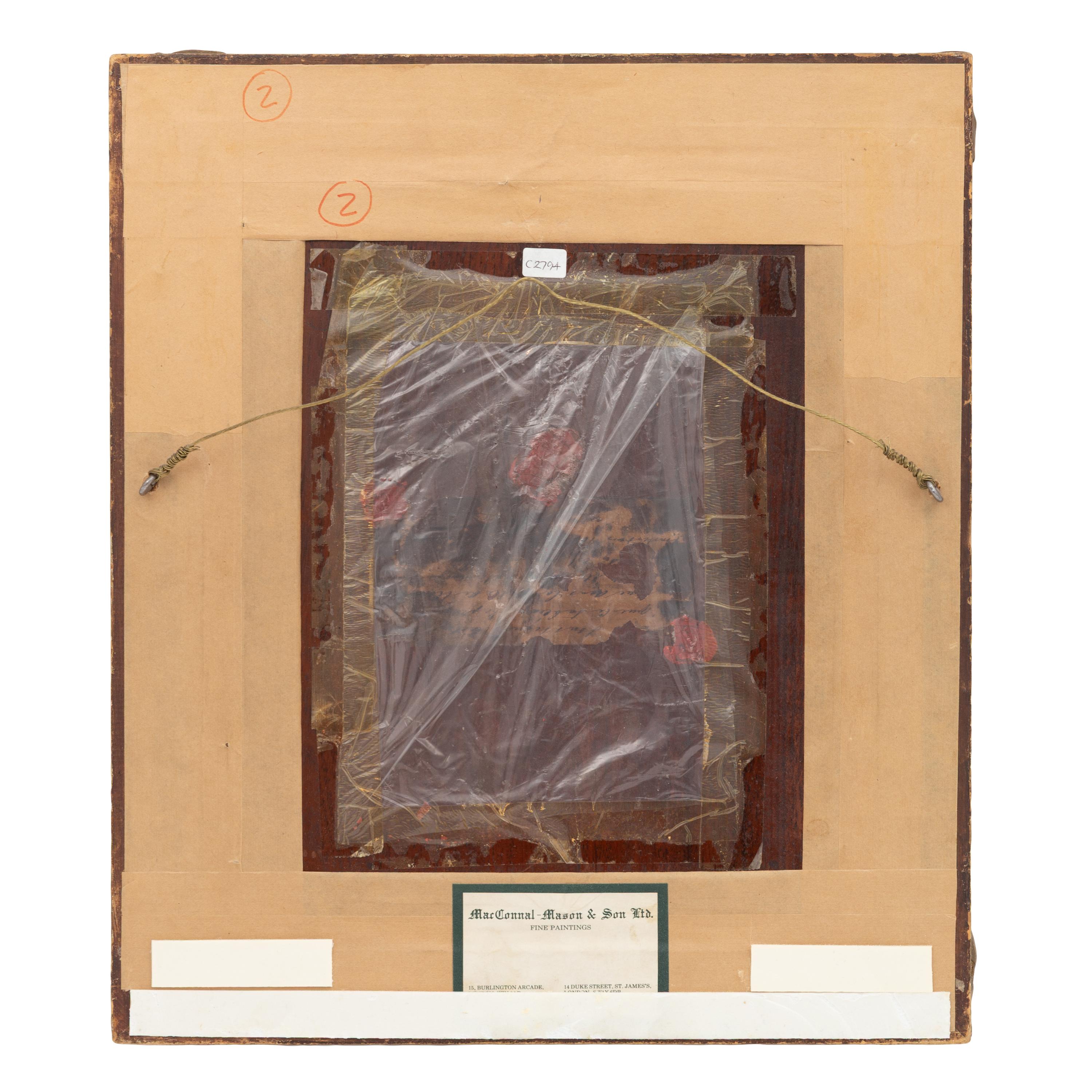
MacConnal-Mason & Son, Ltd., London.
Lot Note:
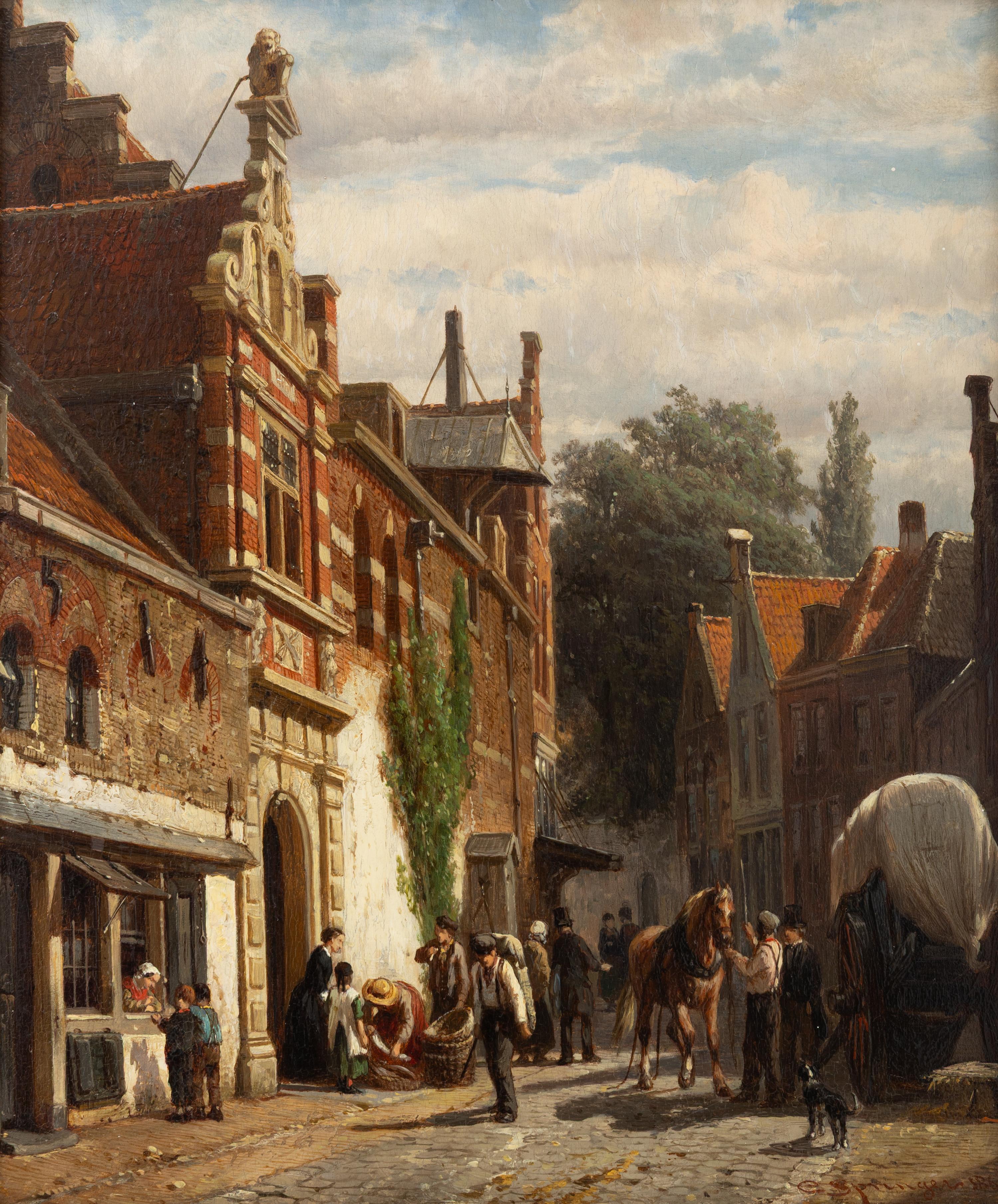
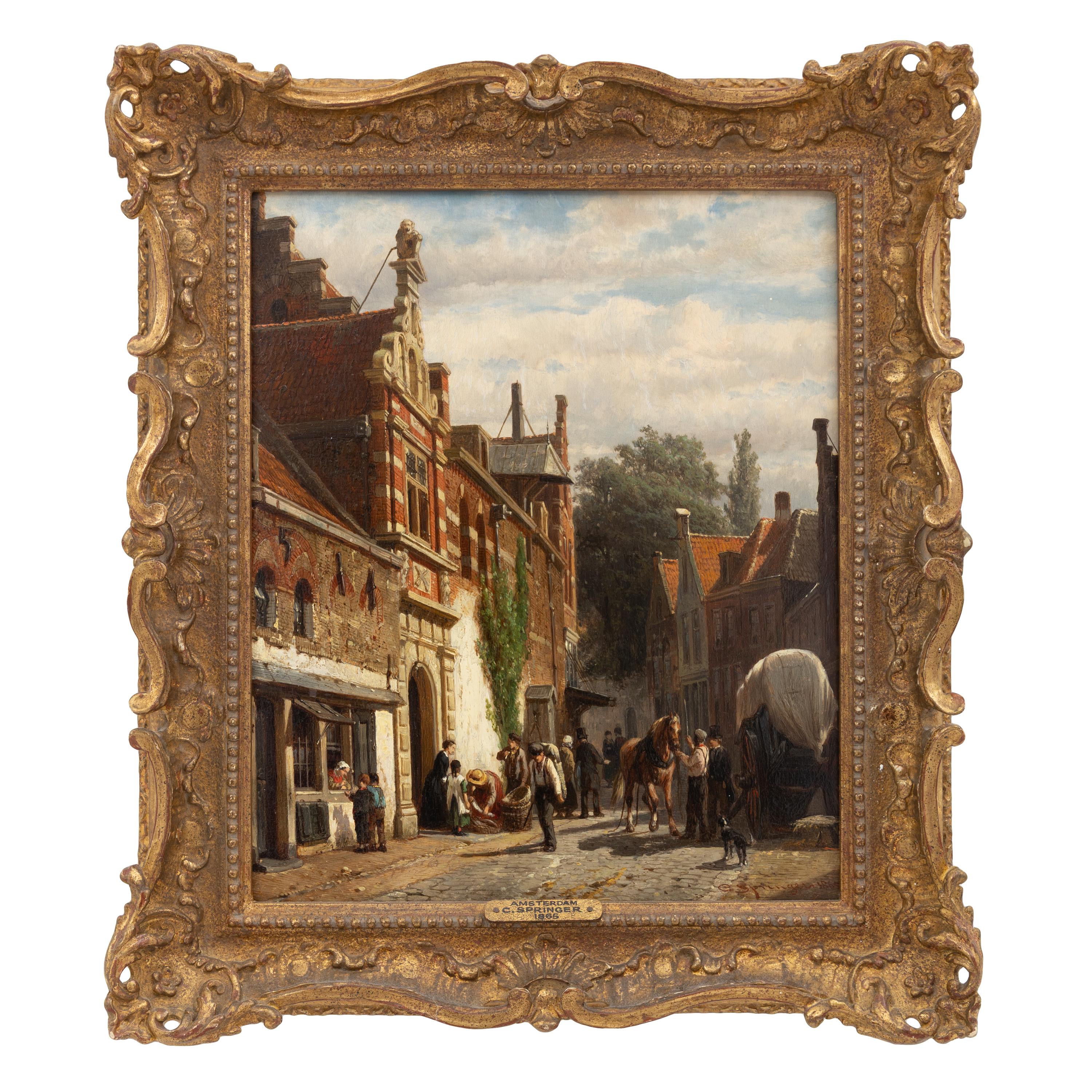
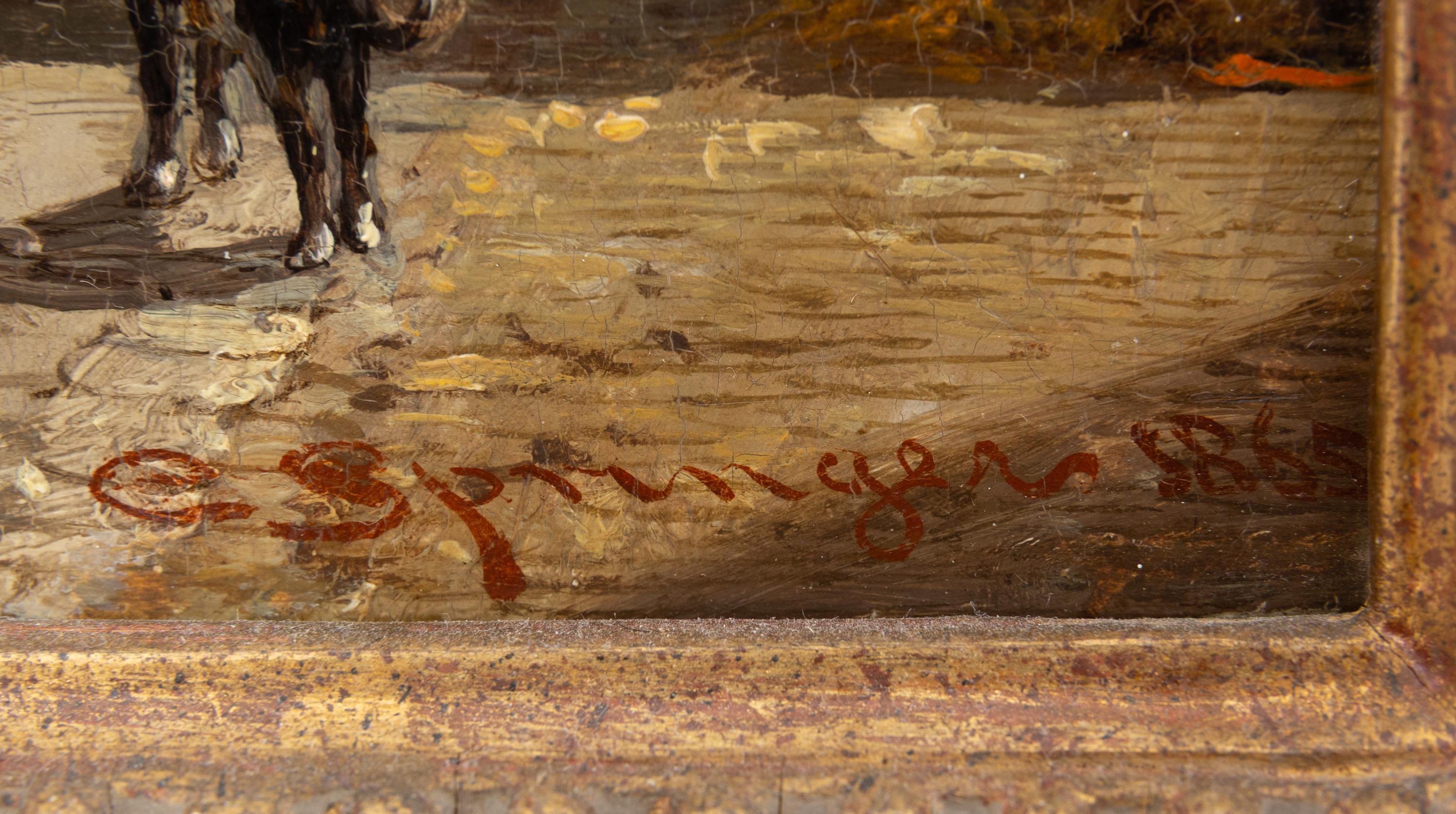
Cornelis Springer was one of the preeminent Dutch townscape painters of the 19th century. The three paintings on offer here – one from the 1840s (lot 132), one from the 1850s (lot 40) and one from the 1860s (lot 133) – are classic examples of the artist’s town scenes, each with carefully rendered buildings and streets filled with local people involved in everyday activities. In each of these paintings Springer employs a single vanishing point perspective wherein the viewer’s eye is drawn from the buildings at left to the townspeople in the foreground, with partially cloudy blue skies occupying roughly one-half of the composition along a diagonal. While great attention to architectural detail is a hallmark of Springer’s paintings, he was known to have sometimes combined his otherwise accurate town views and squares with elements of ‘capricci,’ or imaginary landscape elements. The artist’s paintings clearly show the influence of, and are a homage to, the Dutch ‘Golden Age’ painters of the 17th century who specialized in depicting buildings and architectural elements, including Gerrit Berckheyde. Springer’s townscapes were immensely popular (from the 1850s onward he worked on a commission basis) and they accentuated the national pride experienced by the Dutch during this period, with the Netherlands having been liberated from French rule just decades before. By the mid-19th century, Amsterdam, the subject of lot 132 and lot 133 was established as the official capital of the Kingdom of the Netherlands and was undergoing economic revival, an increase in trade, and advances in early mechanized industrialization. Woerden, located on the Oude Rijn River south of Amsterdam, was itself transitioning from a city originally known as a border fortress during the Napoleonic era, to one undergoing industrial expansion, as well as becoming a hub for a growing Jewish population who comprised mainly of shopkeepers and traders. It was also the site of both a Jewish synagogue as well as a Jewish cemetery during the period when lot 40 was painted.
Framed: 16 1/2 x 14 1/2 in.
Please contact Fineart@freemansauction.com for a detailed condition report.
The physical condition of lots in our auctions can vary due to age, normal wear and tear, previous damage, and restoration/repair. All lots are sold "AS IS," in the condition they are in at the time of the auction, and we and the seller make no representation or warranty and assume no liability of any kind as to a lot's condition. Any reference to condition in a catalogue description or a condition report shall not amount to a full accounting of condition. Condition reports prepared by Freeman's staff are provided as a convenience and may be requested from the Department prior to bidding.
The absence of a posted condition report on the Freeman's website or in our catalogues should not be interpreted as commentary on an item's condition. Prospective buyers are responsible for inspecting a lot or sending their agent or conservator to inspect the lot on their behalf, and for ensuring that they have requested, received and understood any condition report provided by Freeman's.
Please email fineart@freemansauction.com for any additional information or questions you may have regarding this lot.