John A. Anderson
(Swedish, 1869-1948)
Rosebud and Pine Ridge Indian Reservations in South Dakota
boudoir photographs
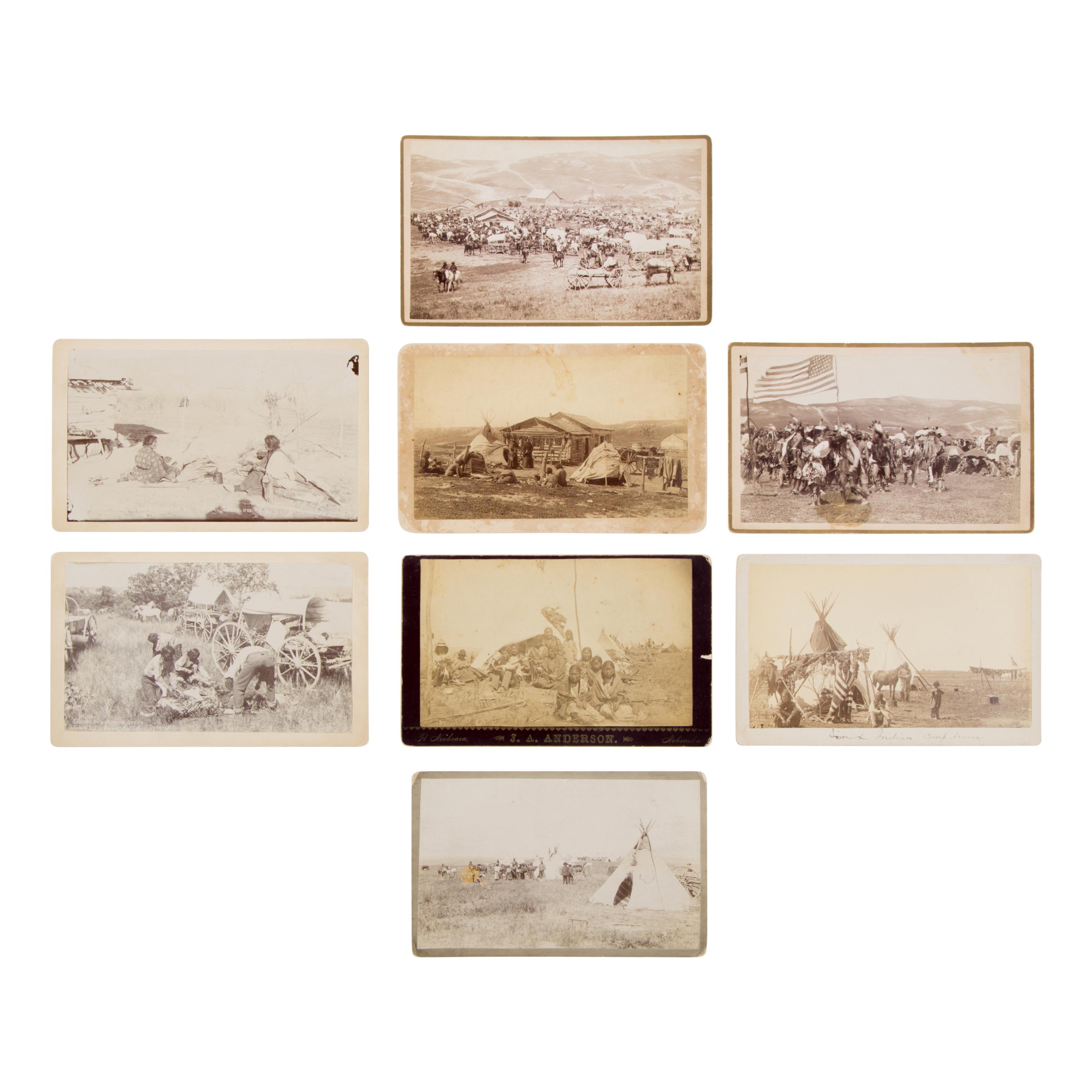
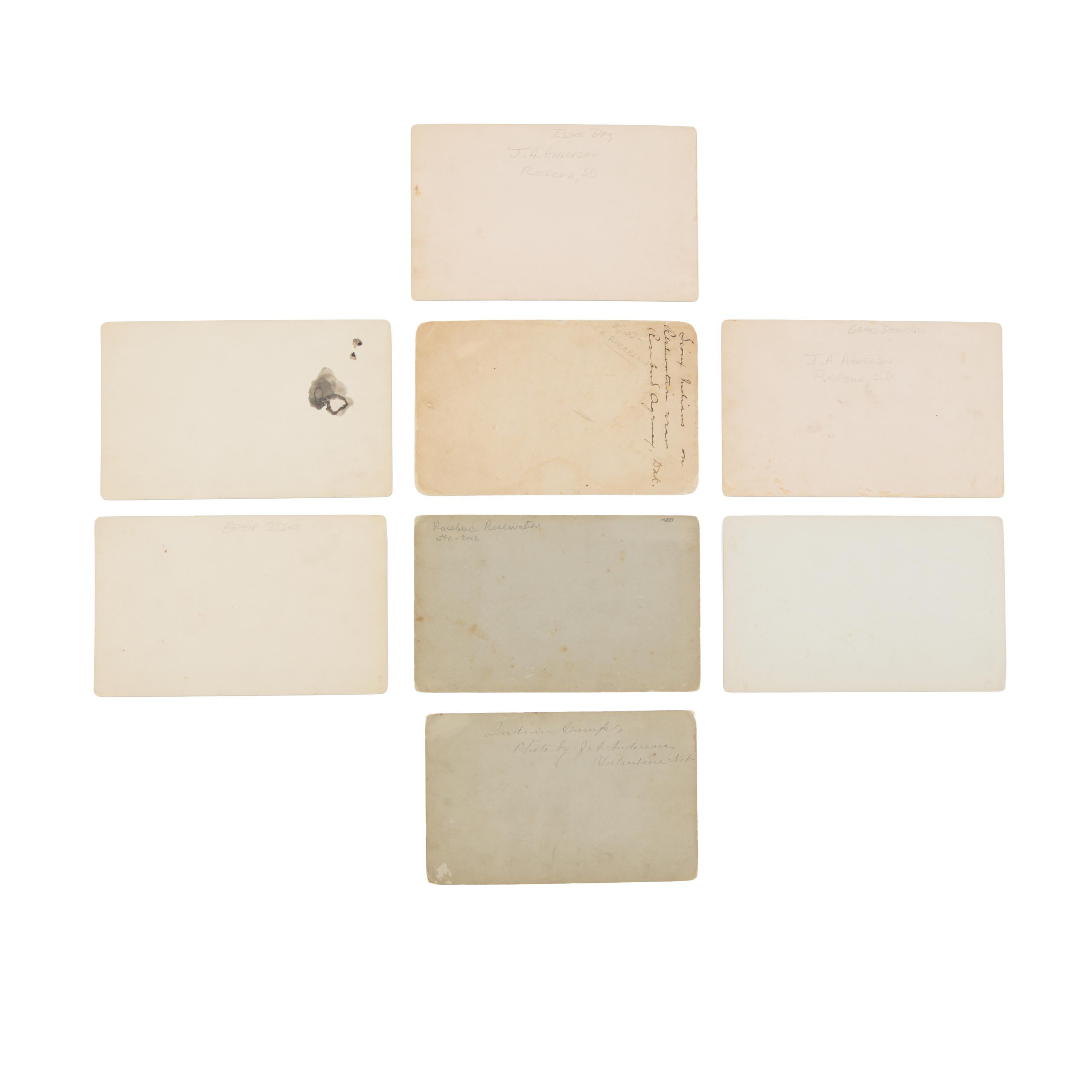
lot of 21 photographs, the majority being boudoir photographs taken at the Rosebud Indian Agency in South Dakota, produced by or attributed to John A. Anderson. Some images are captioned in the negative or in manuscript on mount recto or verso.
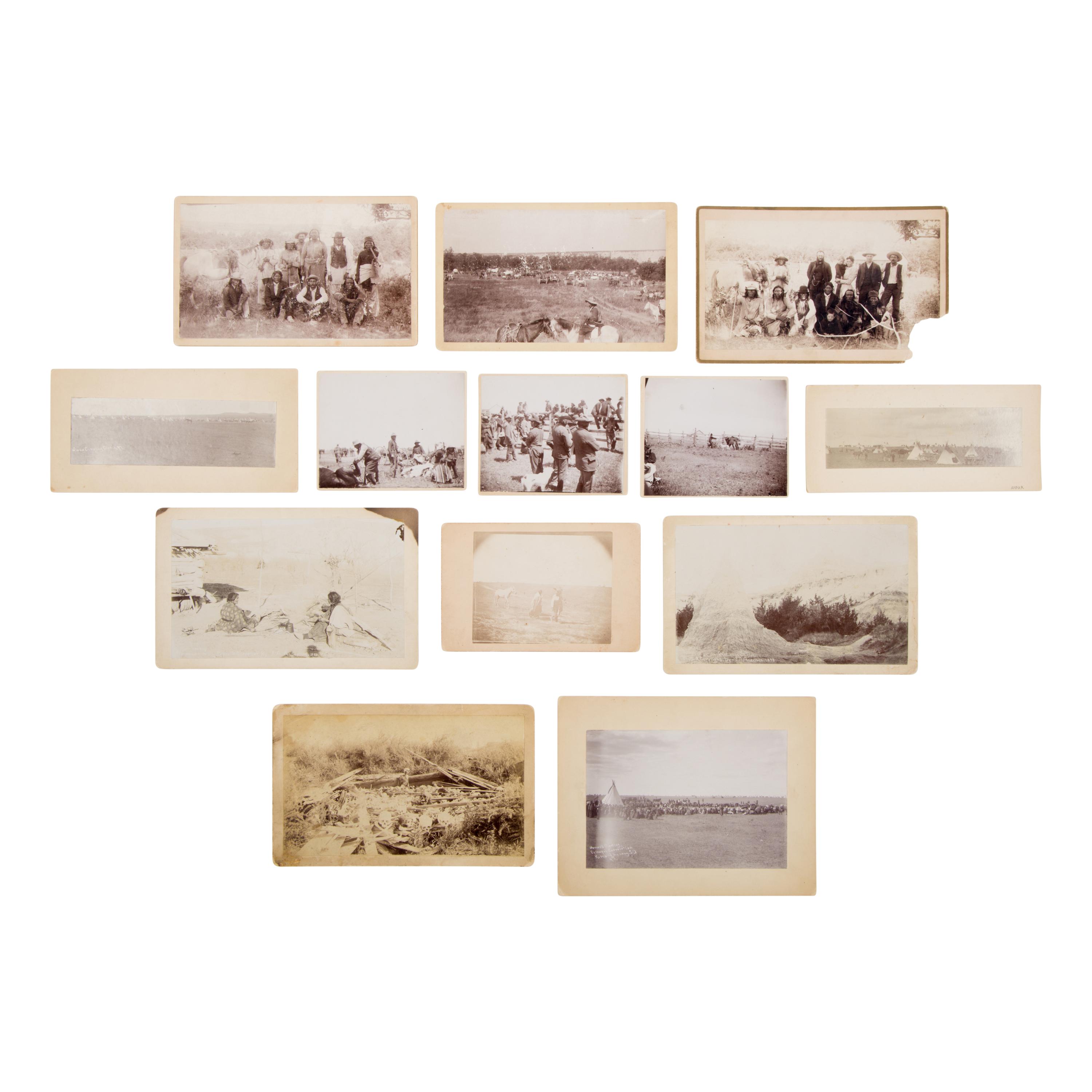
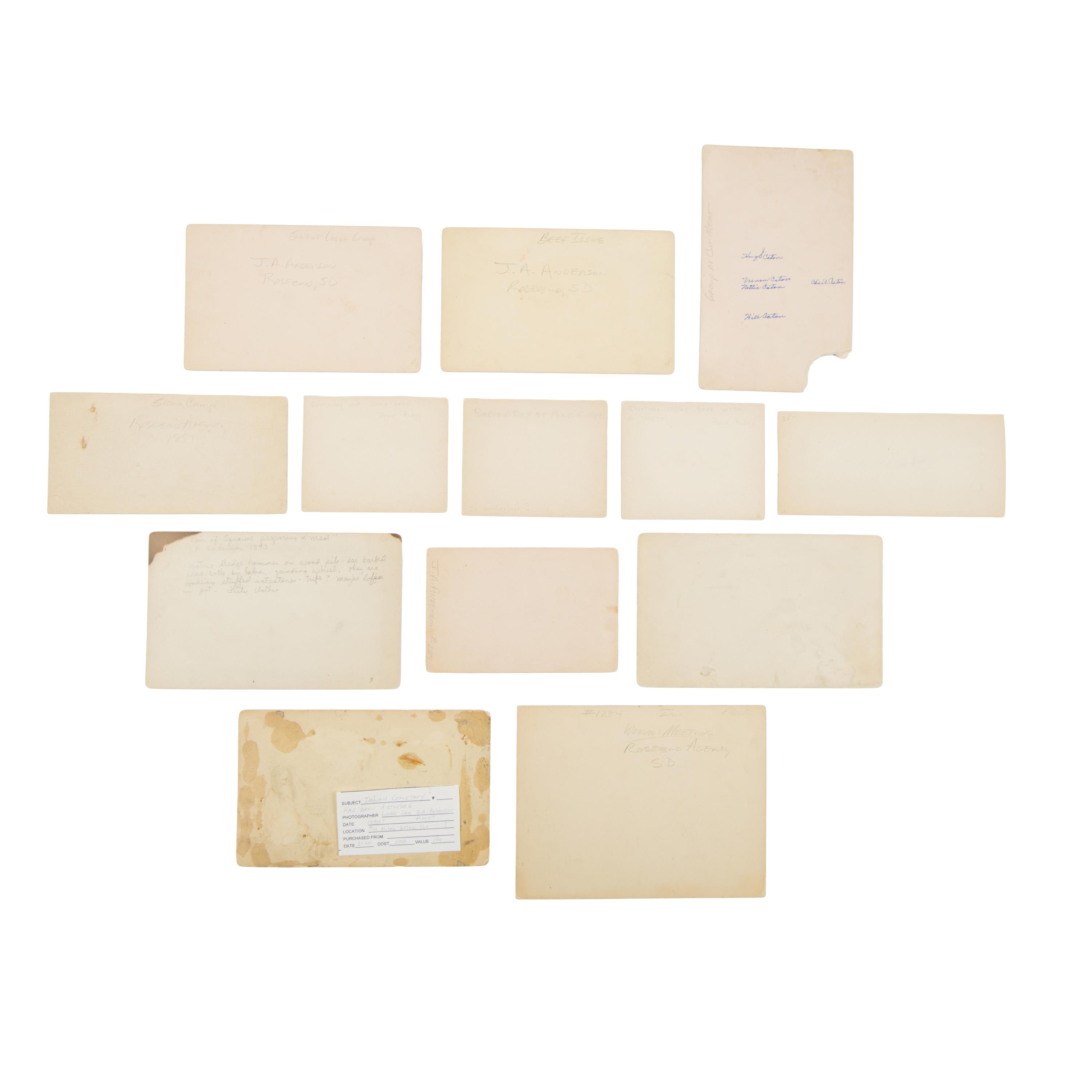
The following scenes are included (as identified in negative or period /modern manuscript): "Indians Butchering a Steer." -- "Sioux Indian Camp Scene." -- "Grass Dancers." -- "Sioux Indians on Reservation near Rosebud Agency, Dak.," as inscribed in period hand on verso. -- "Issue Day." -- Untitled camp scene at Rosebud Reservation on original mount with Anderson's Niobrara, Nebraska imprint. -- "Beef Issue." -- "Indian Camp," as identified in period hand on verso. -- "Squaws preparing a meal" (2). -- "Needlepoint Butte, Bad Lands, So. Dak." -- "Sweat Lodge Group." -- Group portrait comprised of both Native American and white subjects, some identified in unknown hand on verso, including Hugh, Vernon, and Nettie Caton. Later inscription indicates that the group was photographed at Cut Meat, an agency on the Rosebud Reservation (large area of loss to lower right corner of print and mount).
Additional photographs printed in various sizes, uncredited but attributed to Anderson, include: "Women's Meeting, Episcopal Convocation, Rosebud Agency, '97." 4 1/2 x 6 1/2 in. photograph on cardstock mount. -- 2 panoramic photographs of Sioux camp scenes, one titled in the negative, "Sioux Camping Circle, '97." 2 x 6 1/2 in., on cardstock mounts. -- 4 photographs printed late 19th-early 20th century, each approx. 3 3/4 x 4 1/2 in. on cardstock mounts, three of which include modern, penciled attributions to Anderson and captions, "Ration Day at Pine Ridge," "Shooting issue beef with a pistol," and "Dressing out issue beef, Pine Ridge." The fourth image is an untitled view of Native American subjects and a horse in a field.
John Alvin Anderson was born in Sweden, but emigrated in the 1880s to the United States in the region of Fort Niobrara. Purchasing his first camera from his wages as a carpenter, photography was initially a hobby until he became apprenticed to the important frontier photographer, William R. Cross who had a studio at the Fort. In 1885 Anderson was commissioned as a civilian photographer for the U.S. Army. From this date he began recording life on the nearby Rosebud Reservation, eventually moving there. In 1896 he produced a small photographic booklet titled Among the Sioux to illustrate the manners, customs and home life of the Sioux. His early works were documentary in nature. By 1900 his photographic portraits reached an artistic high point. Tragedy, however, struck the family in the 1920s when their only son died and their house burnt down including all but his greatest masterpiece negatives. During this difficult period they also encouraged and financially supported a young Brule boy, Ben Reifel. With their help he earned masters and doctoral degrees from Harvard and was ultimately elected to the House of Representatives. In 1929 Anderson published Sioux Memory Gems a collection of poems by his wife illustrated with his photographs. In the 1930s they moved to Rapid City, South Dakota to manage the Sioux Indian Museum which was built to house their ethnographic collection. When Anderson died in 1948 he was memorialized with a stained-glass window in the Trinity Episcopal Church on the Rosebud Reservation.
The Larry Ness Collection of Native American Photography
This lot is located in Chicago.